Wednesday, August 13, 2014

Choosing vocabulary that dazzles your reader.

image

Big words, little words.  What begins with words?
All of our stories do:  words, words, words.

(with apologies to Dr. Seuss)

Words are the building blocks of our stories.

So it stands to reason that we should try to choose the right words, words that will move and dazzle our readers – at whatever age and reading level they currently find themselves.

How do we do that?  Read on…

The rest of this post is an excerpt from my upcoming (now available!) book, The Seven Day Manuscript Machine: Edit your children’s book to genius in only a week. 
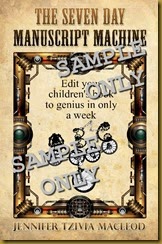
The_SevenDay_Manuscript_Machine Cover sample

(It’ll be available in paperback and Kindle very soon, so sign up for my mailing list to be notified of a terrific freebie deal I’m planning in return for some early reviews.)

Don’t worry; I’m not about to bawl you out for picking words that are too long or inappropriate for the age group you’re writing for.

I personally think a few big words are fun at any age. But how many is too many? And how do you know if you’ve gone too far the other way, talking down to older kids? (And there’s no better way to turn them off.)

Choosing the vocabulary for your children’s book can make a difference when it comes to finding young fans. You don’t want to choose “baby words” that are so simple your target audience feels like you’re talking down to them. No reader, of any age, likes to feel condescended to.

On the other hand, if your target audience is lost and confused when they run into too many unfamiliar words, your story will crash and burn. How do you challenge your reader just the right amount?

Know your target audience.

If you’re writing early chapter books to encourage a reluctant reader, keep your vocabulary simple, your action fast-paced, and your sentences short.

Monday, August 11, 2014

9 ways reviews are sweeter than chocolate – and how you can get more of both.

image

Everybody knows reviews are a good thing.

But why?

Someone recently asked me that, and it left me thinking.  Why are we so obsessed with reviews?  Good reviews, great reviews, 5-star reviews, hundreds of reviews. 

Why do reviews mean so much?

Here are 9 reasons why they’re a totally sweet addition to any indie publishing career.

  1. They feel great.  If you’re at all passionate about what you’ve written, it’s great to know that people are reading your books and talking about them.
  2. Social proof.  Buyers who see your books listed on Amazon or wherever can’t tell if they’re good or not.  Other people, preferably >100 other people, who mainly liked it, are good proof that your writing is tolerably decent.
  3. Momentum. When people review or star your book, Amazon and other sites will recommend other, similar books - hopefully YOUR other, similar books. 
  4. Infectiousness.  The more reviews your book has accumulated, the more likely it is to be suggested to people looking at similar books.
  5. Access.  Libraries won’t even consider a book without reviews.  It’s possible that they won’t take your self-published book even with reviews.  But if you have an “in” with a local branch or library system, you do have a chance as a local author – if you have that proof that your stuff is good.
  6. More access.  Ditto for schools.
  7. Social karma.  Yes, self-pubbed writers write reviews for other self-pubbed writers.  It doesn’t count as buying reviews as long as it’s not a straight “quid pro quo” (“you give me 5 if I give you 5”)  As long as it’s a book you can honestly put your name behind.  As long as you’re not afraid to give fewer than 5 stars or to decline to review a book you don’t like.
  8. Easy to understand.  As Amazon and other sites make marketing your book more and more complex, the appeal of a straightforward, no-nonsense review becomes even more clear.
  9. Agents like them.  So do editors.  Self-publishing one book doesn’t mean you can never go with the traditional model, and with a following, you’re more likely to get picked up.

But.

The reading world has been burned by review-buying scandals a couple of years ago.

However wonderful it feels to rack up a stack of reviews… keep it above board.  

Sure, you may be able to buy a few reviews this way in the short term.  But the minute that reviewer crosses Amazon’s Terms of Service (like when they take money for reviews), Amazon has the right to yank their account(s), and any reviews they’ve posted. 

Especially those reviews you’ve just paid for.  Hundreds of writers have been burned as these bad apples have turned up over the last couple of years.  Don’t be part of the next batch of authors left holding a rotten old core.

Oh, and don’t write reviews of your own books under creative pen names, like this author did.

Instead, these pros offer legitimate strategies to help you get legitimate reviews:

Sunday, August 10, 2014

Free-BEE! Free Kindle book on Amazon.com

image

My favourite price in the world:  free.  And my favourite thing in the world:  a kids’ book.  (Yes, one of mine.)

I don’t usually cross-post, but in this case, I’m making an exception so I can get the word out across all my sites:

Please Like, Share and pass along this deal.  FREE UNTIL AUGUST 14 ONLY!

Learn a little about Israel's modern history and its most beloved songwriter in this short kids' chapter book! This week (Aug 10-14), my book "Naomi Shemer: Teaching Israel to Sing" is FREE for Kindle.

CLICK HERE TO BUY THE KINDLE VERSION FREE UNTIL AUGUST 14.

I started writing this book when my daughter, named after Naomi Shemer, was a baby… but only finished it last year, when she was 8.  A long time in the making, but I think it’s worth every second.  (And I loved reading it to her and telling her about the amazing lady for whom she’s named.

Acclaimed in her lifetime as the "First Lady of Israeli Song" and the author of unforgettable classics like Jerusalem of Gold (Yerushalayim shel Zahav), Naomi Shemer is almost unknown in the English-speaking world. With its engaging, straighforward narrative, this book opens the world of Naomi Shemer for the first time to English-speaking children and their parents. Come find out what made her special.

(I'd also love to get some reviews up, so if you and your kids read/enjoy it, please leave an honest review to help others.)

Here are some shots from the paperback version of the book:


image image image

Enjoy!

CLICK HERE TO BUY THE KINDLE VERSION FREE UNTIL AUGUST 14.

Sign up for weekly writing tips (spam-free, guaranteed!)

* indicates required

Thursday, August 7, 2014

Book Trailers for Dummies: does your children’s book need one?

image

No, I’m not a dummy. 

And neither are you.

And we’re not suckers, either.

So why does everybody make book trailers seem so complicated?  Why is everybody trying to sell us fancy-pants services that will help us sell our kids’ books with the help of video trailers?

The first and most important thing to know about book trailers is this:  nobody really knows whether a book trailer ever, in the history of the universe, made anybody buy a book.

Still, I’m a sucker for new ideas, and thought it would be cute to try doing a few for my new books. 

And it turns out they’re quick and easy.

Granted, mine don’t look totally professional (bit of an understatement).  But given the fact that each of the three I’ve made so far took under an hour and cost exactly $0 to create, upload and promote, I think this is an effort well-spent.  They’re hopefully not going to hurt sales, right?

Also, the more of them you make, the quicker you’ll probably get at it.

You’ll need a few things before you start.

  1. A free video editing program.  I used Windows Live Movie Maker.  The new one won’t run on my cheesy computer, so I downloaded an older version.  I think it’s 2.6-something.  You need something that can add titles; MovieMaker does this, but just barely.  (I’m sure there’s some built-in free equivalent if you’re a Mac.)
  2. A piece of music you like and are allowed to use free.  My go-to spot for this is Kevin McLeod’s site, incompetech.com, where you can find any type of music you care to use.  Remember to give him credit in your video!
  3. Still images from your book.
  4. Video shots (optional), either of you reading the book, kids reading it, etc.  I haven’t done this yet, but you can, and it would probably make the end result more interesting.

Take a look at my own trailers.

So how did my own trailers come out?  I’m going to let you judge. 

Monday, August 4, 2014

Why hiring a fiverr artist for your kids’ book WON’T destroy the universe.

image

Since I posted about how to get your children’s book illustrated for $5 at fiverr, many, many people have raised some pretty strong objections.

If you listen to these people, you might justifiably believe the world as we know it would come to an end if we buy illustrations through fiverr and similar sites.

But I’m here to assure you that it won’t.

Here are a few of their objections (some of which I share – read on):

“As a reader, I object”

I agree.

I read books, too. I hate poorly-illustrated books, and refuse to share them with my children. Bad illustrations are offensive.

And so many self-published books look terrible.

But if you read through my original post on hiring an illustrator through fiverr, you’ll see that I’ve given you a built-in way to avoid finding a terrible illustrator – although, of course, there’s always the chance that a good illustrator will draw bad pictures for you.

Sunday, August 3, 2014

How to get your children’s book illustrated for $5 at fiverr.

a great children's-book artist at work

(I got royally flamed for this post on various children’s book writer and illustrator message boards.  Once you’re finished reading, whether you agree or disagree, read my response, Why hiring a fiverr artist for your kids’ book WON’T destroy the universe.)

UPDATE #2:  A third-world fiverr artist speaks up.  An important post for anyone looking to have their book illustrated, whether through fiverr or not.

Written a book and now you need pictures?

Some of us have the artistic talent to illustrate our own books.

Some don’t have to think about pictures because they’re hoping to snag a traditional publishing contract (don’t even think about submitting a manuscript with pictures unless you’ve drawn them yourself).

For the rest of us… there’s shelling out for illustrations.  And one popular way to do that is through fiverr.

I’ve ordered and received literally hundreds of illustrations through fiverr now – and had mainly good experiences. 

Are you truly going to get away with spending only $5 per picture? Probably not… but that $5 price tag is going to help you out in a few ways, so keep reading.


Fiverr illustrations… step by step.

Here’s how I get my pictures done through fiverr:

1) Write a great book. I don’t even think about pictures until the book is just about perfect. Typos, maybe. But the plot and scenes should be finished.

2) Divide your book into pages. Don’t leave this to chance. You wouldn’t walk into a housewares store and say, “I need… some plates.” No, you need 8, or 12, or however many. So don’t wander onto fiverr with the vague idea that you need “some” pictures.

Wednesday, July 30, 2014

THIS... this is why I self-publish. And why you should, too.

Proof copies:  Shabbat Monsters and One Chanukah Night.
Let's talk about me.

If all I wrote about was me and my own books and how great I am, I know you probably wouldn't read my posts.  But this blog is totally all about helping YOU write and publish great books.

And sometimes, one of the ways I do that is by sharing my own experiences.  So you'll know that I'm out here, too, struggling with rejection, trying my darndest to write great books and get them out into kids' hands... just like you are.

So I wrote a story, a few months back.  My 6-year-old son was feeling very sad and very excluded in his kindergarten.  He didn't speak the language and the other kids, all growing up in the same neighbourhood, were very cliquey and exclusive.

He came home one day, shortly after the kindergarten's "100th day" celebration and said it would be a hundred years before any of the kids would want to be his friend.

A story for my son.


So I ached for him, and wanted to write a story.

A story... about monsters.  Because he loves monsters.  Who doesn't?

And then, for some reason, the first verse popped into my head, fully-formed:

Monday, July 28, 2014

The truth about celebrities… and their kids’ books.

Ball-playing, book-writing brothers Ronde and Tiki Barber.

Should celebrities write children’s books?

Whether we believe they should or not… that doesn’t seem to be stopping them.

Does the fact that they are rich and famous give them greater insight to children’s literature than the rest of us?


The celebrities… and their books

Peeking inside a few recent children’s books by celebrities, you can see that celebrity status doesn’t necessarily make for a talented or insightful writer… but it also doesn’t mean they’re not.

By My Brother's Side, by Ronde and Tiki Barber By My Brother’s Side by Ronde and Tiki Barber, illustrated by Barry Root 

This one gets a resounding “Like!”

This middle grade book, along with several others by the football-playing, kids’-book-writing brothers, is a great example of an encouraging children’s story by a celebrity, or in this case two celebrities.

Wednesday, July 23, 2014

10 success tips your writing teacher never told you (but Jeff Gunhus will).

image

Quick:  what’s the opposite of success?

You guess it – f… f… f….

Oh, shoot.  I can’t bring myself to say it.

And neither should you.  We may be lying in the gutter, as they say, but we can still lie back and stare up at the stars.

If you want to get inspired, and actually create books that find readers, your best bet is to listen to people who are already successful.  Especially if they’re Jeff Gunhus, who’s made his own success in self-publishing.

(Here’s my interview with Jeff Gunhus from a little while ago.)

Jeff had the best motivation of all to create his Jack Templar series of kids’ books.  But the truth is, he was already a successfully conventionally-published writer before he set out to publish his own kids’ books.

That makes him twice as much of an authority, as far as I’m concerned.

image These Ten Tips from Jeff, he says, “come from many books and seminars, but a great influence has been Stephen King's On Writing, just the best little book about craft and the writer's life out there.”

1) Write a lot. Every day. Without fail. Even for ten minutes. It's easier to push a car that's already moving instead of one at a full stop. 

2) Read a lot. "I don't have time to read," means you don't care enough to be a good writer. Create a book list for yourself and set goals. 

3) Create fertilizer. The first draft is the pile of manure out of which great things will come. Allow yourself to make a pile of dung. It's going to be fine, just keep going. 

Monday, July 21, 2014

How are your books selling? A $5 book that can turn sales around.

image

Do you have a head for business?

You should. 

If you’re a writer, of any kind, your business – like it or not – is writing.

It doesn’t matter if your books are full of butterflies, fairies, nymphs, talking animals and whimsy.  Once you’re done writing them, if you expect them to do anything other than just

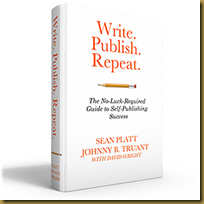
image And the best guide I’ve seen so far to building a writing business is a hefty tome (479 pages) with the hefty title Write. Publish. Repeat. (The No-Luck-Required Guide to Self-Publishing Success).

With a thousand-dollar title like that, you’d expect to pay maybe $17 for this gem, but I just checked and the current Kindle price is $5.58.

Sometimes, as self-publishing children’s writers, we figure we’re somehow exempt from all the messy business-type stuff that applies to other self-pubbed writers today.

We’re not exempt.

As a self-publishing (or, as they say, indie) writer, you have to keep your head on your shoulders and focus on the 80% of activities that pull in the vast majority of profits.  Don’t worry; writing is one of them.  Stuff like piddling around with facebook and blogs (oops) might not be.

Saturday, July 19, 2014

Time off to (not) write.

3475199344_22c0327a80_z

Everyone knows writers write.  Right?

But since I became an Orthodox Jew a looooong time ago, writing hasn't been an option at least one day out of every week. From sundown Friday to sundown Saturday, and on holidays, I don’t write, either with a pen or computer.

Please don’t underestimate how hard this is.  It’s CRAZY hard.  And it’s never gotten easier, the longer I’ve done it.

Wednesday, July 16, 2014

Need inspiration? 15 wild quotes about children and reading, from Maya Angelou and more.

FiverrV2 

Some of these may make you smile, some of these may make you laugh, or stop and think.  I hope they will all inspire you to keep doing what you’re doing.

(Click the image above for a full-sized version you can save and share.)

  1. “Any book that helps a child to form a habit of reading, to make reading one of his deep and continuing needs, is good for him.”  — Maya Angelou

  2. "Children are made readers on the laps of their parents." — Emilie Buchwald

  3. "Oh, magic hour, when a child first knows she can read printed words!" — Betty Smith in A Tree Grows in Brooklyn, 1943

  4. "Reading should not be presented to children as a chore or duty. It should be offered to them as a precious gift." — Kate DiCamillo

  5. "When I say to a parent, ‘read to a child,’ I don't want it to sound like medicine. I want it to sound like chocolate." — Mem Fox