Showing posts with label role models. Show all posts

Thursday, June 11, 2015

5 survival tips for the long, uphill journey to a finished book.

image

You’re standing at the foot of a mountain.  Don’t look up, or you’re done for – there’s just so far to climb when you’re just starting out.

I started a new nonfiction book this week.  I love writing them, gathering photos, putting the information together.  But it’s soooo much work.

Short picture books come easily, but longer stories, like chapter books, are an uphill slog.  Some chapters in a longer book are fun to write – others, not so much.  And when I’m right at the beginning… well, some days I feel like I don’t have the strength.

Does that happen to you, too?

Here are some ideas that get me up that mountain.  I’d love to hear yours, just leave them in the comments at the end of this post.

1.  Sit down and write

“Writing is a struggle against silence.”
― Carlos Fuentes

Writer Cory Doctorow says, “Write every day. Anything you do every day gets easier. If you’re insanely busy, make the amount that you write every day small (100 words? 250 words?) but do it every day.” (read more here)

Thursday, June 4, 2015

Write like a journalist: use the 5 W’s to write captivating children’s books.

image

How are you on the 5 W’s? 

You know:  “who, what, when, where, why”?  Those 5 W’s.  The ones your high school English teacher badgered you about. 

Maybe you’ve pushed them aside and not thought about them since high school.  But it’s time to dust them off and see how they can help you create a tighter, more fascinating story.

Every journalist knows that if they haven’t answered these 5 W questions in the very beginning.  So should every story writer. 

Open up any newspaper in the world and you’ll see how those 5 W’s have been worked into the first paragraph – known as the “lede.”  Here’s a short news item from Reuters today:

An explosion at a gas filling station in Ghana's capital killed at least 78 people, many of whom had sought shelter there due to torrential rain, a spokesman for the national fire brigade told JOYFM radio on Thursday.

Let’s take a look at those 5 W’s.

  • Who’s it about?  78 people who were killed, and one fire brigade spokesman.
  • What happened?  An explosion.
  • When?  Today, Thursday June 4 (or maybe it happened yesterday).
  • Where?  Accra, the capital of Ghana.
  • Why?  The people were in the gas station to seek shelter from the rain.  The article doesn't given a reason for the explosion itself, but the next paragraph says it may be connected to the rain as well.

Oh, and by the way, I know nothing about Ghana.  That’s another thing journalists realize:  if they’re doing their job right, they can make you feel entranced, utterly fascinated, by anything.  They can make you care.

Now let’s look at the beginning of a children’s book.

Thursday, May 21, 2015

Are your books too babyish? The grown-up way to write kids’ books, with 3 easy fixes.

image

Writing for kids keeps us young at heart.  How great is that?

(Very!!!!)

But maybe you’ve made the mistake of thinking that “young at heart” means writing in a childish way.  Are you underestimating your readers’ intelligence?  Is your children's book TOO childlike? 

Sure, we’re writing for kids.  Sure, I feel like a kid when I write.  But we shouldn’t make the mistake of creating books that sound like they’re written by kids – or worse, babies. 

Here are three common problems, and quick fixes to make sure you don’t fall into these traps.

1.  Baby talk

Language development experts say parents should try to speak normally to even the youngest kids.  Some “goo goo” is fine if we’re playing around, but when you’re talking to a baby, you should make an effort to use real words.

Same thing if you’re writing for kids, even babies.  Use real words.  A grown-up is going to be reading the story, so you don’t have to worry that your words are too hard for kids to read.

And whatever you do, don’t make spelling or grammar mistakes – especially on purpose.  Don’t spell fruit as “froot” just because you think it will appeal to kids, or emphasize how hard something was by spelling it “harrrrrrd.” 

Would writers REALLY do this?  I assure you, they would.  I’ve seen some horrors out there.  But you’re the one I care about: don’t you do it.

Thursday, April 23, 2015

How to write an author bio that will sell children’s books

image

Have you ever READ an author bio?

Probably you have.  That’s because you’re a writer, so you’re interested in other writers.  At least, I know I am.

Here’s the thing:  you’re not a kid.  Let’s be honest:  it’s not kids who will be reading your author bio.

Most kids couldn’t care less about who wrote the book, unless they’ve finished one and are looking for more of the same.  So it’s probably parents, grandparents, teachers and librarians who will be reading the author bio. 

There are two kinds of people who are reading your author bio:

  1. People who aren’t sure whether they should buy your book
  2. People who have read your book and want to know more about you

In both cases, a little honesty can go a long way.  In both cases, you want to make a connection that is friendly and personal (not commercial!).  You want them to trust you and – maybe, just maybe – to like you.

Let’s look at ways we can make the bio as appealing as possible without being crass.  What you don’t want is for your bio to sound like marketing copy.

Here’s the trick:  you want your bio to be relatable, which means not too weird.  But you also don’t want it to be so tedious that you are ultimately forgettable.

What should you call yourself?

For some writers, the hardest part of creating an author bio is describing themselves in the third person.  As tempting as it may be to say “I’m a mom of 4, a SCUBA diver and a cat lover,” resist. 

Suck it up, and keep yourself in the third person.  It just looks and sounds better.

The best advice I can give you is to read 5-10 bios of well-known children’s authors before you sit down to write your own.  I think it’ll inspire you, offering hints as to voice and how to streamline your message effectively.

Go long or stay short?

Sunday, March 8, 2015

Stuck for starters? Viral story starters from 3 kids’ best-sellers.

image

How should you start your story?  Every children’s book editor and agent will tell you:  the action needs to begin on Page One.

But hey, isn’t that a little unfair?  What if you have a great idea, but you need to take a few pages to get to it?  Shouldn’t the reader be patient and bear with you? 

The cold hard truth is that today’s readers won’t, and neither will today’s book-buying parents and grandparents.  Your story has to hook us on Page One if you want anyone to invest their time and read any further.

What does that mean for today’s writer (that means you)?  It means starting your story in the middle of the action.  (In Latin, if you want to get fancy, that’s called in media res.)

Let’s see how some of today’s hottest-selling kids’ books do it.  Take a peek at what’s flying off the virtual shelves at Amazon:

Viral Bestseller #1:  The Day the Crayons Quit

The Day the Crayons Quit, by Drew Daywalt Take a look at the current bestseller The Day the Crayons Quit, by Drew Daywalt, illustrated by Oliver Jeffers.  How does it start?

“One day in class, Duncan went to take out his crayons and found a stack of letters with his name on them.”

Thursday, February 5, 2015

Eat, Pray, Love’s Elizabeth Gilbert – 2 profound quotes on writing with creativity and fear

image

Want to know what stops all of us in our tracks sometimes when we sit down to write?

Almost by accident, I just caught a great interview with writer Elizabeth Gilbert (Eat, Pray, Love, among other things) on a podcast I listen to (not for kids, but you should listen – it’s hilarious; this was really the only serious part). 

image She had some incredibly profound things to say about creativity and fear, and on writing without a safety net (“I just jumped off the cliff…” – it starts around 43 minutes into the podcast)

“What you have to understand always about anything creative and inventive is that creativity and fear are conjoined twins.

Friday, December 19, 2014

Best & worst of the Indie Children’s Covers 2014: 19 hits, 10 misses.

image

UPDATE:  Want to enter the 2015 contest?  Open NOW to any children’s books self-published between Dec 1, 2014 and Nov 30, 2015.

Covers are hard.  If you’re like most people, I hope you don’t even try to do them yourself.  But even if you hire a pro, it’s easy to wander off the path of good judgment into the jungle of horrific, embarrassing covers.

That’s why we need objective feedback. 

Which is where Joel Friedlander, the Book Designer, comes in.  Every month, he hosts a cover contest.  It’s free to enter, and if you have a cover you love, you really should.  It won’t boost book sales directly, but it’s worth it, I promise.

Remember:  every single buyer is judging your book by its cover.  You can’t escape from that simple fact.

Every month, Joel shows off every cover he gets.  Sometimes he adds praise – but sometimes, his comments can sting.  One author proudly submitted his cover with the words “Fully designed by the author himself.”  To which Joel replied, “That’s apparent.”  About another cover, he wrote, “Impossible to tell what was intended here, but clearly this is a disaster.”  (My personal favourite:  “Pretty much announces: “I’m self-published!” And not in a good way.”)

I have to laugh – even when his criticisms are aimed at me, which they have been a couple of times.  Don’t submit anything unless you’re prepared for him to tear it apart.

Most of the covers he gets are for adult books.  Why not more kidlit?  Maybe because most of us aren’t putting enough money/effort into our covers, and aren’t proud enough of the results. 

That’s REALLY got to change.  I hope this list inspires you to create excellent covers that will hog all the top spots for 2015.

Here (in no particular order) is my personal Top Nineteen of all the kids’ covers that he’s featured in 2014.  NOTE:  I haven’t read the books.  I’m literally just judging them by their covers.

Down below, you’ll find 10 “misses” and “near-misses” that failed on one count or another to make it to that empty #20 spot in my “top” list.  Plus two grownup books with really, REALLY bad covers that make me wonder why anyone would submit them to a contest.  And one I loved that inspired me to buy the book.

#1

image

The Boy Who Loved Fire by Julie Musil.  There were many great YA covers this year; I think authors in this category are a lot more serious about their covers than if they’re just writing “kiddie books.”  (Again, that’s really got to change.)  Joel didn’t say anything when it was listed in January, but in March when he listed it again, he said, “Although a bit overwrought, it is nicely creepy.”

#2
image

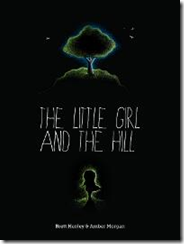
The Little Girl and the Hill by Brett Henley.  In January, Joel didn’t like the smallness of the text and I agree – you can’t read the author’s name, even with this fairly large thumbnail.  He said the art was lovely but that the cover overall is “a dark and easily skipped muddle.”  Still, something about this concept really appeals to me.  Like finding a good black t-shirt for a baby, it’s rare to see an all-black cover on a kids’ book.  (Caveat:  the interior looks similarly all-black, and I’m not 100% sure how good that would look on an ereader.)  I do wish they’d re-do the fonts, however.

#3

Friday, November 28, 2014

GUEST POST: Moving Small Stones: Closing the Diversity Gap in Children’s Books

image

Welcome to my stop on The Secret Life of Jenny Liu book tour!  (Want to check out all the stops?  Here’s a list.)

Today, you’ll discover a tasty new middle-grade chapter book, and hear from its writer about why diverse books matter. 

What am I saying?  You’ve probably heard the buzz about diverse books already. 

But are you convinced yet?

Jean Ramsden is.  These days, she’s connecting with her readers one-on-one.  And she’s hearing from them how much it means to kids to see characters “just like me” in the books they read, on the covers, on the pages of magazines and on TV.

Jean’s book, The Secret Life of Jenny Liu (Jam & Jabber Books, 2014) is about an 11-year-old Chinese-American girl who defiantly refuses to be a stereotype.  When the world tries to shove her into a box, she bursts free and discovers she has the strength to be unique. 

The book confronts all the stereotypes head-on – Jenny is Asian, but she’s no good at math and spelling, and she’s not the piano whiz her teacher and slightly-tiger mom hopes she’ll be.  I loved watching Jenny solve her own problems, finding balance in her own life and helping others along the way.

So why do diverse books matter?

Let’s let Jean speak for herself…

Moving Small Stones: Closing the Diversity Gap in Children’s Books

The Secret Life of Jenny Liu, by Jean Ramsden The fury of activity following my book reading had subsided—questions had been answered, books had been signed, kids and their parents and teachers had moved on to the next event—when a girl holding her copy of my middle-grade contemporary book, “The Secret Life of Jenny Liu,” approached.  

Monday, November 3, 2014

Ebook non-fiction: 3 rules to hook readers (and keep them coming back).

image

Ever felt like you couldn’t compete?

Want to know how your books can rise to the top?

Head over to Amazon and you’ll find a virtual deluge of nonfiction kids’ ebooks, and they’re not going away anytime soon.  Most are awful, a relic of the Kindle “gold rush.”  They repurpose free information, slap on free pictures, and charge anywhere between $.99 and $3.99 to call it a “book.”

I’ve recently converted a couple of the projects I created as a homeschooler into nonfiction ebooks, and discovered along the way that I really love writing kids’ nonfiction.  It’s even a little addictive once you get started.  I love creating books that teach kids about the world – in a fun way, so that ideally, they won’t realize they’re learning a thing.

So how do you do that in a way that doesn’t turn them off?  Or even do it in a way that keeps them coming back for more?  Don’t worry, it’s not as tough as it sounds (unlike getting them to line up for a second helping of green beans).

Staying afloat

Sure, it’s tough to stay above the tide.  It’s easy to despair when you see the numbers:  There is just so much out there, and more every day.

But I do believe that quality will rise to the top… or at least, some elusive mix of quality plus quantity.  If you publish a single Kindle ebook, it may not succeed, no matter how great it is.  But if you publish a whole series of them, and you acquire a loyal audience who enjoys reading them… then, I believe you will.

So how do you pick up that loyal following?

Friday, October 31, 2014

Write better, sell more books. Under a buck.

image

Want to write better?  Want to sell more books?  All for under a buck?

Of course you do.

It doesn’t matter whether you’re writing children’s books, blogs, or full-length adult nonfiction (or anything else).  The basics of writing and publishing in a digital age are exactly the same.

Lots of self-proclaimed “experts” will tell you how you can cash in on some kind of digital gold rush, but they’re all lying to you.  Their tips are gimmicky and most won’t hold true for more than a few months at a time.

Just in time for NaNoWriMo, two bestselling writers and one exceptionally prolific writing team have put together the Indie Author Power Pack.  It’s coming out November 3rd, but if you buy it now, it’s 88 cents.  That’s 88 cents for three books. 

This is easily the best 88 cents you will EVER spend on your writing career.

I literally stumbled across this today on Amazon, so I have no clue how long the presale deal’s going to last.

My current favourite, Write, Publish, Repeat (which I bought in audiobook, but have never sat down and read), alone must be over 100,000; it’s a monster (check out my review of Write Publish Repeat, plus my interview with its author, writer dad Sean Platt).  And it costs $5 all by itself. 

Again, the bundle is 88 cents. 

Get the deal here.

NOTE:  US-based viewers may see a price of 99 cents.  I wrote and published this post before I thought to check how it showed up here.  Here’s a screenshot of how the site comes through at my end:

image

(Which is funny, because usually we pay MORE outside the U.S.)

Let’s take a look at the math.

Write. Publish. Repeat., by Sean Platt and Johnny B. Truant Let's Get Digital, by David Gaughran How to Market a Book, by Joanna Penn

That’s at least $15 worth of ebooks, and these aren’t some second-run thing put out by fly-by-nights who don’t know what they’re doing.  These are the superstars of self-publishing, who have been at it for years and want to share their ideas with you..

I just bought the bundle, and I can’t wait until it comes out.  You should, too, even if you already own one (or two) of the books.  Here’s your last chance for this post…

Get the deal here.

If you do get it, or if any of these books have helped YOU, let me know in the Comments.

Tuesday, September 16, 2014

RIP Crad Kilodney

The late Crad Kilodney, legendary Toronto street author.

Who’s your biggest influence as a writer?

Sometime way too long ago to admit, a friend told me about a guy who stood out on the streets of Toronto selling his books. 

A crazy guy, with a crazy name:  Crad Kilodney.

In an era before self-publishing (think 1972), he typed his own stories and printed them off himself.  Then stood outside, all year long, in all kinds of miserable weather, getting the word out thanks to sandwich boards around his neck.

This is how I first met him.

The late Crad Kilodney, legendary Toronto street author.

This is what he looked like.  Sometimes with the pipe, sometimes not.

Most pedestrians on the busy downtown sidewalks he occupied rushed past pretty quickly.  Trying not to make contact with the greasy-haired guy selling – ahem – literature.

Okay, so it wasn’t exactly literature.  Actually, it was the kind of crazy, train-of-thought, free-associated ranting my mother might refer to as “verbal diarrhea.”

Story and pictures by Crad Kilodney

I don’t believe my mother ever opened up one of those grimy little books that must have come home with me from time to time.

*** Caution:  a small excerpt of his writing is below which contains some NSFW / adult content.  I’m warning you now so you have time to shut the window.  (Also, any of these images of his stories could contain inappropriate language so don’t click if you don’t want to know.)

Sunday, August 17, 2014

Writer Dad: mini-interview with Sean Platt

image

Sometimes, it’s good to be backed into a corner.

Like us, staked out here at the corner of “writing kids’ books” and “self-publishing.” 

I live here, too.  And I love it.  I love sharing tools to create excellent children’s books, whether that’s tips on publishing, marketing, or actually sitting down and writing or editing the thing (and getting it illustrated).

Did I mention I have a guide coming out to self-editing your own children’s book?  I love every aspect of this process, even editing (and with this book, maybe you will, too).

But it does get lonely sometimes.

It’s a fun corner, but there aren’t a lot of us around.  We aren’t very high profile, and there aren’t many folks to keep us inspired.

image Then somebody like Sean Platt comes along, a proud indie author who makes his living and supports his family writing his heart out in science fiction, fantasy, nonfiction and more, to the tune of tens of thousands of words a week. 

Plus he does a couple of podcasts. 

Plus… (get ready for it)… he writes kids’ books.  But you’ve never seen his books, and he says you never will.  That’s because he writes under a pseudonym:  Guy Incognito, a name swiped from a Simpson’s episode.

“Most of my published work is for grownups, so it doesn't make sense for me to use the name ‘Sean Platt’ when writing for children.”

Monday, July 28, 2014

The truth about celebrities… and their kids’ books.

Ball-playing, book-writing brothers Ronde and Tiki Barber.

Should celebrities write children’s books?

Whether we believe they should or not… that doesn’t seem to be stopping them.

Does the fact that they are rich and famous give them greater insight to children’s literature than the rest of us?


The celebrities… and their books

Peeking inside a few recent children’s books by celebrities, you can see that celebrity status doesn’t necessarily make for a talented or insightful writer… but it also doesn’t mean they’re not.

By My Brother's Side, by Ronde and Tiki Barber By My Brother’s Side by Ronde and Tiki Barber, illustrated by Barry Root 

This one gets a resounding “Like!”

This middle grade book, along with several others by the football-playing, kids’-book-writing brothers, is a great example of an encouraging children’s story by a celebrity, or in this case two celebrities.

Wednesday, July 23, 2014

10 success tips your writing teacher never told you (but Jeff Gunhus will).

image

Quick:  what’s the opposite of success?

You guess it – f… f… f….

Oh, shoot.  I can’t bring myself to say it.

And neither should you.  We may be lying in the gutter, as they say, but we can still lie back and stare up at the stars.

If you want to get inspired, and actually create books that find readers, your best bet is to listen to people who are already successful.  Especially if they’re Jeff Gunhus, who’s made his own success in self-publishing.

(Here’s my interview with Jeff Gunhus from a little while ago.)

Jeff had the best motivation of all to create his Jack Templar series of kids’ books.  But the truth is, he was already a successfully conventionally-published writer before he set out to publish his own kids’ books.

That makes him twice as much of an authority, as far as I’m concerned.

image These Ten Tips from Jeff, he says, “come from many books and seminars, but a great influence has been Stephen King's On Writing, just the best little book about craft and the writer's life out there.”

1) Write a lot. Every day. Without fail. Even for ten minutes. It's easier to push a car that's already moving instead of one at a full stop. 

2) Read a lot. "I don't have time to read," means you don't care enough to be a good writer. Create a book list for yourself and set goals. 

3) Create fertilizer. The first draft is the pile of manure out of which great things will come. Allow yourself to make a pile of dung. It's going to be fine, just keep going. 

Saturday, July 19, 2014

Time off to (not) write.

3475199344_22c0327a80_z

Everyone knows writers write.  Right?

But since I became an Orthodox Jew a looooong time ago, writing hasn't been an option at least one day out of every week. From sundown Friday to sundown Saturday, and on holidays, I don’t write, either with a pen or computer.

Please don’t underestimate how hard this is.  It’s CRAZY hard.  And it’s never gotten easier, the longer I’ve done it.

Wednesday, July 16, 2014

Need inspiration? 15 wild quotes about children and reading, from Maya Angelou and more.

FiverrV2 

Some of these may make you smile, some of these may make you laugh, or stop and think.  I hope they will all inspire you to keep doing what you’re doing.

(Click the image above for a full-sized version you can save and share.)

  1. “Any book that helps a child to form a habit of reading, to make reading one of his deep and continuing needs, is good for him.”  — Maya Angelou

  2. "Children are made readers on the laps of their parents." — Emilie Buchwald

  3. "Oh, magic hour, when a child first knows she can read printed words!" — Betty Smith in A Tree Grows in Brooklyn, 1943

  4. "Reading should not be presented to children as a chore or duty. It should be offered to them as a precious gift." — Kate DiCamillo

  5. "When I say to a parent, ‘read to a child,’ I don't want it to sound like medicine. I want it to sound like chocolate." — Mem Fox

Friday, July 4, 2014

Busting out of your niche: mini-interview with writer Eric A. Kimmel

image

Creepy.

Sorry, but that’s what comes to my mind when I think of Eric Kimmel. 

Creepy, as in the very best kind of creepy Jewish books:  ghosts, ghouls, goblins and all things paranormal. 

Hershel and the Hanukkah Goblins kind of creepy.

Gershon’s Monster kind of creepy. 

Jack and the Giant Barbecue kind of creepy.

Huh?  Jack and the… giant… barbecue?

Check it out:

image

Sure, Eric is the undisputed champion of creepy Jewish kidlit, but if that sounds like he’s stuck in a niche, think again.  He’s not just about creepy… or just about Jewish books, as you’ll see. 

Sunday, June 29, 2014

Who’s Jeff Gunhus and what makes him a self-publishing success story? (a mini-interview)

image

How did I find out about Jeff?

Well, his self-publishing success story was featured a couple of weeks ago on Amazon’s home page.  And when a self-publishing kids’-book author is highlighted right up there in lights, I sit up and pay attention.

You’ll be happy I did.

It turns out that his Jack Templar Monster Hunter series of kids’ books aren’t the only self-publishing Jeff has done. 

In fact, two of his novels have brought his AuthorRank up to #52 in Kindle eBooks for Horror, a very crowded genre (to give you some idea of who he’s up against, Stephen King is at #1). 

image Look, the numbers in self-publishing are scary.  So, although it might not seem like an accomplishment that his adult book Night Chill is currently Amazon-ranked #25291, it’s a lot more impressive when you realize he’s up against basically every book in the world.

That’s why we need to pay attention to what Jeff’s doing right.  Jeff’s done two things (at least) to set himself apart from the crowd:

Saturday, June 14, 2014

TOBY Book Launch Blog Tour: mini-interview with author Stacy Nyikos

image

If you’re here for the book tour, come on in, make yourself at home… and come meet Stacy Nyikos, a writer who says she’s “hooked” on writing kids’ stories.

imageAs a children's writer, I get to create worlds as spongy and delicious as marshmallows, soar through green oceans with talking sharks, and float on misty air currents riding the backs of ancient dragons. It's an amazing place to live in. And it changes on a daily basis.

You can see why she’s had such success so far.

Stacy’s new book, Toby, illustrated by Shawn Sisneros (Stonehorse: 2014), is about the journey of a turtle hatchling, who emerges from his egg to find himself all alone.  Where are the other turtles?  Toby’s journey gently explores the often-perilous reality facing a solitary baby sea creature, but with fun verse that really works well with Shawn’s appealing illustrations.

As you’ll see, sea creatures are a bit of an obsession for Stacy, and with very good reason. 

Friday, June 13, 2014

Why we do what we do: the top 10 reasons to write children's books.


Writing for children can be the most rewarding of the literary arts and for those who have never considered such an adventure, here are the top 10 reasons for releasing your imagination:
  1. Fun - The number one reason for writing for children should be because it is fun! Writing for children can be inspiration, limitless and beautiful, and challenges the author to reach their creative potential.
  2. Endless opportunity - The opportunities in writing for children are literally endless. Because of the vast readership age range, subject matter can be incredibly flexible. The same topic will demand a variety of differing styles and of course nonfiction gives the potential for further exploration into educational material.