Showing posts with label characters. Show all posts

Wednesday, June 6, 2018

Am I diverse yet? Why there are no Jews in diverse books

image

If you've been out of the loop in the world of children's publishing, you may not be aware that the big, huge deal right now is Diverse Books. The battle cry for this movement is "We need diverse books."  Diverse books are good because they show kids "people who look like themselves" in the pages of children's literature.

Google "diverse books" and you'll see all kinds of cute pictures of kids--utterly heartwarming.  This is a Very Good Thing, as far as I’m concerned.

Here are a few examples:

image

(From We Need Diverse Books website)

image

(From The JJK Blog)

image

(From the We Need Diverse Books Indiegogo page)

Cute, right?  All of them are cute.  Just to recap: what do we see

Tuesday, July 4, 2017

Blog tour for SCRIBBLE & AUTHOR! by Miri Leshem-Pelly

image

I am so, so thrilled to be hosting today’s stop on the month-long blog tour for my real-life friend and faithful critique group companion Miri Leshem-Pelly… and her new book, Scribble & Author (Kane-Miller Picture Books, 2017)!  Check out yesterday’s stop at PUYB Virtual Book Club – as well as tomorrow’s stop, when it’s posted, at Interview at Literarily Speaking.  So much fun!!!

As children’s writers all know, though, the book isn’t really about us, the writers.  It’s about our CHARACTERS.  And that’s why, for today’s blog tour stop, I decided to host an interview not with Miri herself (check out this interview for that, or Miri’s website, if you’re interested!) – but with her character, Scribble!

Why did I want to talk to Scribble?  Well, take a look and see for yourself:

image

Isn’t she adorable???  Just so sweet and full of spunk.  Miri is an author/illustrator – so she gets to create her own characters.  I’m so jealous.  But it’s not enough to CREATE a character – as writers we know that we have to put our character in fascinating situations. 

Here's what the book is about, in a sweet little nutshell (from the publisher):

In Scribble & Author, Scribble's journey starts on a peaceful shore called THE BEGINNING, continues to the rough, adventurous MIDDLE, and leads finally to the gate of THE ENDING, but it's not at all what Scribble expected...
Scribble is a scribble and Author is an author, but who really gets to tell the tale?
An innovative picture book about finding your own voice, making your own decisions, and writing your own story.

Most importantly, as Scribble learns in the book, whether we’re illustrating our story or not, we also have to CHALLENGE our characters – even though we love them, we have to put them in plenty of danger and then let them find their own way out.

All of which is to say, it’s not easy being a character in a children’s picture book – especially given that element of danger.  So naturally, Scribble had lots and lots to say about her own adventures and being a character in this amazing book. 

Let’s listen in:

WKB: Hey, Scribble. It’s great to meet you! How does it feel now that you’re getting all this attention?

Thank you! Finally somebody’s paying attention to me – the main character! You know, the name of the book is Scribble & Author, not Author & Scribble, but for some reason, all other bloggers chose to interview the author instead of me!

WKB: Can you tell me how you first met Author?

When I first opened my eyes I saw Author, right there in front of me. I was very excited to discover that I was inside a book. But let me tell you something - I’m the only one who gets to see Author. Readers don’t see Author. They can read what Author says but they don’t really know who Author is: a man or a woman? Maybe a boy or a girl? I’m the only one who knows. And I’m not telling! It’s my secret.

image

WKB: Tell us the truth. Does it tickle when you’re being drawn?

You bet it is. I love being

Thursday, July 23, 2015

Beat the blahs with these zesty local story setting ideas

image

Think about a story you've written.  Where is it set?

Now think about where you live.  In the city, the countryside, a small town, a suburban hub?  A farm, a trailer, an apartment, a cottage, a motor home?  In North America, or Asia, or Chile?

Some of us naturally write stories set where we live.  In the vegetable patch in back of our farmhouse, or in the driveway of our one-storey suburban house, or the elevator to our twenty-fifth storey penthouse.

imageOther writers pick a location that's as exotic as possible.  If they live in Canada, they'll set their story in Thailand or Bengal or Nigeria.  (Or, if they're from Nigeria and live in Wales, like Atinuke, author of the lovely Anna Hibiscus series, they'll write a story set - in part - in Canada!)

While writing about a place you DO know well may sound dull, the truth is that some of the most-loved children's books take place in settings that are very similar to places the authors live or lived.  Places they know well, almost like the back of their own hand.

And the good news is that wherever you live, it's bound to be exotic to somebody. 

Right now, I'm visiting Toronto with my family, after nearly two years living in Israel.  This is my home town; I grew up here. 

Thursday, June 4, 2015

Write like a journalist: use the 5 W’s to write captivating children’s books.

image

How are you on the 5 W’s? 

You know:  “who, what, when, where, why”?  Those 5 W’s.  The ones your high school English teacher badgered you about. 

Maybe you’ve pushed them aside and not thought about them since high school.  But it’s time to dust them off and see how they can help you create a tighter, more fascinating story.

Every journalist knows that if they haven’t answered these 5 W questions in the very beginning.  So should every story writer. 

Open up any newspaper in the world and you’ll see how those 5 W’s have been worked into the first paragraph – known as the “lede.”  Here’s a short news item from Reuters today:

An explosion at a gas filling station in Ghana's capital killed at least 78 people, many of whom had sought shelter there due to torrential rain, a spokesman for the national fire brigade told JOYFM radio on Thursday.

Let’s take a look at those 5 W’s.

  • Who’s it about?  78 people who were killed, and one fire brigade spokesman.
  • What happened?  An explosion.
  • When?  Today, Thursday June 4 (or maybe it happened yesterday).
  • Where?  Accra, the capital of Ghana.
  • Why?  The people were in the gas station to seek shelter from the rain.  The article doesn't given a reason for the explosion itself, but the next paragraph says it may be connected to the rain as well.

Oh, and by the way, I know nothing about Ghana.  That’s another thing journalists realize:  if they’re doing their job right, they can make you feel entranced, utterly fascinated, by anything.  They can make you care.

Now let’s look at the beginning of a children’s book.

Tuesday, May 12, 2015

Character names that fly - or flop: 5 rules to live (or die) by when you’re writing children’s books

image

What should you name your characters?  As much as we writers might like to think that story is all about plot, usually it comes down to character instead.  This is especially true in a children's book, when you sometimes have less than 500 words to impress your reader. 

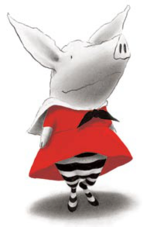
Olivia, by Ian Falconer Have you met Ian Falconer's spunky pig Olivia

Would she have been just as quirky and charismatic with a name like Patty Pig?

You'll want to avoid these 5 critical mistakes to make sure you're creating a character kids can get into.  Without a character we love, the greatest plot in the world is worthless.

1.  Avoid alliteration

Patty Pig, Danny Dog, Ronald Robot, Big Bad Bertha, Eddie the Engine... with very few exceptions, alliterative names are terrible names, and editors tend to cringe when they see them.  If there's one thing that's the mark of an amateur, this is it.

2.  Don’t fear strange, ethnic or regional names

image Remember the story of Tikki Tikki Tembo-no Sa Rembo-chari Bari Ruchi-pip Peri Pembo?  Certainly, if you have read it, you'll never forget his name!
That said, check to make sure the name you're using is authentic.  Tikki Tikki Tembo author Arlene Mosel neglected to do this, whether intentionally or not.  There is no such Chinese name, and apparently, many other "Chinese" details in the story are actually Japanese.  The tale itself may come from a Japanese folktale.

Thursday, March 19, 2015

Are you racist – and you don’t even know it? 3 easy ways to fix it.

image

You know you’re not racist.  But do your readers know it?

Check your writing for signs of these 3 mistakes.  They’re probably there unintentionally, but rest assured that readers will find them – and take it personally, even if you didn’t mean any harm.

Be prepared to root out these problems wherever you find them.  Let’s try to create books that accurately reflect children’s reality, regardless of their skin colour or socioeconomic status.

Only one, or Tokenism

I’m sure you’ve seen this one before:  all the characters in a story are white… except one.  You can see the one black, or Asian, or East Indian, character hanging out in all the illustrations.  Maybe it’s one character in a wheelchair, or a girl in a hijab.  Or one character with some other type of difference, whatever it may be.

Yes, diversity is important.  But that doesn’t mean throwing in a single character of a particular “type,” simply to serve the goal of diversity.

QUICK FIX:

Thursday, February 26, 2015

Does your children’s book have series potential? Use this 3-step checklist to find out!

image

So your book is doing great.  You wrote it, released it, it looks terrific.  You’ve got a few reviews under your belt.  And now… it’s time for your next book.

Should you make it a brand-new story?  Or should you write a “sequel” – spin off a series that somehow picks up where your last book left off?

Series books are proven winners in lots of ways:  26 of Amazon’s 100 Children’s Books to Read in a Lifetime (that’s over 1/4 of the best kids’ books of all time) are series books.  Kids love them, teachers love them, librarians love them.  And writers love them, too.  Why?

Once kids are hooked on a series, they’ll read them one after the other, devouring them like Cheetos.  If my kids are typical, and I think they are, they’ll often go back to the beginning once they’ve read them all.  Series books also look great lined up side by side on a bookshelf (or in a bookstore!).

image

(Once you have a basic cover idea, it’s easy to think up clever variations!)

Will your book make it as a series?  Here’s a three-step checklist to help you identify the most crucial elements that you’ll need to help turn it into a franchise instead of just a single standalone book.

1. Distinctive Character

image Think about your favourite children’s-book series.  Now… who was the main character or characters?  Arthur?  Madeline?  Frances?  The Baudelaires?  Greg Heffley?  Franklin?  Olivia?

The books that stand out – and the series that succeed – are usually the ones with a very strong lead character.  Strong as in unforgettable.

Olivia (fictional pig).pngThink about Olivia, from the books of the same name by Ian Falconer.  She’s a cute pig, but there are a million cute fictional pigs out there.  Actually, Olivia isn’t particularly cute, but the drawings are strong and distinctive, as is her personality.  I mean, she loves opera.  How cool is that?

Is your character unforgettable?  If so, read on…

2. Distinctive Setting

Your character’s world should be compelling enough to make you want to spin more than one story in it.

Thursday, February 12, 2015

What's your story REALLY about? (Hint: forget the forest, just show us a tree.)

image

I’ve figured out how to get rich.  What’s the secret, you’re wondering?

I’m going to make folks hand over a nickel every time they say:

  • “I’ve written (or I’m writing) a story about bullying.“
  • “It’s a kids’ story all about grief.”
  • “This is my book about divorce and/or remarriage and/or gay families.”
  • “It’s an illustrated picture book about eating right.”
  • “I’m writing a story about consideration / politeness / good manners.”

You get the idea.  These are all great concepts, each and every one.  But they are also all lousy kids’ stories.

The truth is, they’re not stories at all. 

Because a story is not about the great big FOREST that is your concept.  A story is about the tiny, individual trees that live in the forest.

Finding the trees in the forest

Have you made this mistake?  I know I have. 

Wednesday, September 3, 2014

How I ended up writing a Bible story (and why you might, too).

Excerpt from Writing the Bible for Children:  How to write blazing Biblical stories and picture books for kids.
I never write a story I don’t love.

But sometimes, it’s possible to write a story you don’t like very much, at least at first.  Stories can grow on you surprisingly quickly.

The scrawny chicken baby


Years ago, I wrote a personal essay about how I didn’t bond with my daughter instantly.  She was a preemie, scrawny and demanding, her wail high-pitched and insistent.  Her birth was unexpected, my marriage was in trouble; it just wasn’t the best time in my life to have a baby, and then she was whisked away to the neonatal ICU moments after birth. 

Trust me, it wasn’t the best setting for mother-baby bonding.

Yet I fell in love with my daughter anyway, albeig on her second day, because the first was just so crazily difficult.  That story, one of my most successful, was later anthologized in the book Chicken Soup for the Mother-Daughter Soul.

The fact that editors loved it, that it sold almost instantly tells me two things:  one, I’m a great writer (yay for modesty!) and two, a lot of people have gone through that experience of not bonding instantly – of falling in love with their baby a little late but just as deeply.

(That daughter, who will turn 19 soon, has never forgiven me for referring to her as a “scrawny chicken baby” in the story.  She doesn’t care that there’s a happy ending!)

I mention this because you may experience the same thing with a Biblical story.  Or perhaps with all Biblical stories.

Most of them are hard to love, at first.

Most of them are pretty scrawny, for one thing.  From a modern perspective, they’re short on details:  there’s almost no attention to basics like character development, establishing the setting, or on making sure the thing flows from one narrative to another. 

If it wasn’t God’s book, you could easily imagine it getting one or two stars on Goodreads or Amazon.

Wednesday, July 9, 2014

Christian without the Cringe: 5 ways to craft stories with spirit

image

Are you Christian? 

If so, you’re right up there with 76% of Americans who believe in some form of Christianity

But I’m not.

Our family is Jewish, and I’ve written about writing Jewish children’s books a few times before.  I thought it would be both fun and fair to my non-Jewish readers to offer a bit of breadth and invite a friend to talk about her approach to writing Christian children’s literature.

Polls show that more than 90% of Americans believe in God. 

They may not all be deeply devout, but many are, and that means hundreds of thousands of parents looking for books that reflect their own family’s values.

This is a major market.

I’m not deeply sad that I don’t get a slice of this pie, but I’m happy to be able to share her tips to help you reach these families, if that’s part of your writing goal.  With these 5 tips, I hoped to help you turn out books that are Christian without the “cringe” factor. 

You know what I’m talking about, right?

But then I read her post, and realized it wasn’t just for Christian writers. The rest of us need to read this, too.

Monday, June 30, 2014

Stuck in the middle? 6 cheats to get you out of your bind.

3779719335_b1a8745502_z

We’ve all been there.

You start a story, typing furiously in an attempt to get the words down as quickly as they are flashing through your mind. Then your fingers come to a screeching halt. Staring at the screen, you are stuck in the middle of the story wondering what happened to that inspiration. Get it back.

Here are 6 “cheats” that can pull you out of the glue when all you see is stuck.

Monday, June 16, 2014

Seven “story renovations” that will make your book great.

image

You know what breaks my heart?  When I hand my story to a reader (an honest proofreader, please!)… and they read the story. 

Here I am, and I I love the story, so I’m all, like, “well?  well?” … and they say, “I liked it.”  That “like” breaks my heart.  That is the “like” that is not love… it means my story’s not good enough.

Has that ever happened to you?

Sometimes, little changes aren’t enough to bridge that disconnect between the story unfolding beautifully in my mind and the story on paper that will make readers say “wow.”  That means your book (and mine) needs a big change.

Don’t be afraid to overhaul your book.  If they can pull up scaffolding and repaint the Sistine Chapel, surely you can take a pen – or keyboard – to your story and have it, too, emerge renewed, recharged and more brilliant than ever.

Here are seven big changes that can take almost any story and make it stronger.  Save your first draft so you can come back to it if you need to… and then plunge right in to make your story better and stronger than ever.

1. Who’s the main character?

This one may be the scariest change to make.  At one point, I was working on a story with a child as the main character, except I was stuck with the story… until my teacher suggested making the main character an adult instead. 

Sunday, May 18, 2014

New life for old stories: 3 that have been done to death – and why you should write them anyway.

image

Searching for new ideas?  Give it up.  There are no new stories… as it says in the book of Ecclesiastes, “What has been will be again, what has been done will be done again; there is nothing new under the sun.” 

But don’t let that worry you.  Here are three books that have been written over and over and over… but which will always be fresh and interesting, with just a little spin.

Wednesday, May 7, 2014

Are your characters going nowhere?

road-166543_1920

It’s a pitfall even in adult books, but in kids’ books, where action is everything, going nowhere can be deadly.

But I don’t just mean walking around for no reason!  Your main character needs motivation; a great reason to get up out of his armchair (or bed, or couch, or floor), and leave the safety of “home “ (wherever that may be) for distant, more exotic, more challenging surroundings.

I’m sure you already know that the main character must solve his own problem.  But it’s not usually enough to have him “think” of a solution… far better if he can arrive there, on his own two feet (or wheelchair, or tank, or tenspeed).  A character who moves is more likely to be a character whose journey moves us (your readers). 

Here are 3 ways to make sure your characters really MOVE. 

Thursday, May 1, 2014

Why “write what you know” produces terrible books: putting a spin on reality.

clouds wtihin cloudsSome of the lamest writing advice is “write what you know.”  It’s lame because it doesn’t go far enough.  It doesn’t show you how to take what you know and make it exotic, exciting, delicious and fun.

These advice-givers fear that, like Shakespeare, we will set our stories in some exotic locale like Denmark or Venice (where Shakespeare himself never actually visited). That used to be acceptable, back when travel was rare and you might never meet an English-speaking person who had visited “darkest Africa.”  These days, when you can hop on a plane and be anywhere, and back in a week to tell the tale, you can’t just make it up.

Fair enough. I think we all have this urge to make our writing exotic and interesting. Indeed, we may even confuse ourselves into believing they are one and the same.

Why?

Because most of us lead lives that FEEL as boring as paste.

We get up, go to work, take our children to soccer practice or dance class… and when we get home and sit down to write, we think, “why would anybody want to read about all of this?”

So we spice it up a bit, in an unnatural way: set our story in a more interesting city or make the characters wildly different from ourselves. Before we know it, we have written a terrible story about people we don’t know or understand.

Thursday, April 3, 2014

Deconstructing the story: Mini-Interview with Writer/Illustrator Rinat Hoffer

image

Rinat Hoffer is probably the most popular and perhaps prolific children’s-book author in Israel today. But for me and my kids, she’s something more – a friendly, fun bridge to Israeli culture and life in this strange, busy, modern country.

We first “met” her books back in Canada at our local public library. I can’t tell you how long it would take me to pick books from their Hebrew books shelf.

Before continuing, I just want to show you what MOST of the Hebrew kids’ books that I found looked like inside:

clip_image006

Yes, they really were this bad.  And this is one of the good ones.  I mean, the bunny and girl are kind of cute.  It’s just dated, with little sense of design and overly dense text.

The language inside (and these are kids’ books, not War and Peace!) was almost as incomprehensible to me as it is to you (unless you’re fluent, in which case, skip to the end – there’s a video). And the art… well, growing up with many of the classics of modern kidlit, something was definitely lacking.

Even back in Canada, Rinat helped change my mind completely.

Monday, March 31, 2014

Do talking animals make our kids dumb?

image In case you don’t feel like reading on, the answer is no.

But the question has been raking up headlines all week anyway, thanks to a University of Toronto (my alma mater !  so proud !) study proving that they do. 

Or at least, kind of proving they do. 

As it turns out, what they’ve done says very little about children’s books – in particular, not much we have to pay attention to as writers or as parents.

But along the way we can have a bit of a laugh looking at the samples of the stories they used, and looking at examples of talking animals who help our kids learn… so keep right on reading!

The Claim:  Talking Animals Hinder Learning

These results indicate that anthropomorphized animals in books may not only lead to less learning but also influence children’s conceptual knowledge of animals. (read the full study here)

This kind of sensationalistic stuff adapts really well to headlines!

Saturday, March 22, 2014

Three tips to write kids’ rhymes that don’t suck.

I’ve talked about rhyme before… but today, I’m here to help you make your rhymes better.

Let’s imagine we’re writing a cute rhyming book about a little penguin named Bridget.  Here’s Bridget:

Let’s introduce her – along the with the central story problem – with a rhyming couplet:

Bridget’s a penguin who lives by the sea
But when it comes to fish, she’s rather picky.

We’re off to a great start, except…this rhyme sucks.

Here are three tips to tweak your own rhymes and help make Bridget’s story great along the way!

Sunday, February 23, 2014

For the win: kill the parents, save your story.

image What do all these children’s books have in common?

  • A Series of Unfortunate Events
  • Anne of Green Gables
  • The Secret Garden
  • Harry Potter
  • Pippi Longstocking
  • The Giver
  • Milkweed
  • Ballet Shoes
  • Great Expectations

Well, by now you’ve probably figured it out – right???  (If you hadn’t yet, the last one gave it away, I’m sure…)

Every single one of these books, many of them enduring classics, features a main character whose parents have – um – gone to the next world.

Tragic, isn’t it?

Or it WOULD be tragic if the books themselves weren’t so terrific because of it.

Why do orphans make such great main characters?

We love these books so much because orphans are forced to fend for themselves.  If they do have a guardian, the guardian is often either incompetent, unaware, or simply not emotionally connected to the main character.

And this is GREAT for your story!

Why? 

Thursday, February 20, 2014

5 Quick Fixes for Point of View (POV) Pitfalls.

POV pitfalls can be a real PITA, a total pain in the abbreviation.  POV means point of view, as in what your character sees and says. 

With these five quick fixes, you can get your story back on track and make sure it stays that way.

1.  Pick a character, any character

This is a big issue for writers who start with a story in mind that they’re dying to get down on paper.  They charge through, writing the story full speed ahead, but when readers get a chance to take a look, it doesn’t click.  They hate it, or, more likely, just can’t get into it.  What’s going on?  You haven’t picked a clear, consistent “POV character.”  Somebody has to tell us the story.  (What’s that?  You’re telling the story?  Not good enough.)

Quick Fix:

Choose one character who’s in a great position