Showing posts with label money. Show all posts

Wednesday, February 7, 2018

Make Research Pay: Turn “leftover” ideas into nonfiction children’s magazine articles

image

Do you groan whenever anybody suggests that your story needs more research?
Does the idea of diving into books and Wikipedia pages, old newspapers or archives bring back nightmares from high school, college, or some other period in your life?

I've been doing a lot of research lately for a chapter book I'm writing that takes place in medieval Egypt.  The subject is fascinating, I love it, but along the way, I've accumulated a ton of information locked up here in my mind... and nowhere to let it out.

Sure, I could write another book.  But I was looking for a quick way to use that information in a way that could help my career as a children's writer.  So I sold it to a kids' magazine, and now those ideas will have new life and reach a lot more kids than my book probably will.

The Problem with Research

I want to explain how, but let's back up a step or two for a second to talk about research overall -- and then I'll share some ideas for how you can make your research pay.

Even if you love writing, heck, even if you love how research gives your writing more depth and authenticity, you probably know at least three things about research already:
1) It's a lot of work - even if you love the topic
2) It eats up a lot of time - especially if you wind up going down all kinds of rabbit holes, as always happens to me
3) You can't just dump all your research into your manuscript or you'll kill readers with boredom!

This last point is most important:  even the most important research isn't always relevant to the story you're telling.  Which means that a lot of research, fascinating as it may be, is going to turn out to be a waste of time.

image

(This is me, researching my book!)

imageIn this interview with Writers' Digest, Andy Weir, author of The Martian and now Artemis, talks about his in-depth research process.  You can see there how much work he has put into researching every single detail for Artemis, the economics of the moon colony and space travel and whatnot, just like he spent years (while working full-time doing something else!) researching the science of Mars exploration for The Martian.

Dealing with “Leftovers”

Now, if Weir had tried gathering up everything he discovered and tossed it into the story, he wouldn't be the bestselling author he is today. 

So what do you do with everything you find when you research?

Well, you weave it

Friday, June 26, 2015

How to have fun collaborating on a kids' book–with a kid

image

Hand in hand in hand in hand.  Collaborating on a meaningful book project together – why not?

The image is so beautiful.  Jodi Picoult writes with her daughter.  So maybe you’re wondering:  why can’t you write a children’s book with your son, niece, granddaughter, cousin, or any other kid you happen to have nearby?

image

(Jodi Picoult and her daughter, Samantha Van Leer, who have written two books together.)

The answer is a resounding yes.  YES!  Absolutely, you can.  You can write a book together, and have tons fun doing it.  Sure, you’ll both learn a lot, too, but shh… keep that part under wraps.  You don’t want it to seem too educational.

Kids adore making books.  More than just another boring creative writing project, they sense that by creating a book, they’re onto something important.  They’re bringing something wonderful into the world.  And you know what?  They’re right.

Follow these DO’s and DON’Ts to make sure you’re not disappointed, and that you both have fun from start to finish.

DO pick realistic goals ahead of time.

What’s your definition of success?  Be honest.  Pick a definition you can both agree on. 

Thursday, June 11, 2015

5 survival tips for the long, uphill journey to a finished book.

image

You’re standing at the foot of a mountain.  Don’t look up, or you’re done for – there’s just so far to climb when you’re just starting out.

I started a new nonfiction book this week.  I love writing them, gathering photos, putting the information together.  But it’s soooo much work.

Short picture books come easily, but longer stories, like chapter books, are an uphill slog.  Some chapters in a longer book are fun to write – others, not so much.  And when I’m right at the beginning… well, some days I feel like I don’t have the strength.

Does that happen to you, too?

Here are some ideas that get me up that mountain.  I’d love to hear yours, just leave them in the comments at the end of this post.

1.  Sit down and write

“Writing is a struggle against silence.”
― Carlos Fuentes

Writer Cory Doctorow says, “Write every day. Anything you do every day gets easier. If you’re insanely busy, make the amount that you write every day small (100 words? 250 words?) but do it every day.” (read more here)

Monday, March 30, 2015

Illustrating your kids’ book on a shoestring budget: YES, you can! (here’s how)

image

Your book is perfect… now, do you know where are the pictures are coming from?

The other day at my SCBWI meeting (have you joined yet?), I mentioned my easy technique for creating a Kindle book from Microsoft Word, and I said, “you just take the words and pictures and pull them together in Microsoft Word.”  To which someone asked, “yeah, but where do the pictures come from???”

Everybody’s ears perked up.  Where DO the pictures come from?

You see, most of us are writers, not illustrators.  Some of us couldn’t even draw stick figures, even if our lives depended on it.

If you write AND draw, you’re lucky.  For most of us, writing is easy… and drawing our own pictures is an impossible dream.

But don’t worry – that doesn’t mean you’re stuck!  Here are three affordable ways (from cheapest to most expensive) that I’ve managed to get great pictures for my own books at prices that didn’t bankrupt me (yet):

1) Super-cheap:  Stock illustrations & photos

I told you a couple of weeks ago about how I get stock photos and illustrations for only $1 apiece… and sometimes, even less.  I really recommend you check it out.

Not every book is the right fit for stock photos, but sometimes, they can add a lot of fun to a story.  I’ve written a series of Jewish holiday children’s books illustrated with stock photos of animals.

Monday, March 9, 2015

How to illustrate a children’s book for $1 a picture or less.

image

The best price tag of all is free.  I’ve written before about finding and using free photos to create gorgeous children’s picture books.  (Don’t believe the haters; it really is possible.)

But what if you can’t find what you’re looking for at the free sites?

Stock photo sites can charge hundreds of dollars for a membership.  What a hassle, am I right?  That’s no problem if I’m The Huffington Post or some other big corporate website. 

But for little guys like us, it’s more than we’re likely to make back from all but the most successful kids’ books.  I really hope you will be that successful, but wouldn’t it be nice to keep that money in your pocket instead?

A stock image resource for the little guys

That’s why I want to tell you about a site I’ve been using for a while now that I absolutely love.  I think you’ll love it too.  Once you hear the name, you’ll understand what it’s about, start to finish. 

Ready…?  Okay.

It’s called Dollar Photo Club.

Why is it called that?  Um, because all the photos and images there are $1 each.  Totally simple, right?

It works with a monthly membership, so you get a certain number of “credits” each month; they roll over if I don’t use them.

Even though it’s called Dollar Photo Club, they have way more than just photos.

What can you find there?

There are lots of hand-drawn illustrations, ranging from cartoons to sketches and more.  You can even click on the name of an artist to find more in the same style. 

Monday, November 24, 2014

Caution, Rant: spammy spammers spamming stupid “Children’s Books” in their KDP listing title.

image

Every once in a while, I’ve just got to rant.  Maybe you know the feeling?

Today’s rant is about that growing breed of Kindle kids’ ebooks that have almost more title than actual book.  I’m sure you know the ones:  the cover of the book has maybe a five-word title, but the title of the book as shown on its Amazon listing is a mile long, like this:

Children books : MARGARET AND THE DONUT: (Explore the Galaxy kids book exclusive collection) (Super-Duper eBook)Sleep & Playtime Books(Short Story) (Bedtime ... Books for Babby & Toddler Readers #15) [Kindle Edition]

You think I’m joking?

Monday, November 17, 2014

$5 to illustrate your book? Yes, please! (a fiverr artist speaks up)

image

My post How to get your children’s book illustrated for $5 on fiverr inspired a veritable poo poo storm of hostility, not just from non-fiverr illustrators, but from many others in the children’s book world. 

That made me sad enough that I wrote a follow up post , Why hiring a fiverr artist for your kids’ book WON’T destroy the universe which inspired a poo poo storm of its own.

So when fiverr artist Eka Saputra, from Indonesia, stopped by to share his views in the Comments section, I felt he deserved a post of his own to hopefully bring some sanity to this stinky storm.

Here’s what Eka has to say:

After reading this post and the previous one, as one of freelance illustrator in fiverr, I can't stand not to post a comment to show you my perspective.

Friday, November 7, 2014

How’s that pigeonhole working out for you? The pros and cons of genre-hopping.

image

How does your pigeonhole feel?  Nice and cozy?  Warm and safe?

Yeah, okay, I’ll admit it.  I don’t like being in pigeonholes.  Maybe you don’t either.

I like to stretch my wings, kick my legs, and fly free, as the mood strikes.  Isn’t that what makes what we do art instead of just churning out ad copy (though there’s definitely an art to that as well).

There are two schools of thought when it comes to “genre-hopping.”  

Friday, October 31, 2014

Write better, sell more books. Under a buck.

image

Want to write better?  Want to sell more books?  All for under a buck?

Of course you do.

It doesn’t matter whether you’re writing children’s books, blogs, or full-length adult nonfiction (or anything else).  The basics of writing and publishing in a digital age are exactly the same.

Lots of self-proclaimed “experts” will tell you how you can cash in on some kind of digital gold rush, but they’re all lying to you.  Their tips are gimmicky and most won’t hold true for more than a few months at a time.

Just in time for NaNoWriMo, two bestselling writers and one exceptionally prolific writing team have put together the Indie Author Power Pack.  It’s coming out November 3rd, but if you buy it now, it’s 88 cents.  That’s 88 cents for three books. 

This is easily the best 88 cents you will EVER spend on your writing career.

I literally stumbled across this today on Amazon, so I have no clue how long the presale deal’s going to last.

My current favourite, Write, Publish, Repeat (which I bought in audiobook, but have never sat down and read), alone must be over 100,000; it’s a monster (check out my review of Write Publish Repeat, plus my interview with its author, writer dad Sean Platt).  And it costs $5 all by itself. 

Again, the bundle is 88 cents. 

Get the deal here.

NOTE:  US-based viewers may see a price of 99 cents.  I wrote and published this post before I thought to check how it showed up here.  Here’s a screenshot of how the site comes through at my end:

image

(Which is funny, because usually we pay MORE outside the U.S.)

Let’s take a look at the math.

Write. Publish. Repeat., by Sean Platt and Johnny B. Truant Let's Get Digital, by David Gaughran How to Market a Book, by Joanna Penn

That’s at least $15 worth of ebooks, and these aren’t some second-run thing put out by fly-by-nights who don’t know what they’re doing.  These are the superstars of self-publishing, who have been at it for years and want to share their ideas with you..

I just bought the bundle, and I can’t wait until it comes out.  You should, too, even if you already own one (or two) of the books.  Here’s your last chance for this post…

Get the deal here.

If you do get it, or if any of these books have helped YOU, let me know in the Comments.

Thursday, October 30, 2014

Dear Amazon, what’s up with my Kindle prices?

image

How much thought do you put into pricing your books?

If you’re like me, it’s a lot.  Which is why it finally drove me around the bend that Amazon has been changing all my prices, without even asking nicely.

When you’re pricing a book, you probably pick a nice, clean number with a 99 on the end, a suffix that is invisible to consumers.  If a book is $8.74 (unless it’s clearly marked down, like from $9.99), it’ll stand out and look weird.

Know how I know?  Because for a long time, I’ve noticed that Amazon prices for my KDP ebooks look terrible.  They totally jump off the page.  Oh, they’re close to the numbers I’ve picked… but not exactly.  And that has slowly been driving me mad.

Just to pick a few titles at random, the prices were $5.11, $1.12, $5.14, $1.13.  Those are terrible numbers, numbers that jump off the page and make a buyer reluctant to buy.  That’s very frustrating, especially because I KNEW I’d priced them at $4.99, 99 cents, $4.99 and 99 cents. 

Why bother planning your prices if they’re just going to change, am I right? 

What’s going on here?

I eventually found out why this happens.  If you’re outside the United States, Amazon can tell from your browser’s IP address, and they adjust the price you see accordingly.  Without telling me, Amazon has been detecting my computer’s location and adjusting the prices accordingly.

At least there’s some GOOD news:  buyers inside the U.S. will most likely see the right prices for your books, namely, the ones you’ve so carefully chosen in KDP’s dashboard.

To test this, I ran my author page through two “anonymizers,” sites that hide your current IP address so nobody can tell where you’re surfing from.  One was in Europe and one was in the U.S. 

Here’s what the pricing looks like from each location:

Books for kids by Jennifer Tzivia MacLeod, available on Amazon.com 

There are all those terrible prices!  But look what happens if you’re seeing the same page from the U.S.:

Friday, October 17, 2014

Have you joined SCBWI yet? (and why I did)

image 

Are you a member yet???

After a couple of years of putting it off, I finally joined the Society of Children’s Book Writers and Illustrators (SCBWI) at the beginning of October, and last week, my membership package finally winged (wung?) its way across the ocean and made it here to me.

Yes, it’s true.  I’m legit now.

image

Well, kind of legit.  They have a checkbox when you join that forces you to admit that, if you’ve self-published your kids’ books (even if you have been published for adult writing, which I have), then you are not exactly a “published” author.

That part didn’t feel so good.

Nevertheless, I was excited to have a good look through “the book,” the writing / publishing guide and directory that’s included with membership, but there wasn’t much there I hadn’t seen elsewhere.  There’s some good information about self-publishing, and a helpful guide to publishing companies as well as author services and other resources.

Monday, September 29, 2014

5 illustrated ways to overcome the “self-published” curse (and make your picture book look great).

image

Are you cursed?

Lots of writers would swear they are.

It’s sort of true.  There’s a “self-published” curse that makes many, many independent, print-on-demand and Kindle books look… bad.  Stinky.  Rotten.

Is yours one of them?

I don’t believe in curses, I believe in bootstraps.  I hope you do, too.

I believe that today every writer has a chance to succeed in publishing a kids’ book… by following these five tips (illustrated for your amusement) to help ensure that yours succeed.

Before you go on, here’s my confession:  I have made mistakes in all of the following areas.  Might be making them at this very moment.  Who hasn’t? 

That’s how we learn.

Let’s sit down and learn these five easy lessons (with illustrated examples by me!) together.

1.  Fonts – get serious.

There is a special place in purgatory for those who rely on Comic Sans to make their story seem childlike / innocent / fun.  Your book is made for reading… so make it readable. 

Script fonts can be hard to read, especially in large doses where there’s not enough whitespace around them.  Similarly, novelty fonts like this sawed-off-boards font make it difficult to read more than a little text at a time.  Finally, don’t mix more than three into your book.  I think the experts say four, per page… but I say three per book, so there.

image image

Sunday, September 14, 2014

Should you crowdfund your next book (on Kickstarter, GoFundMe, or PubSlush)? 3 reasons why not.

image

Should you crowdfund your next book (on Kickstarter, GoFundMe, or PubSlush or whatever tomorrow’s Next Big Crowdfunding Site happens to be)?

No.

Well, that was easy, wasn’t it?

Now we can all go home.

What?  You want me to defend that statement?

Well, okay.  Here are three reasons.

#1 Your crowdfunding project makes me feel spiteful.

I’m not saying this to be nasty, I promise.

I love you, I love writers, I want to encourage independent writers to get their books in print and live their dream.  Really… I do.

But if you publicize your crowdfunding project in writers’ circles, you’re going to get a LOT of people staring at your post, thinking, “I paid to publish my books, darnit; you should pay to publish yours.”

Either that or they’re just plain bored. 

Bored with writers who hang out online on facebook, LinkedIn, and anywhere else writers hang out, telling me to fund their book… when they ought to be writing. 

Another question that may just cross our mind when you announce your crowdfunding attempt: 

Sunday, August 17, 2014

Writer Dad: mini-interview with Sean Platt

image

Sometimes, it’s good to be backed into a corner.

Like us, staked out here at the corner of “writing kids’ books” and “self-publishing.” 

I live here, too.  And I love it.  I love sharing tools to create excellent children’s books, whether that’s tips on publishing, marketing, or actually sitting down and writing or editing the thing (and getting it illustrated).

Did I mention I have a guide coming out to self-editing your own children’s book?  I love every aspect of this process, even editing (and with this book, maybe you will, too).

But it does get lonely sometimes.

It’s a fun corner, but there aren’t a lot of us around.  We aren’t very high profile, and there aren’t many folks to keep us inspired.

image Then somebody like Sean Platt comes along, a proud indie author who makes his living and supports his family writing his heart out in science fiction, fantasy, nonfiction and more, to the tune of tens of thousands of words a week. 

Plus he does a couple of podcasts. 

Plus… (get ready for it)… he writes kids’ books.  But you’ve never seen his books, and he says you never will.  That’s because he writes under a pseudonym:  Guy Incognito, a name swiped from a Simpson’s episode.

“Most of my published work is for grownups, so it doesn't make sense for me to use the name ‘Sean Platt’ when writing for children.”

Thursday, August 7, 2014

Book Trailers for Dummies: does your children’s book need one?

image

No, I’m not a dummy. 

And neither are you.

And we’re not suckers, either.

So why does everybody make book trailers seem so complicated?  Why is everybody trying to sell us fancy-pants services that will help us sell our kids’ books with the help of video trailers?

The first and most important thing to know about book trailers is this:  nobody really knows whether a book trailer ever, in the history of the universe, made anybody buy a book.

Still, I’m a sucker for new ideas, and thought it would be cute to try doing a few for my new books. 

And it turns out they’re quick and easy.

Granted, mine don’t look totally professional (bit of an understatement).  But given the fact that each of the three I’ve made so far took under an hour and cost exactly $0 to create, upload and promote, I think this is an effort well-spent.  They’re hopefully not going to hurt sales, right?

Also, the more of them you make, the quicker you’ll probably get at it.

You’ll need a few things before you start.

  1. A free video editing program.  I used Windows Live Movie Maker.  The new one won’t run on my cheesy computer, so I downloaded an older version.  I think it’s 2.6-something.  You need something that can add titles; MovieMaker does this, but just barely.  (I’m sure there’s some built-in free equivalent if you’re a Mac.)
  2. A piece of music you like and are allowed to use free.  My go-to spot for this is Kevin McLeod’s site, incompetech.com, where you can find any type of music you care to use.  Remember to give him credit in your video!
  3. Still images from your book.
  4. Video shots (optional), either of you reading the book, kids reading it, etc.  I haven’t done this yet, but you can, and it would probably make the end result more interesting.

Take a look at my own trailers.

So how did my own trailers come out?  I’m going to let you judge. 

Monday, August 4, 2014

Why hiring a fiverr artist for your kids’ book WON’T destroy the universe.

image

Since I posted about how to get your children’s book illustrated for $5 at fiverr, many, many people have raised some pretty strong objections.

If you listen to these people, you might justifiably believe the world as we know it would come to an end if we buy illustrations through fiverr and similar sites.

But I’m here to assure you that it won’t.

Here are a few of their objections (some of which I share – read on):

“As a reader, I object”

I agree.

I read books, too. I hate poorly-illustrated books, and refuse to share them with my children. Bad illustrations are offensive.

And so many self-published books look terrible.

But if you read through my original post on hiring an illustrator through fiverr, you’ll see that I’ve given you a built-in way to avoid finding a terrible illustrator – although, of course, there’s always the chance that a good illustrator will draw bad pictures for you.

Sunday, August 3, 2014

How to get your children’s book illustrated for $5 at fiverr.

a great children's-book artist at work

(I got royally flamed for this post on various children’s book writer and illustrator message boards.  Once you’re finished reading, whether you agree or disagree, read my response, Why hiring a fiverr artist for your kids’ book WON’T destroy the universe.)

UPDATE #2:  A third-world fiverr artist speaks up.  An important post for anyone looking to have their book illustrated, whether through fiverr or not.

Written a book and now you need pictures?

Some of us have the artistic talent to illustrate our own books.

Some don’t have to think about pictures because they’re hoping to snag a traditional publishing contract (don’t even think about submitting a manuscript with pictures unless you’ve drawn them yourself).

For the rest of us… there’s shelling out for illustrations.  And one popular way to do that is through fiverr.

I’ve ordered and received literally hundreds of illustrations through fiverr now – and had mainly good experiences. 

Are you truly going to get away with spending only $5 per picture? Probably not… but that $5 price tag is going to help you out in a few ways, so keep reading.


Fiverr illustrations… step by step.

Here’s how I get my pictures done through fiverr:

1) Write a great book. I don’t even think about pictures until the book is just about perfect. Typos, maybe. But the plot and scenes should be finished.

2) Divide your book into pages. Don’t leave this to chance. You wouldn’t walk into a housewares store and say, “I need… some plates.” No, you need 8, or 12, or however many. So don’t wander onto fiverr with the vague idea that you need “some” pictures.

Monday, July 21, 2014

How are your books selling? A $5 book that can turn sales around.

image

Do you have a head for business?

You should. 

If you’re a writer, of any kind, your business – like it or not – is writing.

It doesn’t matter if your books are full of butterflies, fairies, nymphs, talking animals and whimsy.  Once you’re done writing them, if you expect them to do anything other than just

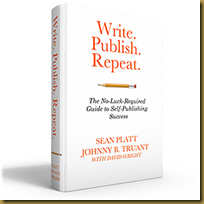
image And the best guide I’ve seen so far to building a writing business is a hefty tome (479 pages) with the hefty title Write. Publish. Repeat. (The No-Luck-Required Guide to Self-Publishing Success).

With a thousand-dollar title like that, you’d expect to pay maybe $17 for this gem, but I just checked and the current Kindle price is $5.58.

Sometimes, as self-publishing children’s writers, we figure we’re somehow exempt from all the messy business-type stuff that applies to other self-pubbed writers today.

We’re not exempt.

As a self-publishing (or, as they say, indie) writer, you have to keep your head on your shoulders and focus on the 80% of activities that pull in the vast majority of profits.  Don’t worry; writing is one of them.  Stuff like piddling around with facebook and blogs (oops) might not be.

Wednesday, June 4, 2014

FREE Kindle “Dinosaurs” e-book – today & tomorrow only!

image

Want a cool FREE way to check out your book’s competition?  Download it free from Amazon.  And sometimes, even if a book is not at all like yours, you’ll learn a thing or two.

I’m planning a full-fledged review of Emma Child’s high-quality self-published Kindle books (also recently featured in this post about using Internet and stock photos in children’s books)… but in the meantime, I didn’t want you to miss out, because her Dinosaurs book is FREE from Amazon today and tomorrow (June 4 and 5) only.

Click here to “buy” this e-book – absolutely free before June 5th.

Not to spoil the review but – though I have found several typos in her books – Emma’s doing a lot right and we should all take a look at her books if we’re planning to publish Kindle e-books.

In particular, what I enjoy (compared to some other Kindle e-books) is that the captions are part of the photographs, so they never scroll off the page.  Also, the facts are truly interesting, and don’t talk down to kids.

image

Anyway, it’s free, so get clicking, quick… you’ll never regret putting in work on those “comps”, I promise!

Tuesday, May 27, 2014

15 Kindle books under $10 that will help you write a great children’s book… and 3 to skip at any price.

image
I read a lot of ebooks these days, because we’re about a bazillion miles from the nearest English-language bookstore.  And like always, I love reading… about writing.  But I don’t love spending a ton on writing books.  It makes writing feel like a self-indulgent hobby, an extravagance.  So I’m always on the lookout for cheap, high-quality writing books.
Happily, there are many good books out there for not much money.  But how can you sift through them all and decide which ones are worth even the little that they cost?  Here, I’ve sifted through the cheapest and best I could find to offer you fifteen good ones and three stinkers.

What do I look for in a writing book?

First, here’s what I don’t look for - a few pet peeves I try to avoid, including:
  • Generic cover with a typewriter or something writerly that screams, “I’m going to spend all my time turning out a series of a dozen books on writing books… instead of writing books myself.”  Shudder.
  • Puns that promise you “the write stuff” or any other pun-ishing approach to writing it “write.”  Groan.
  • Books that start by telling you that “some people” think kids’ books are super-easy to write.  We know, we know.  Don’t lead with this – it’s not news.  Blah.
  • Out-of-date books that are re-released for Kindle with no new content.  Ugh.


Different genres of writing books

Before you buy any book, make sure you know what you’re buying.  The book’s description should tell you clearly what type of book it is:
  • Is it a “basics” book that will give prompts and help you actually write the story?
  • Is it an “industry overview” book that explains the business of publishing?
  • Is it a “nuts and bolts” book that tells you how to get your book ready for a specific format, like Kindle?
  • Is it a “promotion” book that shows you how to market a book you’ve already written?

None of these is the WRONG answer, by the way.  You need different books at different points in your life and even different days of the week.  If you’re not sure from the description of the book, be very wary.  Read reviews to try to find out.  Click to see the preview.  If you’re still not clear on what you’re going to get out of the book… give up and try the next one on the list.

The books

So without further ado (dontcha hate when they say “without further adieu…”?), I now present… the books.  I know I promised cheap Kindle books in the headline.  But I’m going to do you an even bigger favour and divide these books up into three price ranges:  super-cheap (under $2), way cheap (under $7) and still pretty cheap (under $10).  Beyond that, the books here appear in no particular order.

Super-cheap (under $2)

image

#1… $1.99 How To Write a Children's Picture Book by Darcy Pattison (Nov 28, 2013).  A terrific value even at a few bucks more, you cannot go wrong with this detailed book, that gets into the real nitty gritty of the writing and publishing business.  I OWN THIS BOOK.
image

#2… $0.01 The Business of Writing for Children: An Award-Winning Author's Tips on  Writing Children's Books and Publishing by Aaron Shepard (Mar 25, 2014).  As of this writing, it costs only one cent, way less than what I paid (I think $0.99 or $1.00?).  Buy it!!!  I OWN THIS BOOK.
image

#3… $0.91 Formatting of Children's Books and Comics for the Kindle, by Charles Spender (November 13, 2012).  The Amazon page for this book now directs you to this site (5th book down in the list) to download a free (& totally legit) copy.  What a nice surprise!  With 35 mostly-positive reviews, and a price tag like this, what are you waiting for?  I OWN THIS BOOK (now).

Way cheap (under $7)

image

#4… $2.83 The Easy Way to Write Picture Books That Sell by Robyn Opie Parnell (Oct 20, 2013).  Not my favourite, because I didn’t really click with her writing style and the book was a little basic for me.  She’s very enthusiastic, though – if slightly redundant in her advice.  This one is high on confidence but low on technical details.  A great suggestion if you’re just starting out.  I OWN THIS BOOK.
image

#5… $4.99 The Children's Writer's Guide by Simon Rose (Sep 22, 2013).  This one also falls into the category of good books for beginners, dealing with issues like naming your characters, turning ideas into stories, making time to write, dealing with rejection (important!) and more.  For under $5, it’s like a writing course in easy portable ebook form.
image

#6… $4.59 A Self-Publisher's Companion: Expert Advice for Authors Who Want to Publish by Joel Friedlander (Mar 24, 2011).  The only non-kids’-book specific book you’ll find on this list (and similarly, the only non-kids’-book-related blog on my blogroll, for the same reason).  If you ever hope to self-publish, Friedlander won’t steer you wrong.  You’ll get an overview of the publishing industry and what has changed with the advent of ebooks, as well as crucial lists of what self-publishers do wrong and how to fix them.  True, a lot of the pieces are available free on his blog, but come on - $5?  And most have been expertly revised to suit the book form and flow from chapter to chapter.  I OWN THIS BOOK.
image

#7… $2.87 Picture Books: The Write Way by Laura Salas and Lisa Bullard (November 13, 2013).  Recommended despite the “write” pun in the title.  This book deals with ten BIG problems that writers encounter when their stories meet up with editors for the first time.  It assumes you have a story that is already written and goes through this list of ten biggies step by step.  I love a book this focused and on-task, and as a result, this book is now ON MY WISH LIST.
image

#8… $6.28 Writing Magic: Creating Stories That Fly by Gail Carson Levine (August 27, 2013).  You don’t get much more cred than Levine, creator of such books as Ella Enchanted.  Mainly geared towards teaching middle-schoolers how to write, this book has clearly struck a chord with adult writers as well, judging from its positive reviews.  If you consider yourself an expert or advanced writer, this may not be the book for you given its young adult focus.
image

#9… $3.67 The Busy Writer's Tips on Writing for Children by Marg McAlister (November 22, 2012).  Another one I’d never heard of.  Amazon says the writer, Marg McAlister, has written more than 60 books for children – which may be, but not a single one is listed on Amazon; all they have is her books on writing for writers.  But she’s in Australia, which may explain this, and her own website, writing course, etc., look legit.

Still pretty cheap (under $10)

image

#10… $7.62 How to Write a Children's Picture Book and Get it Published by Andrea Shavick (July 29, 2011).  I admit, I hadn’t heard of Shavick or her book, but it looks well written enough, and her personal website is professionally done, which tells me that some effort has probably gone into the book as well.  If that sounds like it’s setting the bar pretty low, you should see some of the so-called writing books out there.
image

#11… $9.38 Writing Irresistible Kidlit: The Ultimate Guide to Crafting Fiction for Young Adult and Middle Grade Readers by Mary Kole (Nov 6, 2012).  I love it when bloggers write books!  You can check out their writing and the quality of their advice for free ahead of time.  Mary Kole is a pro in both areas, and this book is ON MY WISHLIST.
image

#12… $9.17 You Can Write Children's Books by Tracey E. Dils (Sep 10, 2009).  Another one that was new to me, but what an encouraging title.  Lots of great reviews, too, showing that this is a beginner’s guide that may be worth the (under $10) investment just to have on the (virtual) bookshelf.  While I haven’t read this book specifically, the Kindle edition is an update of an earlier book published by Writer’s Digest, so I expect that it is well-produced, slick and upbeat, like most of their other books… a format that was very, very encouraging to me when I was just starting out.
image

#13… $9.18 The Everything Guide To Writing Children's Books by Lesley Bolton (Dec 1, 2002).  Looks like a solid overview from this company, that publishes “For Dummies” style intro books, and offers a glimpse of the process of creating kids’ books.  Most of the focus is on traditional publishing, with only a brief, discouraging (and perhaps slightly outdated) nod towards self-publishing.
image

#14… $9.17 The Nuts and Bolts Guide to Writing Picture Books by Linda Ashman (September 25, 2013).  With a ton of published kids’ books under her belt, Linda Ashman feels like a writer you can trust.  Plus, blogger Julie Hedlund says it’s full of “juicy goodness”… how can we resist?
image

#15… Okay, at $10.15, How to Promote Your Children's Book: Tips, Tricks, and Secrets to Create a Bestseller, by Katie Davis (March 22, 2014), is slightly over the promised price point (but then I gave you one free, so go easy on me).  This is one I haven’t read, but it’s on my wish list now for sure.  With 151 positive reviews (in just over a month?!), this book about a much-overlooked area is what I’d call an Important Read.  How about this positive review from Laura Purdie Salas, co-author of Picture Books: The Write Way (see above):  “I blog, Facebook, and do a lot of promotional stuff, including an online book launch, online teacher extension materials, etc. But Katie's book still offered me tons more ideas for things I want to check out”?  Come on… it’s only $0.15 over!  ON MY WISH LIST.

…And 3 to skip unless they’re free

(and even then, probably skip them)

Why avoid these books?  Even a cheap book isn’t free if you think about the time you have to put in reading it.  Why throw your money away on a book that offers you cheap information that you can find either on the writer’s blog or, worse, on someone else’s – because they’ve just ripped it off and/or spun it to create their book.
image

#1… $4.71 Publish Children's Books - How to Self Publish and Market Your Kids Books by Caterina Christakos (Sep 1, 2013).  See that image of money bags on the cover???  Yeah, that’s you, raking in the dough over your little rhyming nursery story – NOT.  What a weird cover.  At only 18 pages, this is way too short to call a book.  A pamphlet, maybe?  Just from the preview, I can tell that the writer has no clue how to use a comma, and she uses every opportunity to hype her own book, How to Write a Children’s Book in 30 Days or Less! – which, by the way, has many bad reviews and is apparently full of typos.  Her only children’s book visible on Amazon begins with the sentence, “In every baby’s life, their comes the time when they get to meet their very own guardian Angel.”  Groan…
image

#2…$1.00 Writing Guide: RIGHT FOR KIDS: 333 One Sentence Tips and Tricks on the Art and Business of Writing Picture Books for Children by Tom Skinner (June 29, 2012).  This book is chock full of three hundred and thirty-three one-liners like, “The industry is very competitive and full of talented professionals,” “You can do it!  (With a few tips + bit of study + practice),” and “A picture book is simple.  And simply irresistible.”  Guess whose book I’m resisting very easily right now?  Pretty easy to avoid given that he has a chapter called “COZ HE WOZ.”
image

#3… $2.88 Writing Books for Children and Youth (Boot Camp for Christian Writers) by Carolyn Tomlin (Dec 19, 2013).  It’s not the religious aspect of this book that turned me off.  It’s the near-illiteracy of its sweeping generalizations (“There are some writers who look at trends – including what topics are being discussed in the media?” “Writers for children’s books would be wise to know the breakdown of the publisher you wish to submit your work”), and the lack of writing cred of the author.  Despite this lack, she offers copious examples – including a full-text excerpt – from her own single children’s book (“Matthew smiled when he thought about all of his different friends.  They all looked different from him.  Some had dark skin, others light.” Can you tell yet that the book is about multiculturalism??  In case you missed it, how about, “On the next block lived Matthew’s African American friend, Lakesia.”?).  And in case you’re looking for a Christian perspective, I couldn’t find any in this book except in the aforementioned excerpt.

*All prices are as of this writing.  Amazon pricing can fluctuate randomly from day to day and even from minute to minute.

Did I forget to include your favourite book?  Let me know in the comments!