Showing posts with label diversity. Show all posts

Wednesday, June 6, 2018

Am I diverse yet? Why there are no Jews in diverse books

image

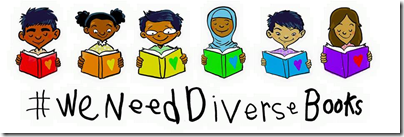
If you've been out of the loop in the world of children's publishing, you may not be aware that the big, huge deal right now is Diverse Books. The battle cry for this movement is "We need diverse books."  Diverse books are good because they show kids "people who look like themselves" in the pages of children's literature.

Google "diverse books" and you'll see all kinds of cute pictures of kids--utterly heartwarming.  This is a Very Good Thing, as far as I’m concerned.

Here are a few examples:

image

(From We Need Diverse Books website)

image

(From The JJK Blog)

image

(From the We Need Diverse Books Indiegogo page)

Cute, right?  All of them are cute.  Just to recap: what do we see

Monday, June 4, 2018

Why translation isn’t magical: What you MUST know before you translate your book into English…

image

The US market needs diverse books, and that includes the voices of those who live elsewhere, speaking other languages, and living different lives. It’s also great that authors are willing to invest money, time, and effort. If you believe that strongly in your book, there’s a chance it can succeed.

But not if you rush into submitting it the second it’s translated into English.

Working as a translator for the last four years, unfortunately, I’ve met many writers who believe that all it takes to break into the U.S. market is to translate their book into English and sit back waiting for offers to roll in.

Unfortunately, translation isn’t a magic bullet that’s going to shoot your story straight into the heart of an agent or publisher.  And even if you self-publish, having your story translated into English is not a guarantee of success.  It’s not a magic wand that you wave to let those big US bucks start rolling in.

So I want to ask you to pause, just for a second, and ask yourself: Is my book ready to translate? Am I giving it the best possible chances of success?

Here are three issues you might want to consider first.

1. Physical expectations

Be absolutely certain that you know what publishers in the U.S. market are expecting. The standard for picture books is 32 pages, and word count ranges between 600 and 800 words (plus or minus). However wonderful your book is, if it doesn’t look and feel like what they’re expecting, agents and editors will be far more likely to say no without giving you a fair chance.*

To be submission-ready, your book should also be in “bare naked” format—a plain font like Arial or Times New Roman, 12 points, double-spaced, with no fancy graphics. Understand the basics of English punctuation, which may be different from what you’re used to. Sure, your translator should know this, but

Monday, July 13, 2015

Forever young: 20 famous children’s authors still working hard after 65

image

Years ago, the age of 60 marked a threshold in a person’s life.  Not anymore.  Today, 60 is just the beginning.  For many authors, including independent, self-publishing authors, it’s the start of the most productive years of their career.

Why?

Easy:  we’re busy doing other things.  If you start having a family in your 30s, then you’ll be in your late 50s before they’re all up and out (if you’re lucky).  Plus, until age 60ish, you’re probably working like crazy and perhaps caring for elderly relatives as well.

It’s a tough time to sit down and write a book (though you can still find time to write if that’s where you are in life!).

An ancient Jewish teaching says that “at fifty, one can give counsel; at sixty, one attains old age, and at seventy, fullness of years.”  This is because King David died at 70, which the Book of Chronicles (29:28) says, “And David died at a full old age.”

Forget about that.

Thursday, March 19, 2015

Are you racist – and you don’t even know it? 3 easy ways to fix it.

image

You know you’re not racist.  But do your readers know it?

Check your writing for signs of these 3 mistakes.  They’re probably there unintentionally, but rest assured that readers will find them – and take it personally, even if you didn’t mean any harm.

Be prepared to root out these problems wherever you find them.  Let’s try to create books that accurately reflect children’s reality, regardless of their skin colour or socioeconomic status.

Only one, or Tokenism

I’m sure you’ve seen this one before:  all the characters in a story are white… except one.  You can see the one black, or Asian, or East Indian, character hanging out in all the illustrations.  Maybe it’s one character in a wheelchair, or a girl in a hijab.  Or one character with some other type of difference, whatever it may be.

Yes, diversity is important.  But that doesn’t mean throwing in a single character of a particular “type,” simply to serve the goal of diversity.

QUICK FIX:

Friday, November 28, 2014

GUEST POST: Moving Small Stones: Closing the Diversity Gap in Children’s Books

image

Welcome to my stop on The Secret Life of Jenny Liu book tour!  (Want to check out all the stops?  Here’s a list.)

Today, you’ll discover a tasty new middle-grade chapter book, and hear from its writer about why diverse books matter. 

What am I saying?  You’ve probably heard the buzz about diverse books already. 

But are you convinced yet?

Jean Ramsden is.  These days, she’s connecting with her readers one-on-one.  And she’s hearing from them how much it means to kids to see characters “just like me” in the books they read, on the covers, on the pages of magazines and on TV.

Jean’s book, The Secret Life of Jenny Liu (Jam & Jabber Books, 2014) is about an 11-year-old Chinese-American girl who defiantly refuses to be a stereotype.  When the world tries to shove her into a box, she bursts free and discovers she has the strength to be unique. 

The book confronts all the stereotypes head-on – Jenny is Asian, but she’s no good at math and spelling, and she’s not the piano whiz her teacher and slightly-tiger mom hopes she’ll be.  I loved watching Jenny solve her own problems, finding balance in her own life and helping others along the way.

So why do diverse books matter?

Let’s let Jean speak for herself…

Moving Small Stones: Closing the Diversity Gap in Children’s Books

The Secret Life of Jenny Liu, by Jean Ramsden The fury of activity following my book reading had subsided—questions had been answered, books had been signed, kids and their parents and teachers had moved on to the next event—when a girl holding her copy of my middle-grade contemporary book, “The Secret Life of Jenny Liu,” approached.  

Thursday, May 1, 2014

Why “write what you know” produces terrible books: putting a spin on reality.

clouds wtihin cloudsSome of the lamest writing advice is “write what you know.”  It’s lame because it doesn’t go far enough.  It doesn’t show you how to take what you know and make it exotic, exciting, delicious and fun.

These advice-givers fear that, like Shakespeare, we will set our stories in some exotic locale like Denmark or Venice (where Shakespeare himself never actually visited). That used to be acceptable, back when travel was rare and you might never meet an English-speaking person who had visited “darkest Africa.”  These days, when you can hop on a plane and be anywhere, and back in a week to tell the tale, you can’t just make it up.

Fair enough. I think we all have this urge to make our writing exotic and interesting. Indeed, we may even confuse ourselves into believing they are one and the same.

Why?

Because most of us lead lives that FEEL as boring as paste.

We get up, go to work, take our children to soccer practice or dance class… and when we get home and sit down to write, we think, “why would anybody want to read about all of this?”

So we spice it up a bit, in an unnatural way: set our story in a more interesting city or make the characters wildly different from ourselves. Before we know it, we have written a terrible story about people we don’t know or understand.

Friday, April 18, 2014

Writing to change the world.

imageWhile I’m off enjoying Passover with my family, here’s another guest post, this one by an anonymous mom with strong feelings about the future direction of children’s books. :-)

In the past several years especially, the realm of children’s literature has made leaps and bounds in terms of diversity and promoting coexistence amongst our differences. But there are still topics that could certainly see a little more circulation in terms of popular children and adolescent publications, particularly when it comes to truly teaching youngsters about the dissimilarities of society.

Which of these do you think you could write about – and make a difference in kids’ lives?  (not to mention the world!)

Disabilities

Although picture books are not limited in portraying characters that need to use a wheelchair or crutches, few venture further into the territories of physical, emotional, or intellectual disabilities.

Sunday, March 23, 2014

Seven picture books that heal the diversity gap.

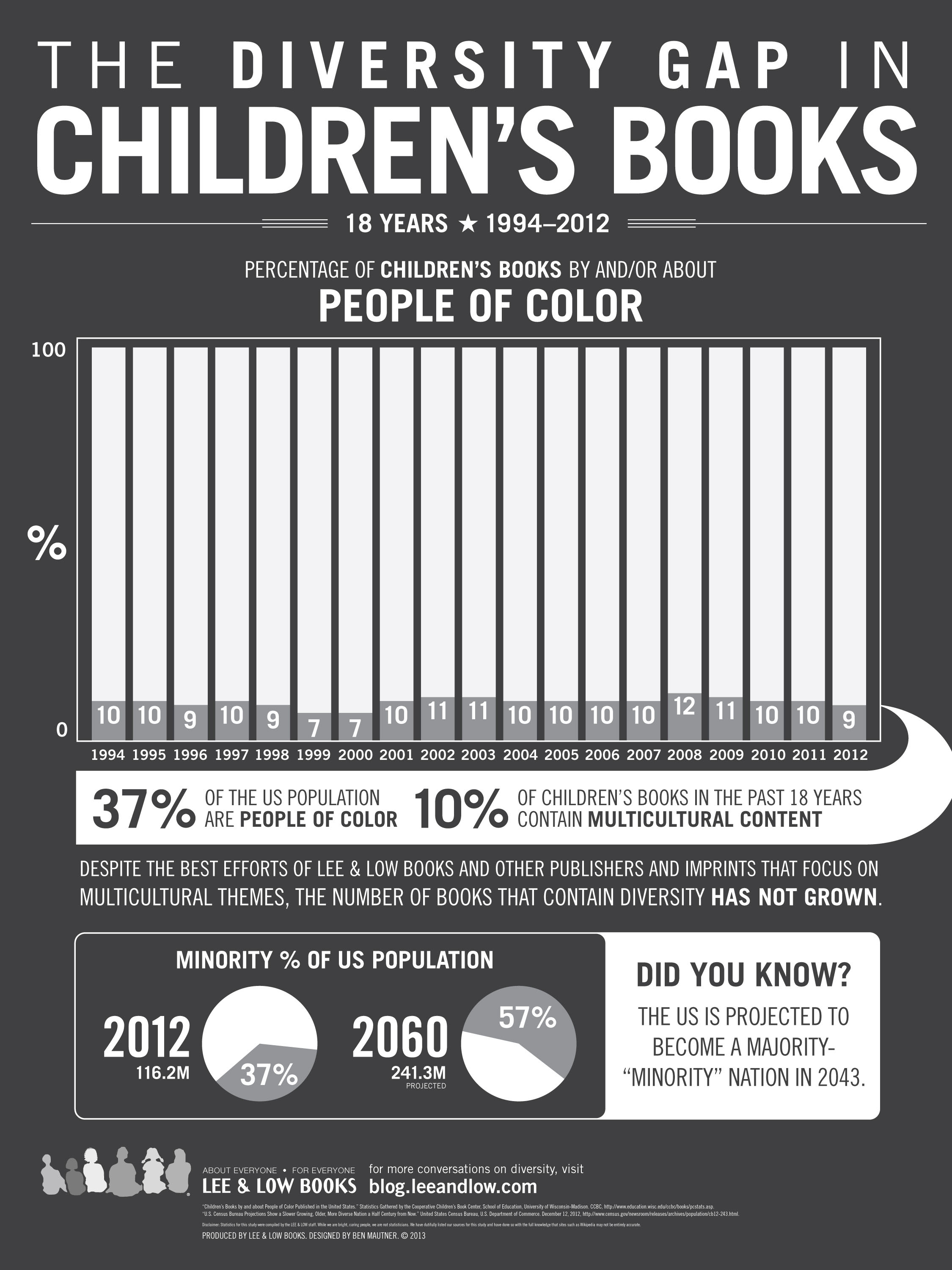
http://www.leeandlow.com/images/Childrens_Book_Infographic-lg.jpgLee & Low Publishers reports that the “diversity gap” in kids’ books hasn’t changed in the last 18 years – even though 37% of the U.S. population now comprises people of colour (a term I don’t like because it includes purple and cyan, but there you go). 

Pale-skinned people like me are slated to become a minority by 2060, yet up to 91% of kids’ books today are about people roughly the same shade as me & my family. 

This isn’t good for anyone – especially whitish folks like my kids, who look up from their reading to see a nation far more diverse than anything they see in books.

(True, we live in Israel, not the U.S., but yeah, it’s far more ethnically diverse than anything you might picture!)

The solution isn’t stocking up on books about black kids, written by black writers.  Change will only come when our shelves are stocked with TRUE diversity, books that reflect the true cultural context of our lives.  Books by every-colour authors, about every-colour kids. 

Not all-black or all-white, but a rainbow

Here are five “every-colour” books you can keep on your bookshelf and read to your kids to help them understand what a big, wide, wonderful world this is!