Showing posts with label inspiration. Show all posts

Thursday, July 27, 2017

If you want to write kids’ books–read, read, READ! (with 6 of this summer's favourites)

image

What’s the best way to ensure that you’re writing kids’ books that are relevant to today’s readers? 

When I say readers, by the way, you can assume I also mean all the gatekeepers between you and your readers: editors, agents, publishers, and anyone else who gets to vet your book before it’s approved for publication.

And the best way to make sure you’re writing the books they want to see is… to READ kids’ books.  A LOT of kids’ books.

Now – just to be very, very clear here, I’m not telling you a) to read books in order to copy them, or b) to read books in order to write more marketable books.  You probably shouldn’t be thinking about marketability as you’re actually writing your book.

But reading what’s out there on the children’s-book shelves will give you an edge in a few ways, by helping you answer the following questions for yourself:

  • Who are the protagonists of kids’ books today?
  • What kind of situations do they find themselves in?
  • What’s the art like?
  • How wordy are they?  (hint: not very!!!)
  • What kind of vocabulary do they use?
  • What kinds of resolutions / messages do publishers seem to prefer?

Now, if you’re like me and you live in a non-English speaking country, all of this puts you at a distinct disadvantage.  And even if you live in a totally English-speaking country, there are a few reasons you might not have visited your local bookstore or library lately. 

For example, many children’s authors are older parents or grandparents – you may have read a lot of kids’ books at one point, like when your kids were younger.  You just haven’t checked out new books recently.  But why should you bother?  Classics are classics are classics, and what makes a book great doesn’t change from one generation to the next… right?

WRONG.

Even when it’s difficult, you must check out what kids’ books are out there, not just to scope out the competition but to make your own stories stronger and more contemporary-feeling.

Here’s one tip that I sent around to my local SCBWI chapter a few months ago:  search for current popular kids’ books on YouTube.  We had just had a Skype meeting with a publisher in L.A., so everybody was fired up about writing books for a U.S. audience, but many people in the crowd weren’t really sure what that entailed. 

Fortunately, there are MANY popular kids' books being read aloud by native English speakers on YouTube, including many of the books the agent had placed on her recommended-reading list for authors submitting to her. 

Wondering what books she suggested???  Here are the two books she mentioned most:  Llama Llama Misses Mama (https://www.youtube.com/watch?v=9xB6i1ReuT8) (along with all the other Llama Llama books by Anna Dewdney!) and Dragons Love Tacos (https://www.youtube.com/watch?v=AUTmRJqwI_c).  I'm betting that whoever can write the next book like those will get a sweet deal from her publishing company!

I’m very lucky to be in Toronto visiting family right now, so I took this opportunity to walk into my local library last week to scope out (aka “take home half of”) the kids’ picture-book section. 

Here’s my haul:

image

These are all fairly recent.  I’d heard of two of these beforehand and was psyched to see them in stock:  School’s First Day of School by Adam Rex, and Yaffa and Fatima: Shalom, Salaam by Fawzia Gilani-Williams, from Kar-Ben, the same publishing company that published my book Yossi & the Monkeys.

The first of these, School’s First Day of School, has been on my wish list

Thursday, July 23, 2015

Beat the blahs with these zesty local story setting ideas

image

Think about a story you've written.  Where is it set?

Now think about where you live.  In the city, the countryside, a small town, a suburban hub?  A farm, a trailer, an apartment, a cottage, a motor home?  In North America, or Asia, or Chile?

Some of us naturally write stories set where we live.  In the vegetable patch in back of our farmhouse, or in the driveway of our one-storey suburban house, or the elevator to our twenty-fifth storey penthouse.

imageOther writers pick a location that's as exotic as possible.  If they live in Canada, they'll set their story in Thailand or Bengal or Nigeria.  (Or, if they're from Nigeria and live in Wales, like Atinuke, author of the lovely Anna Hibiscus series, they'll write a story set - in part - in Canada!)

While writing about a place you DO know well may sound dull, the truth is that some of the most-loved children's books take place in settings that are very similar to places the authors live or lived.  Places they know well, almost like the back of their own hand.

And the good news is that wherever you live, it's bound to be exotic to somebody. 

Right now, I'm visiting Toronto with my family, after nearly two years living in Israel.  This is my home town; I grew up here. 

Monday, July 13, 2015

Forever young: 20 famous children’s authors still working hard after 65

image

Years ago, the age of 60 marked a threshold in a person’s life.  Not anymore.  Today, 60 is just the beginning.  For many authors, including independent, self-publishing authors, it’s the start of the most productive years of their career.

Why?

Easy:  we’re busy doing other things.  If you start having a family in your 30s, then you’ll be in your late 50s before they’re all up and out (if you’re lucky).  Plus, until age 60ish, you’re probably working like crazy and perhaps caring for elderly relatives as well.

It’s a tough time to sit down and write a book (though you can still find time to write if that’s where you are in life!).

An ancient Jewish teaching says that “at fifty, one can give counsel; at sixty, one attains old age, and at seventy, fullness of years.”  This is because King David died at 70, which the Book of Chronicles (29:28) says, “And David died at a full old age.”

Forget about that.

Monday, July 6, 2015

3 ridiculously easy ways to get more words down on paper (a guest post)

image

We’re heading overseas for our big family vacation in Canada, so I’m turning over the rudder to the experienced hands of Australian writer Ruth Barringham, who’s here to talk about…

3 Ridiculously Easy Steps to Writing More

imageWe all have the same amount of hours in a day and it's usually not possible to complete everything on our daily to do list.

This is especially true when it comes to writing because not only is it something that we put off doing to last every day, but find it hard to concentrate because of the nagging feeling that we should be doing something else.

But what if you could sit down and write every day with 100% focus on your work and write more in the same time?

Is that something that you like to do?

Wednesday, July 1, 2015

The top-secret way to write more when you have young kids

image

School’s out!

Summer’s here, and if you have young kids, you know what that means: kids in your hair. 

All day long, and by evening, you’re sapped by family activities and running around.  Running, running, running.  They’re running you into an early grave… and you’re running on empty.

Where can you find time to write?

Some days (is this just me?), the thought of sitting down at the computer after a busy family-filled day is utterly, completely depressing.  I know there are disciplined writers out there who put in their 1000 words a day come hell or high water.  But I’ll admit it right now: I’m not always one of them.

Do you ever have a day when you feel like you’ve given them everything you’ve got?

I do.  Sometimes, I’ve given my kids everything in me and there is nothing – well, almost nothing – left.  But it’s that almost nothing that you have to take and squeeze out. 

Those very last drops of inspiration are sometimes the very sweetest.  

Giving more than 100%

Have you ever cut and squeezed a lemon? 

Friday, June 26, 2015

How to have fun collaborating on a kids' book–with a kid

image

Hand in hand in hand in hand.  Collaborating on a meaningful book project together – why not?

The image is so beautiful.  Jodi Picoult writes with her daughter.  So maybe you’re wondering:  why can’t you write a children’s book with your son, niece, granddaughter, cousin, or any other kid you happen to have nearby?

image

(Jodi Picoult and her daughter, Samantha Van Leer, who have written two books together.)

The answer is a resounding yes.  YES!  Absolutely, you can.  You can write a book together, and have tons fun doing it.  Sure, you’ll both learn a lot, too, but shh… keep that part under wraps.  You don’t want it to seem too educational.

Kids adore making books.  More than just another boring creative writing project, they sense that by creating a book, they’re onto something important.  They’re bringing something wonderful into the world.  And you know what?  They’re right.

Follow these DO’s and DON’Ts to make sure you’re not disappointed, and that you both have fun from start to finish.

DO pick realistic goals ahead of time.

What’s your definition of success?  Be honest.  Pick a definition you can both agree on. 

Thursday, June 11, 2015

5 survival tips for the long, uphill journey to a finished book.

image

You’re standing at the foot of a mountain.  Don’t look up, or you’re done for – there’s just so far to climb when you’re just starting out.

I started a new nonfiction book this week.  I love writing them, gathering photos, putting the information together.  But it’s soooo much work.

Short picture books come easily, but longer stories, like chapter books, are an uphill slog.  Some chapters in a longer book are fun to write – others, not so much.  And when I’m right at the beginning… well, some days I feel like I don’t have the strength.

Does that happen to you, too?

Here are some ideas that get me up that mountain.  I’d love to hear yours, just leave them in the comments at the end of this post.

1.  Sit down and write

“Writing is a struggle against silence.”
― Carlos Fuentes

Writer Cory Doctorow says, “Write every day. Anything you do every day gets easier. If you’re insanely busy, make the amount that you write every day small (100 words? 250 words?) but do it every day.” (read more here)

Tuesday, June 9, 2015

So you want to write a children’s book…? The ultimate Quick-Start tutorial.

image

When I started out writing children’s books, I was full of ideas, but I had no idea what to actually DO. 

Should I write the story?  Find an artist?  How was it all supposed to come together into an actual book?  Like I said, I had no idea.

You might be right where I was a few years ago, wondering how to get started.

I’ve put this quick-start guide together to help YOU skip over the mistakes I made.  I hope it’ll help give you a smoother launch into this incredible world of writing for children.

1. How can you write (or finish) your book?

You can’t do much until you have a finished book saved on your hard drive (or, if you’re the old-fashioned type, written down on paper).  Here are the basics, the least you need to know to sit down and get writing.

Monday, June 8, 2015

The seriously YOLO guide for children’s book writers and other grown-ups.

image

If you were around the Internet a couple of years ago, you probably came across the sleazy wad of letters that is “YOLO.”

It stands for “You Only Live Once,” and it’s basically an updated take on “carpe diem.”  Kids essentially used it to justify doing crazy and impulsive things in the name of enjoying their one and only go-round on this earth. 

But maybe you’re wondering how it can help us, as writers, and grownups, who are not so impulsive.

Even now, a few years after its heyday, the #YOLO hashtag is still alive and well on Twitter:

and and


Basically, if you see the YOLO hashtag, you’ll know the person’s doing something you probably wouldn’t do.

But why should teenagers have all the fun, and keep what’s actually kind of a great meme all to themselves?  Let’s take YOLO back and claim it for children’s authors everywhere. 

How can YOU channel the “spirit of YOLO” to help yourself succeed as a writer? 

Sunday, April 26, 2015

How to be a bolder, more confident writer (hint: don’t baby your book!)

image

Once upon a time (don’t worry; this is a true story), when my older kids were little, my dad took them out to the park.  I came along after a while and saw he was pushing my son alarmingly high on the swing. 

“Daddy,” I said, completely on edge, “that’s WAY too high.”

“That’s okay,” he said.  “You can always make more.”

In that moment, a) I knew he was going to ruin my son’s life by pushing him too high, and b) my father knew it was perfectly safe and I was being a silly first-time mom (albeit one with two kids, but it was still early days).

(The fact that I did indeed go on to make two more kids is irrelevant.  My father knew nothing bad would happen.)

That’s how it is with your first book, too.

Getting over the apprehension

You need to get over it.  Just as I did with my new-mom apprehension.

When I put out my first children’s book, I really cared about every aspect of it.  I laid it out as well as I knew how at the time.  I threw myself entirely into editing and the cover.  (Those things are as it should be.  I hope you do them as well.)

But

Friday, March 27, 2015

Best of the (Kids-Book) Writing Online this week: March 27, 2015

image

An occasional roundup of blogs and other writings for kids’-book writers and illustrators… stuff that’s inspiring me, so I hope you’ll enjoy it, too.

1. Are we turning teens into readers… or turning them off reading?

Over at Writers Rumpus, Marti Johnson asks, ”why is it that our high school age students abandon – no change that to – are driven from reading?”  Does required reading instill great habits, or just make teens resent books? 

I had spent two months of the summer prodding, pleading, arguing, punishing and bullying this 16-year-old into reading a classic that he will now abhor for the remainder of his life. I decided to read it. Well, I hated it too. As a matter of fact, I didn’t finish reading it. IMHO, it was AWFUL.

Read more from Writers Rumpus in How to Build Better Readers: IMHO

2.  Want to write a book with “Happy Birthday” in it?

Or any other song, for that matter?  Chances are, you will write a book someday that has lyrics in it.  Do you know how to do it without getting yourself sued?  Helen Sedwick explains that it’s not as tough as you might think.  She also lays out some great alternatives if you don’t want to pay.

Thursday, February 12, 2015

Best of the Kids-Book Writing Online this week: Feb 13, 2015

image

An occasional roundup of Required Reading for kids’-book writers and illustrators:

1.  On books that do more harm than good

image You may not have heard about the book Melanie’s Marvelous Measles (I hadn’t), but you’ve probably heard that measles is on the rise in kids in a few places around the world.  Readers, parents, and now scientists are weighing in on the kind of science we’re teaching our kids from books, as science writer Dean Burnett says:

…it seems you don’t actually have to be accurate in order to get a book published. The recent measles outbreak in the US has led to more people seeking out Melanie’s Marvelous Measles. This is a book that informs children that measles is fine and actually helpful, so it’s nothing to worry about, and vaccines are bad.

Read more in Terrible books for ruining children’s health from The Guardian

I couldn’t help including that, because it’s such a juicy, timely topic… but the rest of these are written more from a children’s-writer’s perspective.

2. On Revision

On Kathy Temean’s site, writer Erika Wassall shares her ideas on the sometimes-painful process of revision.

We’re all attached to whatever we’ve written so far. We’re proud, as we should be, and it’s often hard to even imagine the piece any other way. The idea for a revision can sometimes feel like it’s a whole different manuscript.

But maybe that’s the manuscript that I was supposed to write.

Read more in Giving Your Revision Wings

3.  On Creativity

Thursday, February 5, 2015

Eat, Pray, Love’s Elizabeth Gilbert – 2 profound quotes on writing with creativity and fear

image

Want to know what stops all of us in our tracks sometimes when we sit down to write?

Almost by accident, I just caught a great interview with writer Elizabeth Gilbert (Eat, Pray, Love, among other things) on a podcast I listen to (not for kids, but you should listen – it’s hilarious; this was really the only serious part). 

image She had some incredibly profound things to say about creativity and fear, and on writing without a safety net (“I just jumped off the cliff…” – it starts around 43 minutes into the podcast)

“What you have to understand always about anything creative and inventive is that creativity and fear are conjoined twins.

Wednesday, February 4, 2015

55 juicy story starters to light up your story the campfire way

image

Stuck for inspiration?  Try writing your story the campfire way.

Have you ever built a campfire?

Maybe you know the trick already:  you don’t start by taking huge logs and setting them ablaze.  That would never work. 

You start with tinder, small fluffy things that are nothing like the fire you want to create.  From tinder, you work your way up to kindling - bigger things that also catch fire easily.  Once you’ve got some momentum going, THEN (and only then) can you start burning the real stuff:  twigs, and eventually, small branches, and only then… are you ready to set fire to some logs.

That’s how stories work, too.  Even if you want to write a HUGE story, you have to start small.

There are so many big ideas out there, waiting to be written down, that it can seem overwhelming.  So don’t set out to write about the BIG ideas.  Small ideas – whether from your own imagination or from story starters like these – are the tinder that will set your story ablaze. 

That’s where these 55 story starters listed here come in.  These 55 small ideas can help you set fire to millions of stories… if you let them.

Read through the lists.  If one or two don’t click, just move on.  If you get to the end of the list and you haven’t found one… I’ll give you a list of random generators for millions more ideas that just might inspire you instead.
Deal?

Let’s get sparking those stories!

Tuesday, September 16, 2014

RIP Crad Kilodney

The late Crad Kilodney, legendary Toronto street author.

Who’s your biggest influence as a writer?

Sometime way too long ago to admit, a friend told me about a guy who stood out on the streets of Toronto selling his books. 

A crazy guy, with a crazy name:  Crad Kilodney.

In an era before self-publishing (think 1972), he typed his own stories and printed them off himself.  Then stood outside, all year long, in all kinds of miserable weather, getting the word out thanks to sandwich boards around his neck.

This is how I first met him.

The late Crad Kilodney, legendary Toronto street author.

This is what he looked like.  Sometimes with the pipe, sometimes not.

Most pedestrians on the busy downtown sidewalks he occupied rushed past pretty quickly.  Trying not to make contact with the greasy-haired guy selling – ahem – literature.

Okay, so it wasn’t exactly literature.  Actually, it was the kind of crazy, train-of-thought, free-associated ranting my mother might refer to as “verbal diarrhea.”

Story and pictures by Crad Kilodney

I don’t believe my mother ever opened up one of those grimy little books that must have come home with me from time to time.

*** Caution:  a small excerpt of his writing is below which contains some NSFW / adult content.  I’m warning you now so you have time to shut the window.  (Also, any of these images of his stories could contain inappropriate language so don’t click if you don’t want to know.)

Tuesday, September 2, 2014

Elijah and the Priests of Baal, covers, interior, and the secret back story.

baal1

Know what’s awesome?

Getting proof copies in the mail.

There may be more wonderful feelings, but not that are reasonably cheap and legal in all 50-some-odd states.

This book is called Elijah and the Priests of Baal. It’s an approachable Biblical narrative for slightly older kids. Illustrated by a super-talented artist who was a pleasure to work with. More words & substance than your typical picture book... more pictures than your typical big-kids' book. It's sort of a hybrid for big kids who like pictures.

Here I am getting my hands on it, literally, for the very first time.

baal4baal3

I’ll be honest:  I was always bored to tears, or thought I was, by stories of the ancient prophets (in Hebrew, nevi’im).  I never thought I would write a Biblically-based story.  I’m just not that kind of person – I thought.

Saturday, August 30, 2014

Inspirational quote infographics about kids, books and writing.

goodbook
Feel free to borrow and use any of these on your own site, facebook or elsewhere. 
I’d love a link back if you could include one.  Will update this page as new infographics and quotes are created.

Click each graphic to see full-size.
 inspirational quote “There’s more summer in September than in June.” – Sara Lapell
“There’s more summer in September than in June.” – Sara Lapell

inspirational quote “When I say to a parent, ‘read to a child,’ I don’t want it to sound like medicine, I want it to sound like chocolate.” – Mem Fox
“When I say to a parent, ‘read to a child,’ I don’t want it to sound like medicine, I want it to sound like chocolate.” – Mem Fox

inspirational quote “Any book that helps a child to form a habit of reading, to make reading one of his deep and continuing needs, is good for him.” – Maya Angelou
“Any book that helps a child to form a habit of reading, to make reading one of his deep and continuing needs, is good for him.” – Maya Angelou

inspirational quote “Books are a uniquely portable magic.” – Stephen King

“Books are a uniquely portable magic.” – Stephen King

inspirational quote “A good book has no ending.” – R.D. Cumming

“A good book has no ending.” – R.D. Cumming


What quotes inspire you???  Let me know in the comments!

Sunday, August 17, 2014

Writer Dad: mini-interview with Sean Platt

image

Sometimes, it’s good to be backed into a corner.

Like us, staked out here at the corner of “writing kids’ books” and “self-publishing.” 

I live here, too.  And I love it.  I love sharing tools to create excellent children’s books, whether that’s tips on publishing, marketing, or actually sitting down and writing or editing the thing (and getting it illustrated).

Did I mention I have a guide coming out to self-editing your own children’s book?  I love every aspect of this process, even editing (and with this book, maybe you will, too).

But it does get lonely sometimes.

It’s a fun corner, but there aren’t a lot of us around.  We aren’t very high profile, and there aren’t many folks to keep us inspired.

image Then somebody like Sean Platt comes along, a proud indie author who makes his living and supports his family writing his heart out in science fiction, fantasy, nonfiction and more, to the tune of tens of thousands of words a week. 

Plus he does a couple of podcasts. 

Plus… (get ready for it)… he writes kids’ books.  But you’ve never seen his books, and he says you never will.  That’s because he writes under a pseudonym:  Guy Incognito, a name swiped from a Simpson’s episode.

“Most of my published work is for grownups, so it doesn't make sense for me to use the name ‘Sean Platt’ when writing for children.”

Monday, July 28, 2014

The truth about celebrities… and their kids’ books.

Ball-playing, book-writing brothers Ronde and Tiki Barber.

Should celebrities write children’s books?

Whether we believe they should or not… that doesn’t seem to be stopping them.

Does the fact that they are rich and famous give them greater insight to children’s literature than the rest of us?


The celebrities… and their books

Peeking inside a few recent children’s books by celebrities, you can see that celebrity status doesn’t necessarily make for a talented or insightful writer… but it also doesn’t mean they’re not.

By My Brother's Side, by Ronde and Tiki Barber By My Brother’s Side by Ronde and Tiki Barber, illustrated by Barry Root 

This one gets a resounding “Like!”

This middle grade book, along with several others by the football-playing, kids’-book-writing brothers, is a great example of an encouraging children’s story by a celebrity, or in this case two celebrities.

Monday, July 21, 2014

How are your books selling? A $5 book that can turn sales around.

image

Do you have a head for business?

You should. 

If you’re a writer, of any kind, your business – like it or not – is writing.

It doesn’t matter if your books are full of butterflies, fairies, nymphs, talking animals and whimsy.  Once you’re done writing them, if you expect them to do anything other than just

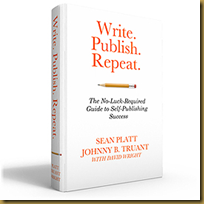
image And the best guide I’ve seen so far to building a writing business is a hefty tome (479 pages) with the hefty title Write. Publish. Repeat. (The No-Luck-Required Guide to Self-Publishing Success).

With a thousand-dollar title like that, you’d expect to pay maybe $17 for this gem, but I just checked and the current Kindle price is $5.58.

Sometimes, as self-publishing children’s writers, we figure we’re somehow exempt from all the messy business-type stuff that applies to other self-pubbed writers today.

We’re not exempt.

As a self-publishing (or, as they say, indie) writer, you have to keep your head on your shoulders and focus on the 80% of activities that pull in the vast majority of profits.  Don’t worry; writing is one of them.  Stuff like piddling around with facebook and blogs (oops) might not be.