Showing posts with label picture books. Show all posts

Sunday, October 8, 2017

How to create home-run stories with a perfect pitch sentence

image

I’ve talked before about the importance of the “pitch.”  This is a single sentence you can haul out whenever anyone asks you to describe your book.  Here, I’m going to give you my secret “formula” for creating awesome and compelling pitch sentences.

But first – why do you need a pitch?

  • For talking to agents or editors, if you ever get a face-to-face meeting
  • For including in your cover letter
  • For chatting with friends and other children’s writers
  • For writing your back-cover synopsis if you’re self-publishing

Most importantly, though, the pitch helps YOU. 

If you can’t sum up your picture book in a single sentence, you’re either trying to cram too much into your story, or you don’t have a clear enough idea what it’s about.

So here’s my secret formula – and it’s actually

Thursday, July 27, 2017

If you want to write kids’ books–read, read, READ! (with 6 of this summer's favourites)

image

What’s the best way to ensure that you’re writing kids’ books that are relevant to today’s readers? 

When I say readers, by the way, you can assume I also mean all the gatekeepers between you and your readers: editors, agents, publishers, and anyone else who gets to vet your book before it’s approved for publication.

And the best way to make sure you’re writing the books they want to see is… to READ kids’ books.  A LOT of kids’ books.

Now – just to be very, very clear here, I’m not telling you a) to read books in order to copy them, or b) to read books in order to write more marketable books.  You probably shouldn’t be thinking about marketability as you’re actually writing your book.

But reading what’s out there on the children’s-book shelves will give you an edge in a few ways, by helping you answer the following questions for yourself:

  • Who are the protagonists of kids’ books today?
  • What kind of situations do they find themselves in?
  • What’s the art like?
  • How wordy are they?  (hint: not very!!!)
  • What kind of vocabulary do they use?
  • What kinds of resolutions / messages do publishers seem to prefer?

Now, if you’re like me and you live in a non-English speaking country, all of this puts you at a distinct disadvantage.  And even if you live in a totally English-speaking country, there are a few reasons you might not have visited your local bookstore or library lately. 

For example, many children’s authors are older parents or grandparents – you may have read a lot of kids’ books at one point, like when your kids were younger.  You just haven’t checked out new books recently.  But why should you bother?  Classics are classics are classics, and what makes a book great doesn’t change from one generation to the next… right?

WRONG.

Even when it’s difficult, you must check out what kids’ books are out there, not just to scope out the competition but to make your own stories stronger and more contemporary-feeling.

Here’s one tip that I sent around to my local SCBWI chapter a few months ago:  search for current popular kids’ books on YouTube.  We had just had a Skype meeting with a publisher in L.A., so everybody was fired up about writing books for a U.S. audience, but many people in the crowd weren’t really sure what that entailed. 

Fortunately, there are MANY popular kids' books being read aloud by native English speakers on YouTube, including many of the books the agent had placed on her recommended-reading list for authors submitting to her. 

Wondering what books she suggested???  Here are the two books she mentioned most:  Llama Llama Misses Mama (https://www.youtube.com/watch?v=9xB6i1ReuT8) (along with all the other Llama Llama books by Anna Dewdney!) and Dragons Love Tacos (https://www.youtube.com/watch?v=AUTmRJqwI_c).  I'm betting that whoever can write the next book like those will get a sweet deal from her publishing company!

I’m very lucky to be in Toronto visiting family right now, so I took this opportunity to walk into my local library last week to scope out (aka “take home half of”) the kids’ picture-book section. 

Here’s my haul:

image

These are all fairly recent.  I’d heard of two of these beforehand and was psyched to see them in stock:  School’s First Day of School by Adam Rex, and Yaffa and Fatima: Shalom, Salaam by Fawzia Gilani-Williams, from Kar-Ben, the same publishing company that published my book Yossi & the Monkeys.

The first of these, School’s First Day of School, has been on my wish list

Tuesday, January 17, 2017

Want to teach values in a kids' book? Put them in the background!

image

Got a message you’re dying to share?

I’ve been there.

But those of us who do have a real problem.

I’m sure you’ve heard before – and I’ve certainly said it before – that kids’ books shouldn’t be used to preach at kids.  If you put that message first and fill your book chock-full with good healthy values, you’ll end up with a terrible book that kids simply won’t enjoy.

Think of zucchini.  Nobody in my family likes zucchini very much.  If you adore zucchini, think about another vegetable.  Eggplant, maybe.

Now, you know you should eat zucchini.  It’s super-good for you, right?

But if I were to cook up a big batch of zucchini for my family, they’d all sit and stare at it – myself included – and not know what to do with it.  That zucchini would sit uneaten on the plate.

Now here’s the cool part:  we actually eat a LOT of zucchini.  We eat it sliced into chicken soup every Friday night; we eat it grated into latkes and any number of savoury dishes; we eat it pureed into potato soup.  I’ve even baked zucchini bread, though yes, I understand, it’s not entirely super-good for you if it’s surrounded by flour and sugar!

The trick to zucchini, or whatever veg you don’t like very much, is to put it in the background, and the same is true for morals, values, or any other type of lesson you’d like to embed in your book.

In my new book, Yossi and the Monkeys (2017, Kar Ben Publishing), there are a ton of what the publisher probably calls Jewish values, but which I consider pretty universal.  Here’s the first page:

image

What values are here – in the background?  There are things Yossi really wants, but they are not selfish wishes; they are things he wants for his family. 

(So I don’t have to come out and say something annoying like, “Don’t be selfish!”  Kids know that already anyway, so they’ll just tune you out if you try.)

The holiday itself is another value right here on this front page:  I love writing stories with Jewish holidays in them but which aren’t about the holiday.  There are too many “what is Chanukah?” books out there for me to want to contribute to the genre, plus those kinds of books have always bored my children, who have known since infancy what all the holidays are about.

(Notice I haven’t said: “Shavuot is a wonderful festival in which Jews…”  This book isn’t about Jews in general, so forget about them.  This is Yossi’s story.  Just in case the reader isn’t familiar with the festival, the publisher has included a short paragraph about it on the copyright page.)

Here are two more pages from later in the story:

Friday, May 15, 2015

Carnival of Jewish Books – May 2015 / Iyyar 5775

image

If this is the 15th of the month (which it is), then this must be... the Jewish book carnival!  Don't be scared, even if you're not Jewish, you can step inside and find some great books and writers about books from all over the internet.

What goes on in a Jewish book carnival?

Glad you asked! 

imageHere, you’ll find…

  • Reviews of Jewish books
  • Interviews with authors, illustrators, editors, publishers, librarians, etc. about Jewish literature
  • Reporting on Jewish literary events (or the Jewish angle at non-Jewish events)
  • Reflective essays related to Jewish literature, which may include reflections on the process of creating a specific title (this is the one instance in which authors/publshers might discuss one of their own books, in a meaningful and non-commercial way that serves a larger goal)

The Jewish Book Carnival also has a GoodReads page, for discussions and more. Whether or not you’re participating, we hope you’ll stop by, join and take part!

If you want to host a future Jewish book carnival on your blog (and who wouldn’t?!?), contact Heidi at heidi@cbiboca.org.

And now… for the good stuff: 

The posts!

Heidi at the Book of Life blog hosts a podcast interview with Suri Rosen about her debut novel for teens, a hip and funny Orthodox story called Playing with Matcheshttp://www.jewishbooks.blogspot.com/2015/05/playing-with-matches.html

Thursday, April 30, 2015

Reader Feedback – why you need it, and how it helps

image

Have you heard the expression, "a camel is a horse designed by a committee?"  It's because they're lumpy and bumpy and funny-looking and inefficient, and, well, you get the picture.

One thing that's NOT meant to be "designed by committee" is a children's picture book. 

But I sort of went and did it anyway.  I created a page using Google Forms to help me collect feedback from pre-readers about a Jewish children's picture book I wrote.

image

And you know what?  It really helped. 

Here’s the biggest thing I learned:

Even the greatest book in the world is still written only from your perspective.  Other people’s views can make it much broader.

Your book reflects you and YOUR world and YOUR point of view.  By opening it up to feedback, though, you let other people behind the scenes, into your creative process… and sometimes, their ideas and their perspective, are exactly what you need to broaden your book and make it more universally appealing.

Sure, some of the feedback I got wasn't helpful at all, like one person, who suggested I rewrite the whole thing in verse because she likes rhymes. But some really was, and it helped me figure out what the first draft of the book had been missing.

When you're asking for feedback, be specific.  Don’t say “did you like the book?”  Use questions that are specifically targeted to things that are within your power to change about the book.

For example, one of my questions was

Saturday, March 21, 2015

Beyond ABC and 123: 5 easy themes you can use to write picture books.

image

Do you love the light in the tiniest kids' eyes when they listen to a picture book?

"Theme" books, like ABC's and 123's are time-tested favourites for a reason.  The very youngest readers (and listeners) love seeing familiar patterns and concepts - numbers, letters, colours, shapes, sizes.  What would be deathly dull for us, as adults, is absolutely the hottest thing with little kids.

Lots of writers make the mistake of trying to mix things up for very young readers.  You have to keep them entertained, right?

Wrong.  Instead, make your life easier and try one of these five familiar themes.

Of course, if you want to sell parents on your idea, you'll still have to make it original to some degree.  But remember that it doesn't have to be all that original to charm buyers and knock little kids' socks off. 

A lesson about kids – from Malcolm Gladwell

image Malcolm Gladwell showed in his fantastic book, The Tipping Point, that when little kids had a choice, they would watch the EXACT SAME episode of the TV show Blue’s Clues every day for an entire week. 

Even the show’s creators were shocked. 

Not only were kids NOT bored, they were more excited and engaged every single time they saw the episode.

Monday, March 9, 2015

How to illustrate a children’s book for $1 a picture or less.

image

The best price tag of all is free.  I’ve written before about finding and using free photos to create gorgeous children’s picture books.  (Don’t believe the haters; it really is possible.)

But what if you can’t find what you’re looking for at the free sites?

Stock photo sites can charge hundreds of dollars for a membership.  What a hassle, am I right?  That’s no problem if I’m The Huffington Post or some other big corporate website. 

But for little guys like us, it’s more than we’re likely to make back from all but the most successful kids’ books.  I really hope you will be that successful, but wouldn’t it be nice to keep that money in your pocket instead?

A stock image resource for the little guys

That’s why I want to tell you about a site I’ve been using for a while now that I absolutely love.  I think you’ll love it too.  Once you hear the name, you’ll understand what it’s about, start to finish. 

Ready…?  Okay.

It’s called Dollar Photo Club.

Why is it called that?  Um, because all the photos and images there are $1 each.  Totally simple, right?

It works with a monthly membership, so you get a certain number of “credits” each month; they roll over if I don’t use them.

Even though it’s called Dollar Photo Club, they have way more than just photos.

What can you find there?

There are lots of hand-drawn illustrations, ranging from cartoons to sketches and more.  You can even click on the name of an artist to find more in the same style. 

Thursday, February 26, 2015

Does your children’s book have series potential? Use this 3-step checklist to find out!

image

So your book is doing great.  You wrote it, released it, it looks terrific.  You’ve got a few reviews under your belt.  And now… it’s time for your next book.

Should you make it a brand-new story?  Or should you write a “sequel” – spin off a series that somehow picks up where your last book left off?

Series books are proven winners in lots of ways:  26 of Amazon’s 100 Children’s Books to Read in a Lifetime (that’s over 1/4 of the best kids’ books of all time) are series books.  Kids love them, teachers love them, librarians love them.  And writers love them, too.  Why?

Once kids are hooked on a series, they’ll read them one after the other, devouring them like Cheetos.  If my kids are typical, and I think they are, they’ll often go back to the beginning once they’ve read them all.  Series books also look great lined up side by side on a bookshelf (or in a bookstore!).

image

(Once you have a basic cover idea, it’s easy to think up clever variations!)

Will your book make it as a series?  Here’s a three-step checklist to help you identify the most crucial elements that you’ll need to help turn it into a franchise instead of just a single standalone book.

1. Distinctive Character

image Think about your favourite children’s-book series.  Now… who was the main character or characters?  Arthur?  Madeline?  Frances?  The Baudelaires?  Greg Heffley?  Franklin?  Olivia?

The books that stand out – and the series that succeed – are usually the ones with a very strong lead character.  Strong as in unforgettable.

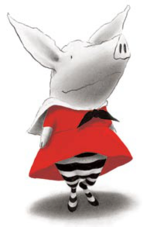
Olivia (fictional pig).pngThink about Olivia, from the books of the same name by Ian Falconer.  She’s a cute pig, but there are a million cute fictional pigs out there.  Actually, Olivia isn’t particularly cute, but the drawings are strong and distinctive, as is her personality.  I mean, she loves opera.  How cool is that?

Is your character unforgettable?  If so, read on…

2. Distinctive Setting

Your character’s world should be compelling enough to make you want to spin more than one story in it.

Monday, February 9, 2015

Is your manuscript headed for the shredder? 15 formatting DO’s and DON’Ts to make editors fall in love.

image

Will your story survive the slushpile… only to end up in an editor’s recycle bin, trash can, or shredder?

A story manuscript that doesn’t look like a manuscript will get you exactly the WRONG kind of attention.  The kind that winds your story up in that virtual paper shredder before the editor gets to word one.

True, you’re submitting a children’s book.  But the core of all these DON’Ts is one simple fact:  your story can’t LOOK like a children’s book when you submit it.

What not to do.

Be very, very careful.  Violating any one of these will get your story tossed (or shredded) in disgust:

    Friday, December 19, 2014

    Best & worst of the Indie Children’s Covers 2014: 19 hits, 10 misses.

    image

    UPDATE:  Want to enter the 2015 contest?  Open NOW to any children’s books self-published between Dec 1, 2014 and Nov 30, 2015.

    Covers are hard.  If you’re like most people, I hope you don’t even try to do them yourself.  But even if you hire a pro, it’s easy to wander off the path of good judgment into the jungle of horrific, embarrassing covers.

    That’s why we need objective feedback. 

    Which is where Joel Friedlander, the Book Designer, comes in.  Every month, he hosts a cover contest.  It’s free to enter, and if you have a cover you love, you really should.  It won’t boost book sales directly, but it’s worth it, I promise.

    Remember:  every single buyer is judging your book by its cover.  You can’t escape from that simple fact.

    Every month, Joel shows off every cover he gets.  Sometimes he adds praise – but sometimes, his comments can sting.  One author proudly submitted his cover with the words “Fully designed by the author himself.”  To which Joel replied, “That’s apparent.”  About another cover, he wrote, “Impossible to tell what was intended here, but clearly this is a disaster.”  (My personal favourite:  “Pretty much announces: “I’m self-published!” And not in a good way.”)

    I have to laugh – even when his criticisms are aimed at me, which they have been a couple of times.  Don’t submit anything unless you’re prepared for him to tear it apart.

    Most of the covers he gets are for adult books.  Why not more kidlit?  Maybe because most of us aren’t putting enough money/effort into our covers, and aren’t proud enough of the results. 

    That’s REALLY got to change.  I hope this list inspires you to create excellent covers that will hog all the top spots for 2015.

    Here (in no particular order) is my personal Top Nineteen of all the kids’ covers that he’s featured in 2014.  NOTE:  I haven’t read the books.  I’m literally just judging them by their covers.

    Down below, you’ll find 10 “misses” and “near-misses” that failed on one count or another to make it to that empty #20 spot in my “top” list.  Plus two grownup books with really, REALLY bad covers that make me wonder why anyone would submit them to a contest.  And one I loved that inspired me to buy the book.

    #1

    image

    The Boy Who Loved Fire by Julie Musil.  There were many great YA covers this year; I think authors in this category are a lot more serious about their covers than if they’re just writing “kiddie books.”  (Again, that’s really got to change.)  Joel didn’t say anything when it was listed in January, but in March when he listed it again, he said, “Although a bit overwrought, it is nicely creepy.”

    #2

    image

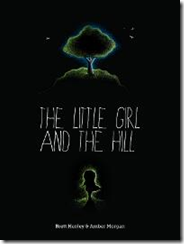
    The Little Girl and the Hill by Brett Henley.  In January, Joel didn’t like the smallness of the text and I agree – you can’t read the author’s name, even with this fairly large thumbnail.  He said the art was lovely but that the cover overall is “a dark and easily skipped muddle.”  Still, something about this concept really appeals to me.  Like finding a good black t-shirt for a baby, it’s rare to see an all-black cover on a kids’ book.  (Caveat:  the interior looks similarly all-black, and I’m not 100% sure how good that would look on an ereader.)  I do wish they’d re-do the fonts, however.

    #3