Showing posts with label quick tips. Show all posts

Wednesday, July 1, 2015

The top-secret way to write more when you have young kids

image

School’s out!

Summer’s here, and if you have young kids, you know what that means: kids in your hair. 

All day long, and by evening, you’re sapped by family activities and running around.  Running, running, running.  They’re running you into an early grave… and you’re running on empty.

Where can you find time to write?

Some days (is this just me?), the thought of sitting down at the computer after a busy family-filled day is utterly, completely depressing.  I know there are disciplined writers out there who put in their 1000 words a day come hell or high water.  But I’ll admit it right now: I’m not always one of them.

Do you ever have a day when you feel like you’ve given them everything you’ve got?

I do.  Sometimes, I’ve given my kids everything in me and there is nothing – well, almost nothing – left.  But it’s that almost nothing that you have to take and squeeze out. 

Those very last drops of inspiration are sometimes the very sweetest.  

Giving more than 100%

Have you ever cut and squeezed a lemon? 

Monday, June 29, 2015

How strong is your story's opening? Turbocharge it with this 5-point checklist

image

Did you ever watch a space shuttle launch? 

It was an awesome thing: the thundering noise, the heat, the deep bass rumble.  Why do they have to put so much energy into launching ships into space?  They have to start out with a ton of power so the ship has enough velocity to make it all the way into space.

And that's what your story has to do, too.

Adding rocket fuel to your book

Pour a ton of thrust into the story's opening to carry readers all the way through to the end.  Here's a quick 5-point checklist to make sure your opening covers all the bases.

If you're writing a chapter book, you should include all these elements in the first chapter, preferably in the first half of the first chapter.   In a picture book, you'll want all of this on the first one or two pages.  That seems tight, but remember that your illustrations are going to be doing at least half the work.

Ready?  Get out your red pencil... here's the checklist:

Does your story's opening...

image1) …Introduce the main character?

We should get a clear idea of who this character is and what they're going to want in the story.  Show, don't tell. Let the illustrations do part of the work here, and whatever you do, don't start with the character's name and age.

Tuesday, December 2, 2014

Coping with the KDP Freebie Juggling Act: a simple 2-step system

image

Are you giving it away for free?

If your books are exclusive through Amazon’s Kindle Select program through KDP (Kindle Direct Publishing), they make it oh-so-easy to give away books for free.  They make it sound like a privilege, even.  Like it’s going to do tons for your books’ sales and your author ranking.

Will it really?

One school of thought, let’s call them School A, says – “No, no, no!  Never give it away for free!  Offering freebies trains your “loyal” readers to pay nothing for your books.  That’s terrible.  Don’t do it!”

The other school of thought, School B, says (equally loudly) – “Yes, yes, yes!  Giving books away for free will help new readers find your books.  They will become loyal readers!  Free books ‘hook’ them in, like a sample at the supermarket.  If they like it, they’re sure to come back and buy more (for actual money).”

As a fairly new writer trying to get established, I’m somewhere in between.  I do think freebies help get attention I wouldn’t get otherwise.  So I’m still doing them.

I don’t like keeping secrets.  I’m going to share what I’m doing here, but I’ll be honest:  I don’t really know yet if it’s working.  I hope this will be the start of a conversation, and I’d love to hear your thoughts and experiences in the comments.

If you have more than a couple of books enrolled in KDP select, you need a way to keep track of which ones are free at any given time.  That’s where this simple 2-step system comes in.  Follow these steps, and you’ll never get mixed up again.  You’ll also be able to reward your loyal followers with a chance at getting hold of these.

Here’s how I set up my KDP freebies:

Wednesday, July 23, 2014

10 success tips your writing teacher never told you (but Jeff Gunhus will).

image

Quick:  what’s the opposite of success?

You guess it – f… f… f….

Oh, shoot.  I can’t bring myself to say it.

And neither should you.  We may be lying in the gutter, as they say, but we can still lie back and stare up at the stars.

If you want to get inspired, and actually create books that find readers, your best bet is to listen to people who are already successful.  Especially if they’re Jeff Gunhus, who’s made his own success in self-publishing.

(Here’s my interview with Jeff Gunhus from a little while ago.)

Jeff had the best motivation of all to create his Jack Templar series of kids’ books.  But the truth is, he was already a successfully conventionally-published writer before he set out to publish his own kids’ books.

That makes him twice as much of an authority, as far as I’m concerned.

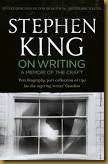
image These Ten Tips from Jeff, he says, “come from many books and seminars, but a great influence has been Stephen King's On Writing, just the best little book about craft and the writer's life out there.”

1) Write a lot. Every day. Without fail. Even for ten minutes. It's easier to push a car that's already moving instead of one at a full stop. 

2) Read a lot. "I don't have time to read," means you don't care enough to be a good writer. Create a book list for yourself and set goals. 

3) Create fertilizer. The first draft is the pile of manure out of which great things will come. Allow yourself to make a pile of dung. It's going to be fine, just keep going. 

Monday, June 30, 2014

Stuck in the middle? 6 cheats to get you out of your bind.

3779719335_b1a8745502_z

We’ve all been there.

You start a story, typing furiously in an attempt to get the words down as quickly as they are flashing through your mind. Then your fingers come to a screeching halt. Staring at the screen, you are stuck in the middle of the story wondering what happened to that inspiration. Get it back.

Here are 6 “cheats” that can pull you out of the glue when all you see is stuck.

Sunday, June 8, 2014

Twelve steps to writing an awful kids’ book.

image

Mea culpa.  I have been there and I have done that.  I have written awful children’s books; not just book but books, plural.  And no amount of “Hail Mary”s can fix the bad writing I’ve done (plus, I’m not Catholic).

Phew.  Feels good to get it off my chest.  These days, I sometimes turn up an old file on my hard drive and open it up, only to discover an ugly early attempt at a kids’ story.  I’m nowhere near perfect yet, but it has become easier, at least, to spot where all those early attempts went wrong.

If I ever wanted to write an awful kids’ book again, let’s just say I now know all the steps to get me there.  And having been there and done that, I’m happy to share this twelve-step plan to help you, too, create a children’s book that truly stinks. 

What?  You want to write a great kids’ book?

Don’t worry… for each of these twelve steps, I’ve offered a few tips (many from painful personal experience) on how to do it right.  You know… just in case you want to write this book:

image

Instead of this one:

image

You decide which you want to write… and then follow these twelve simple tips.

Wednesday, April 2, 2014

Writing so your illustrator won’t hate you (with tips from a pro!).

zap!  manuscripts that will inspire your illustrator If you’re reading this post, you’re probably a writer, and not an illustrator (unless you are an illustrator and are wondering how not to hate yourself?). 

So it’s not your job to draw the pictures for your story.

Sounds basic, but too many authors forget and overstep what they’re supposed to be doing.  On the other hand, there are writers who go too far the other way, and don’t give the illustrator anything to work with.

Let’s look at both these types and figure out how to turn you into the kind of writer your illustrator will love!

The two kinds of boo-boos

writer / illustrator Christine TrippSince I’m not a visual person (as in, when I draw stuff you can’t really tell what it is that I’ve drawn!), I’ve asked illustrator Christine Tripp, a writer and illustrator of over 50 kids’ books, to help me out in giving advice from her own experience of working with a number of authors.

Thursday, March 27, 2014

Making space for… nothing. 5 books, 5 experts on white space.

It’s called “white space,” but it doesn’t have to be white.  Are you using enough of it in your kids’ books?  I’m going to show you five books that do a GREAT job with white space – in a couple of cases, becoming classics along the way.

And then, because (gasp!) creating white space is one of my weak points… I’m going to share with you not my own wisdom, but that of five experts who have Things to Say and manage to say them far better than I could.

To get us in the mood, here are five kids’ picture books that make GREAT use of white space:

Saturday, March 22, 2014

Three tips to write kids’ rhymes that don’t suck.

I’ve talked about rhyme before… but today, I’m here to help you make your rhymes better.

Let’s imagine we’re writing a cute rhyming book about a little penguin named Bridget.  Here’s Bridget:

Let’s introduce her – along the with the central story problem – with a rhyming couplet:

Bridget’s a penguin who lives by the sea
But when it comes to fish, she’s rather picky.

We’re off to a great start, except…this rhyme sucks.

Here are three tips to tweak your own rhymes and help make Bridget’s story great along the way!

Wednesday, March 12, 2014

Two tips for older writers that Keith Richards will probably ignore – but you shouldn’t.

Mr. Richards’s “Gus & Me: The Story of My Granddad and My First Guitar,” will be published on Sept. 9.Keith Richards is writing a kids’ book, and frankly, I’m not all that excited.

Certainly, all the headlines make it seem like he’s performing brain surgery:  at 70, the Stones guitarist is a five-time grandfather himself already!  Stop the presses!  Bring in the Dalai Lama or the Nobel committee!

But no, I’m not excited, and it’s not because he’s 70, either.  I think you can write as good a kids’ book at 60, or 70, or 80, as anyone can in their 20s or 30s.  So that’s not the reason I’m not digging Keith’s new project – as I’ll explain below.

It’s true – you can write a great kids’ book at any age, if you keep these two key tips in mind to make sure you come up with something great.  Keith would do well to read these, but I honestly don’t think he will (hint: he’s not really planning to write the book himself).

Two tips for writers of a certain age

Here’s my open letter to Keith Richards, or any older writer:

Wednesday, February 26, 2014

Writing Style with Strunk & White: #1 and #2

image Flipping through my vintage Strunk & White, rediscovered why I liked the book so much in the first place.  It’s as jarring and fun as anything written about writing today, especially the unassuming Approach to Style section near the back.

020530902X(This vintage edition is actually new to me – it arrived a few weeks ago after I ordered a newer edition from Better World Books; they refunded my money very quickly when I reported the mistake.)

So – I thought – why not bring it up-to-date, sharing these fabulous insights in a way that applies to children’s books?  Brilliant.  And then kick it up just a bit (unless you’re Emeril, don’t call it a notch) with a “Lazy-Day Takeaway” – an easy tip you can incorporate into your own writing, like, immediately, today.  Or whenever.

Why not, indeed???

So I did.  I am.  I will.  I must!

There are 21 points in the Approach to Style, and I’m going to take them on two at a time. 

Thursday, February 20, 2014

5 Quick Fixes for Point of View (POV) Pitfalls.

POV pitfalls can be a real PITA, a total pain in the abbreviation.  POV means point of view, as in what your character sees and says. 

With these five quick fixes, you can get your story back on track and make sure it stays that way.

1.  Pick a character, any character

This is a big issue for writers who start with a story in mind that they’re dying to get down on paper.  They charge through, writing the story full speed ahead, but when readers get a chance to take a look, it doesn’t click.  They hate it, or, more likely, just can’t get into it.  What’s going on?  You haven’t picked a clear, consistent “POV character.”  Somebody has to tell us the story.  (What’s that?  You’re telling the story?  Not good enough.)

Quick Fix:

Choose one character who’s in a great position

Sunday, February 16, 2014

Five quick tips to reach the kids you’re leaving out.

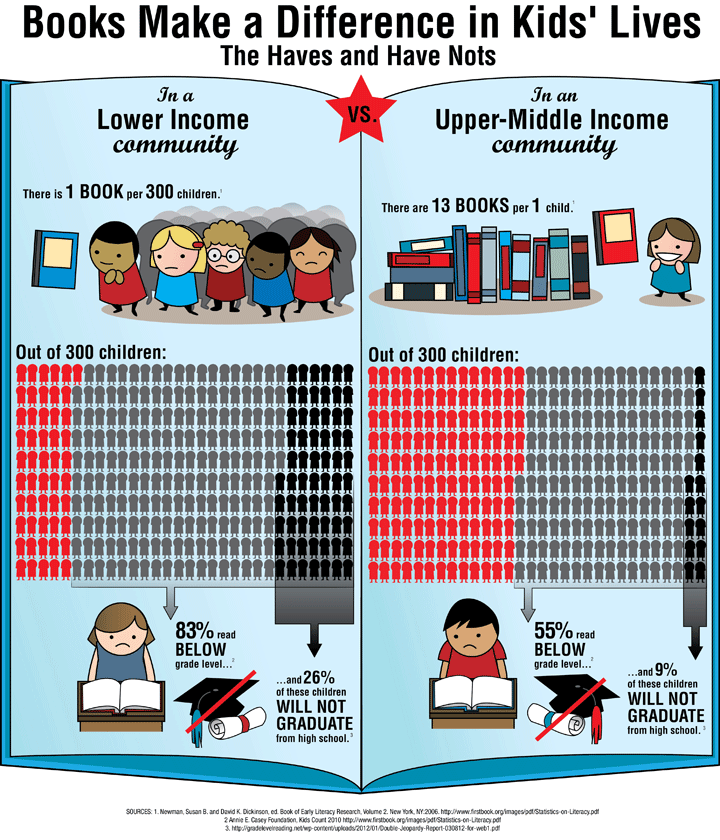
Try to guess which group gets forgotten most often when we write kids’ books.  This infographic will help you figure it out…

http://blog.firstbook.org/wp-content/uploads/2013/02/300_kids-BLOG.gif

(source:  firstbook.org)

You guessed it:  the “have not” kids, the ones who are socioeconomically in that depressed left-hand group.  Not enough books, yes, and when they do open up a book, what do they see?

It’s not written for kids like them.

Chances are, the kids in the books have parents who are around to take care of them, living orderly lives in clean houses in good neighbourhoods (why are the neighbourhoods in kids’ books generally squeaky-clean, anyway???).

There are easy ways to open up your books to include these kids.

Monday, February 3, 2014

Do your characters speak for themselves? They can, with DIRECT quotations.

image“Aargh!” the writer screamed in frustration, flinging her hands in the air and spilling her Coke.  “How come this dialogue isn’t quite right?” 

Lots of writing & grammar sites tell you the difference between direct and indirect quotations.  But those sites aren’t bossy enough:  they don’t tell you which kind to use. 

I will, and here it is:

Use direct quotations.

Indirect quotations are the boring kind.

Thursday, January 16, 2014

What to call your characters? Three reliable tips to help you choose.

Are you saddling your characters with the wrong names?  How would you know if you were?

It’s true that a rose by any other name would smell as sweet… as would a Eustace Scrubb or Severus Snape or Winnie the Pooh or India Opal Buloni.  But sometimes, we miss the obvious when we’re picking names for our story characters.  Here are three quick tips for finding character names that will be just as memorable as these.

0763644323(Who’s India Opal Buloni?  Guess you’re going to have to check out Kate diCamillo’s leisurely-paced but mesmerizing Because of Winn-Dixie – our current read-aloud – to find out… and meanwhile, what a name, right?!)

1.  Decide who will stand out.

Many things can make a name stand out – and that’s not a bad thing.  But you as the writer have to decide who stands out and who doesn’t in your story.  A principal who appears as an incidental character in one scene shouldn’t bear the mellifluous moniker “Melville Monofinindohatchee.”  For one thing, you’d take more time introducing him than he’s on stage in the first place.

Many things can make a name stand out:  alliteration (like I just did!), a name that’s Dickensian in its moralism (Ebenezer Scrooge), or a name that’s a little strange and unexpected (Winn-Dixie, or India Opal Buloni).  It’s not a bad thing for a name to stick out from the crowd, but the uniqueness of the name should be related to the significance of the character.
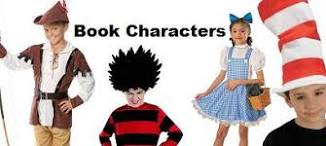
2.  Make it suit your story.

You don’t have to pick a rare, fancy or even unique name.  Remember, the most popular kids’ books of all time revolve around a boy named Harry Potter.  The name you choose doesn’t have to have Dickensian portent if you don’t want it to.  What it does have to do is flow naturally from the style of your story. 

B000VYX8PE0064431789For the elaborate, gothic faux-horror motif that frames the Series of Unfortunate Events books, you may need names like Klaus, Violet and Sunny Baudelaire, but many perfectly wonderful books have been written about characters with everyday names as well. 0394824903 You’ll probably never forget Max from Maurice Sendak’s Where the Wild Things Are, or Marvin, from Dr. Seuss’s Marvin K. Mooney, Will You Please Go Now? (yeah, I know it’s really about Richard Nixon!) even though their names are extremely ordinary – or were ordinary when the book was written…. which reminds me:

Be conscious of the “age” of your name.  These days, Abigail is a common little-girl name.  But when my sister was born 30-something years ago, it really wasn’t, and I barely forgave my parents for choosing it for her.  “You’re giving her an old-lady name!” I yelled at them, in bossy-but-innocent wisdom. 

0064434516They picked the name anyway, and you can too, if you like, but I’m going to yell the same advice to you:  pick a name that suits your character’s age and the period in which they live.  “Frances” was probably a perfectly ordinary girl’s name in 1960, when Russell Hoban’s Bedtime for Frances was written, but these days, it’s a bit dated.  Ignore this advice if you want to – my sister seems to love her name, so there you go.

3.  Pick a name and stick with it.

On a writers’ group in which I participate, someone mentioned that she’d been proofreading a book with a character named Paul, a company vice-president (it was an adult book), who was referred to variously, throughout the book, as:  Paul, Paulie, Paulie-Wallie, Mr. Charleston, Paulie C., Mr. C., Mr. VP, Mr. Veep, the vice president, the veep, and Mr. Marketing.

With few exceptions, you’re only allowed to mix up the names as much as you would in real life, which is to say, not much at all.  You don't call your mother "mom" "moms" "momzy" "mommy" in the space of a single conversation ... unless she has some kind of weird split personality. 

On the other hand, it’s okay for certain characters (not all!) to call your character by different names if it comes naturally as part of their relationship.  If his name is Charlie, maybe his brother calls him Chuck and his mom, "sweetie."  But you shouldn't then have his best buddy call him "Chaz" and his wife call him "Cheetah."  Keep it as natural as possible; listen to the way we speak in real life and you (probably) won't go wrong.

Whether you use a random name generator, spend hours with a Bible or a name dictionary, or just let names bubble up from the depths of your imagination, I’d love to hear how you figure out which character names to stick with and which to toss back into the bin!  Let me know more about your process in the Comments section.

Monday, December 30, 2013

Quick tip to double your odds: read it out loud.

Ezras_Aliyah cmyk_small

Actually, I believe you can MORE than double your odds of a book’s success just by following this one piece of crucial advice that’s overlooked more often than you’d think:

Read it OUT LOUD.

Read it OUT LOUD.

Read it OUR LOUD.

(ha ha ha… see what I did there?)

Yesterday, I had Word open and was tootling around in the final manuscript of a kids’ book when my 6-year-old son came up behind me.  (He was home sick with a cold.)

“Want me to read it to you?” I asked.

“Nope,” he said, but he continued to read over my shoulder, which everybody here knows drives me craaaaaaaaazy.

After a few minutes, while it sunk in that I was flipping around in my ADHD style aligning illustrations and wasn’t going through the book in a linear way, I asked again and he said yes.  So I read it out loud to him, the whole thing, start to finish.

And instantly found not one, not two, but FOUR changes I needed to make – urgently! – in a 27-page book.

Now, these weren’t catastrophic errors.  This book is long past that stage.  These were minor lumps and bumps; places where the reading wasn’t clear or the wording of a sentence was awkward on the tongue.  Mistakes you’d only catch by reading it aloud.  Mistakes I wouldn’t have caught if there hadn’t been a little guy standing behind me willing to listen all the way through.

But if you’d have asked before I read it through, I’d have said it was ready to go to print, and I would have been wrong.

This book is a bit of an exception:  most of what I’ve written has started out as a story, been read to the kids and their friends a few times, and revised several times based on what they like and how well it reads out loud.  In this case, it’s been sitting neglected on my hard drive since July and we don’t have a printer here, so they haven’t heard it yet.

BOY, was that a mistake.

Would Microsoft release a new operating system without beta-testing it first?  (okay, don’t answer that!)  Would General Mills put out a new flavour of Cheerios without giving it to a bunch of typical families for feedback?  Would Hollywood release a movie without focus grouping it to death first?

Sometimes, dogs will get through anyway.  Like professionally-“edited” books that are full of typos, breakfast cereal that is so woefully bad nobody eats it, cars that catch fire when driven at highway speeds, multimillion-dollar movies that flop during opening weekend and are never heard from again.

But you have to do your best to up the odds, and the quickest, easiest way to do that is to “beta-test” your book with actual kids.  This isn’t expensive and it isn’t hard: 

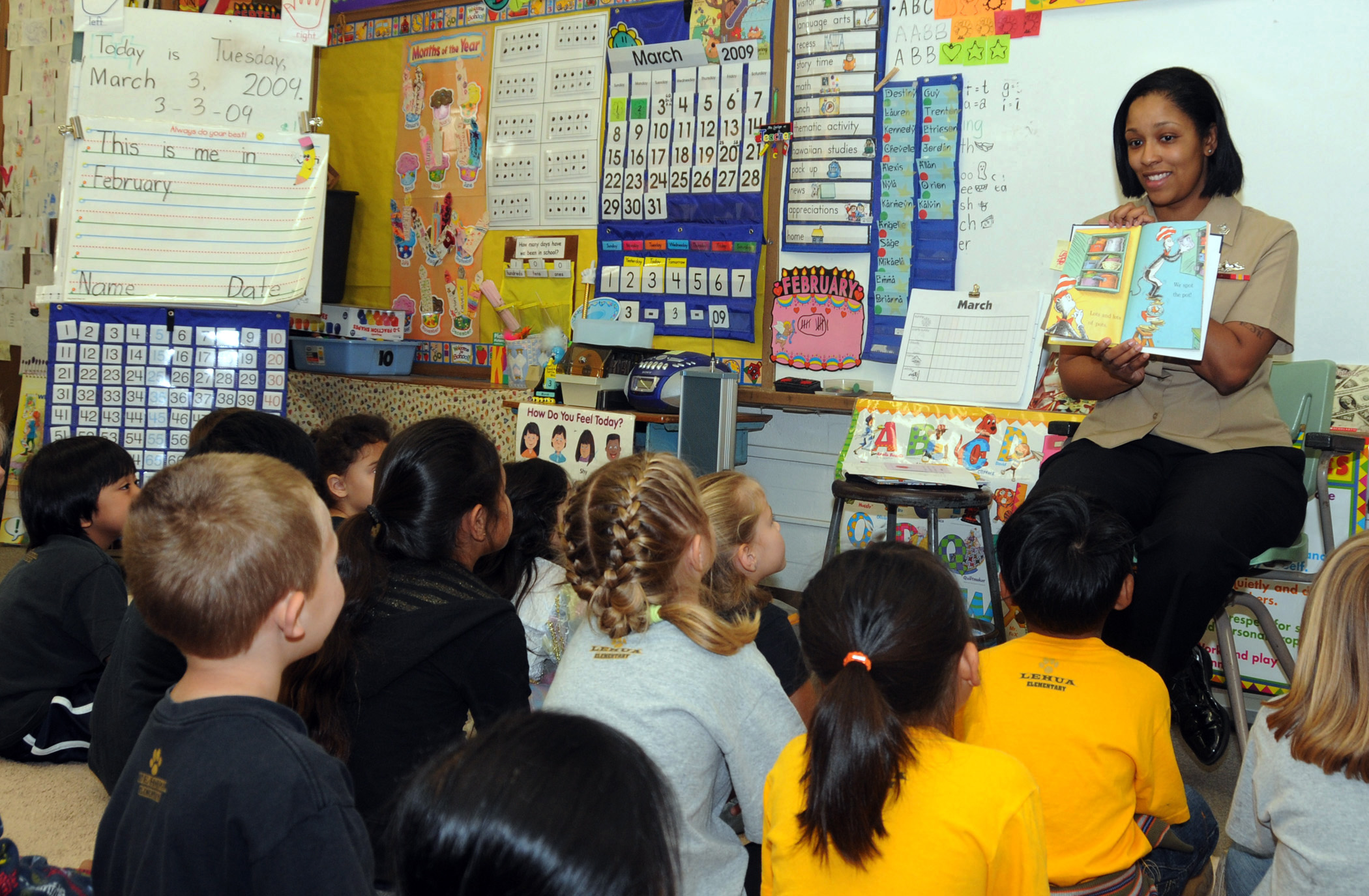
Print it out!  Gather kids!  Read it to them!

Like this:

http://upload.wikimedia.org/wikipedia/commons/0/02/US_Navy_090303-N-3666S-003_Boatswain%27s_Mate_2nd_Class_Rasheema_Newsome,_assigned_to_Commander,_Navy_Region_Hawaii,_reads_Dr._Seuss%27_The_Cat_in_the_Hat_to_kindergarten_students_at_Lehua_Elementary_School.jpg

Of course, what you do with their feedback is a topic for a whole ‘nother post, like how to tighten up bits where they squirm and get restless and what if they don’t understand some of the language or the plot.

Read it OUT LOUD.

This is especially true for poetry, by the way.  Just because the rhymes all cap off nicely at the end of the lines doesn’t mean it scans perfectly.  Ask me how I know.

Oh, and even if your book is for older kids and isn’t really meant to be read aloud, do it anyway.  If not with children, by yourself in a room, unless your manuscript is prohibitively long, in which case you need to get as many eyes – kids’ and adults’ – on that thing as you possibly can if you really want to double your odds of creating a hit.

If you don’t have willing victims kids standing peering over your shoulder, who are your victims children of choice to test-read your books aloud???