Showing posts with label YA. Show all posts

Friday, February 9, 2018

What the Cat taught me: Lessons for authors from yesterday’s book covers

image

Do you have a favourite book from childhood?  You can probably visualize its cover, right? 
Just picture it in your mind's eye and maybe feel the nice, contented feeling that comes with curling up with a delicious book...

Well, this morning, I came across one of my preteen favorites sitting open on the floor where my daughter had left it when she went to school:  The Cat Ate My Gymsuit, by Paula Danziger:

image

This book meant a lot to me as a kid.  I think it was because of its open acknowledgment that life is sometimes lousy when you’re a teenager but also the gentle message that (thanks, Dan Savage!) it gets better.  That there is a light at the end of the tunnel.  And it does all that with the good-natured humour that the late Paula Danziger brought to all her books.image

I posted this picture on Facebook because it brought back so many memories.  But I also started thinking about both how dated the cover looks (it's from 1978) and also how I doubted publishers would put a picture like this, showing a slightly overweight, slightly depressed teen on the cover of a book today.

Searching Google to find a history of this book cover, and I discovered I was right.  The most current version of this book, on Amazon, just shows

Wednesday, February 7, 2018

Make Research Pay: Turn “leftover” ideas into nonfiction children’s magazine articles

image

Do you groan whenever anybody suggests that your story needs more research?
Does the idea of diving into books and Wikipedia pages, old newspapers or archives bring back nightmares from high school, college, or some other period in your life?

I've been doing a lot of research lately for a chapter book I'm writing that takes place in medieval Egypt.  The subject is fascinating, I love it, but along the way, I've accumulated a ton of information locked up here in my mind... and nowhere to let it out.

Sure, I could write another book.  But I was looking for a quick way to use that information in a way that could help my career as a children's writer.  So I sold it to a kids' magazine, and now those ideas will have new life and reach a lot more kids than my book probably will.

The Problem with Research

I want to explain how, but let's back up a step or two for a second to talk about research overall -- and then I'll share some ideas for how you can make your research pay.

Even if you love writing, heck, even if you love how research gives your writing more depth and authenticity, you probably know at least three things about research already:
1) It's a lot of work - even if you love the topic
2) It eats up a lot of time - especially if you wind up going down all kinds of rabbit holes, as always happens to me
3) You can't just dump all your research into your manuscript or you'll kill readers with boredom!

This last point is most important:  even the most important research isn't always relevant to the story you're telling.  Which means that a lot of research, fascinating as it may be, is going to turn out to be a waste of time.

image

(This is me, researching my book!)

imageIn this interview with Writers' Digest, Andy Weir, author of The Martian and now Artemis, talks about his in-depth research process.  You can see there how much work he has put into researching every single detail for Artemis, the economics of the moon colony and space travel and whatnot, just like he spent years (while working full-time doing something else!) researching the science of Mars exploration for The Martian.

Dealing with “Leftovers”

Now, if Weir had tried gathering up everything he discovered and tossed it into the story, he wouldn't be the bestselling author he is today. 

So what do you do with everything you find when you research?

Well, you weave it

Friday, May 15, 2015

Carnival of Jewish Books – May 2015 / Iyyar 5775

image

If this is the 15th of the month (which it is), then this must be... the Jewish book carnival!  Don't be scared, even if you're not Jewish, you can step inside and find some great books and writers about books from all over the internet.

What goes on in a Jewish book carnival?

Glad you asked! 

imageHere, you’ll find…

  • Reviews of Jewish books
  • Interviews with authors, illustrators, editors, publishers, librarians, etc. about Jewish literature
  • Reporting on Jewish literary events (or the Jewish angle at non-Jewish events)
  • Reflective essays related to Jewish literature, which may include reflections on the process of creating a specific title (this is the one instance in which authors/publshers might discuss one of their own books, in a meaningful and non-commercial way that serves a larger goal)

The Jewish Book Carnival also has a GoodReads page, for discussions and more. Whether or not you’re participating, we hope you’ll stop by, join and take part!

If you want to host a future Jewish book carnival on your blog (and who wouldn’t?!?), contact Heidi at heidi@cbiboca.org.

And now… for the good stuff: 

The posts!

Heidi at the Book of Life blog hosts a podcast interview with Suri Rosen about her debut novel for teens, a hip and funny Orthodox story called Playing with Matches:  http://www.jewishbooks.blogspot.com/2015/05/playing-with-matches.html

Monday, February 16, 2015

Why picking the right age category for your book is so important (and how not to mess it up). GUEST POST by Laurisa White Reyes

image

If you are as avid a reader as I am, you are probably familiar with the terms Middle Grade, Young Adult, and Adult fiction. Recently, a new category has popped up: New Adult.

laurisa2What exactly determines if a book fits into one category or another? This may not be important for people who just want to read good books, (Who cares if the protagonist is sixteen or thirty-six as long as it’s a great read!) but understanding the difference is vital when you are writing books and marketing them.

Middle Grade Books

Let’s start with Middle Grade. This category is for younger readers, generally between the ages of 8 to 12, or if the subject matter is a little more mature, ages 10 to 14.

The protagonist’s age should fall into one of these ranges, and the story should be told from a child’s point of view (1st or 3rd person doesn’t matter). Adults may be present in the story, but the kids are the stars of the show.

Some “no-no’s” for writing for this age group include books told from an adult perspective reminiscing about when they were young and stories told from a kid’s POV but where the subject matter could be considered mature.

Middle Grade = Young Adult?  (nope)

Friday, December 19, 2014

Best & worst of the Indie Children’s Covers 2014: 19 hits, 10 misses.

image

UPDATE:  Want to enter the 2015 contest?  Open NOW to any children’s books self-published between Dec 1, 2014 and Nov 30, 2015.

Covers are hard.  If you’re like most people, I hope you don’t even try to do them yourself.  But even if you hire a pro, it’s easy to wander off the path of good judgment into the jungle of horrific, embarrassing covers.

That’s why we need objective feedback. 

Which is where Joel Friedlander, the Book Designer, comes in.  Every month, he hosts a cover contest.  It’s free to enter, and if you have a cover you love, you really should.  It won’t boost book sales directly, but it’s worth it, I promise.

Remember:  every single buyer is judging your book by its cover.  You can’t escape from that simple fact.

Every month, Joel shows off every cover he gets.  Sometimes he adds praise – but sometimes, his comments can sting.  One author proudly submitted his cover with the words “Fully designed by the author himself.”  To which Joel replied, “That’s apparent.”  About another cover, he wrote, “Impossible to tell what was intended here, but clearly this is a disaster.”  (My personal favourite:  “Pretty much announces: “I’m self-published!” And not in a good way.”)

I have to laugh – even when his criticisms are aimed at me, which they have been a couple of times.  Don’t submit anything unless you’re prepared for him to tear it apart.

Most of the covers he gets are for adult books.  Why not more kidlit?  Maybe because most of us aren’t putting enough money/effort into our covers, and aren’t proud enough of the results. 

That’s REALLY got to change.  I hope this list inspires you to create excellent covers that will hog all the top spots for 2015.

Here (in no particular order) is my personal Top Nineteen of all the kids’ covers that he’s featured in 2014.  NOTE:  I haven’t read the books.  I’m literally just judging them by their covers.

Down below, you’ll find 10 “misses” and “near-misses” that failed on one count or another to make it to that empty #20 spot in my “top” list.  Plus two grownup books with really, REALLY bad covers that make me wonder why anyone would submit them to a contest.  And one I loved that inspired me to buy the book.

#1

image

The Boy Who Loved Fire by Julie Musil.  There were many great YA covers this year; I think authors in this category are a lot more serious about their covers than if they’re just writing “kiddie books.”  (Again, that’s really got to change.)  Joel didn’t say anything when it was listed in January, but in March when he listed it again, he said, “Although a bit overwrought, it is nicely creepy.”

#2
image

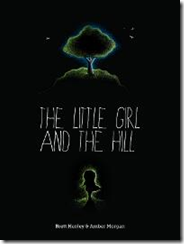
The Little Girl and the Hill by Brett Henley.  In January, Joel didn’t like the smallness of the text and I agree – you can’t read the author’s name, even with this fairly large thumbnail.  He said the art was lovely but that the cover overall is “a dark and easily skipped muddle.”  Still, something about this concept really appeals to me.  Like finding a good black t-shirt for a baby, it’s rare to see an all-black cover on a kids’ book.  (Caveat:  the interior looks similarly all-black, and I’m not 100% sure how good that would look on an ereader.)  I do wish they’d re-do the fonts, however.

#3