Showing posts with label examples. Show all posts

Tuesday, January 17, 2017

Want to teach values in a kids' book? Put them in the background!

image

Got a message you’re dying to share?

I’ve been there.

But those of us who do have a real problem.

I’m sure you’ve heard before – and I’ve certainly said it before – that kids’ books shouldn’t be used to preach at kids.  If you put that message first and fill your book chock-full with good healthy values, you’ll end up with a terrible book that kids simply won’t enjoy.

Think of zucchini.  Nobody in my family likes zucchini very much.  If you adore zucchini, think about another vegetable.  Eggplant, maybe.

Now, you know you should eat zucchini.  It’s super-good for you, right?

But if I were to cook up a big batch of zucchini for my family, they’d all sit and stare at it – myself included – and not know what to do with it.  That zucchini would sit uneaten on the plate.

Now here’s the cool part:  we actually eat a LOT of zucchini.  We eat it sliced into chicken soup every Friday night; we eat it grated into latkes and any number of savoury dishes; we eat it pureed into potato soup.  I’ve even baked zucchini bread, though yes, I understand, it’s not entirely super-good for you if it’s surrounded by flour and sugar!

The trick to zucchini, or whatever veg you don’t like very much, is to put it in the background, and the same is true for morals, values, or any other type of lesson you’d like to embed in your book.

In my new book, Yossi and the Monkeys (2017, Kar Ben Publishing), there are a ton of what the publisher probably calls Jewish values, but which I consider pretty universal.  Here’s the first page:

image

What values are here – in the background?  There are things Yossi really wants, but they are not selfish wishes; they are things he wants for his family. 

(So I don’t have to come out and say something annoying like, “Don’t be selfish!”  Kids know that already anyway, so they’ll just tune you out if you try.)

The holiday itself is another value right here on this front page:  I love writing stories with Jewish holidays in them but which aren’t about the holiday.  There are too many “what is Chanukah?” books out there for me to want to contribute to the genre, plus those kinds of books have always bored my children, who have known since infancy what all the holidays are about.

(Notice I haven’t said: “Shavuot is a wonderful festival in which Jews…”  This book isn’t about Jews in general, so forget about them.  This is Yossi’s story.  Just in case the reader isn’t familiar with the festival, the publisher has included a short paragraph about it on the copyright page.)

Here are two more pages from later in the story:

Thursday, July 23, 2015

Beat the blahs with these zesty local story setting ideas

image

Think about a story you've written.  Where is it set?

Now think about where you live.  In the city, the countryside, a small town, a suburban hub?  A farm, a trailer, an apartment, a cottage, a motor home?  In North America, or Asia, or Chile?

Some of us naturally write stories set where we live.  In the vegetable patch in back of our farmhouse, or in the driveway of our one-storey suburban house, or the elevator to our twenty-fifth storey penthouse.

imageOther writers pick a location that's as exotic as possible.  If they live in Canada, they'll set their story in Thailand or Bengal or Nigeria.  (Or, if they're from Nigeria and live in Wales, like Atinuke, author of the lovely Anna Hibiscus series, they'll write a story set - in part - in Canada!)

While writing about a place you DO know well may sound dull, the truth is that some of the most-loved children's books take place in settings that are very similar to places the authors live or lived.  Places they know well, almost like the back of their own hand.

And the good news is that wherever you live, it's bound to be exotic to somebody. 

Right now, I'm visiting Toronto with my family, after nearly two years living in Israel.  This is my home town; I grew up here. 

Sunday, March 8, 2015

Stuck for starters? Viral story starters from 3 kids’ best-sellers.

image

How should you start your story?  Every children’s book editor and agent will tell you:  the action needs to begin on Page One.

But hey, isn’t that a little unfair?  What if you have a great idea, but you need to take a few pages to get to it?  Shouldn’t the reader be patient and bear with you? 

The cold hard truth is that today’s readers won’t, and neither will today’s book-buying parents and grandparents.  Your story has to hook us on Page One if you want anyone to invest their time and read any further.

What does that mean for today’s writer (that means you)?  It means starting your story in the middle of the action.  (In Latin, if you want to get fancy, that’s called in media res.)

Let’s see how some of today’s hottest-selling kids’ books do it.  Take a peek at what’s flying off the virtual shelves at Amazon:

Viral Bestseller #1:  The Day the Crayons Quit

The Day the Crayons Quit, by Drew Daywalt Take a look at the current bestseller The Day the Crayons Quit, by Drew Daywalt, illustrated by Oliver Jeffers.  How does it start?

“One day in class, Duncan went to take out his crayons and found a stack of letters with his name on them.”

Friday, December 19, 2014

Best & worst of the Indie Children’s Covers 2014: 19 hits, 10 misses.

image

UPDATE:  Want to enter the 2015 contest?  Open NOW to any children’s books self-published between Dec 1, 2014 and Nov 30, 2015.

Covers are hard.  If you’re like most people, I hope you don’t even try to do them yourself.  But even if you hire a pro, it’s easy to wander off the path of good judgment into the jungle of horrific, embarrassing covers.

That’s why we need objective feedback. 

Which is where Joel Friedlander, the Book Designer, comes in.  Every month, he hosts a cover contest.  It’s free to enter, and if you have a cover you love, you really should.  It won’t boost book sales directly, but it’s worth it, I promise.

Remember:  every single buyer is judging your book by its cover.  You can’t escape from that simple fact.

Every month, Joel shows off every cover he gets.  Sometimes he adds praise – but sometimes, his comments can sting.  One author proudly submitted his cover with the words “Fully designed by the author himself.”  To which Joel replied, “That’s apparent.”  About another cover, he wrote, “Impossible to tell what was intended here, but clearly this is a disaster.”  (My personal favourite:  “Pretty much announces: “I’m self-published!” And not in a good way.”)

I have to laugh – even when his criticisms are aimed at me, which they have been a couple of times.  Don’t submit anything unless you’re prepared for him to tear it apart.

Most of the covers he gets are for adult books.  Why not more kidlit?  Maybe because most of us aren’t putting enough money/effort into our covers, and aren’t proud enough of the results. 

That’s REALLY got to change.  I hope this list inspires you to create excellent covers that will hog all the top spots for 2015.

Here (in no particular order) is my personal Top Nineteen of all the kids’ covers that he’s featured in 2014.  NOTE:  I haven’t read the books.  I’m literally just judging them by their covers.

Down below, you’ll find 10 “misses” and “near-misses” that failed on one count or another to make it to that empty #20 spot in my “top” list.  Plus two grownup books with really, REALLY bad covers that make me wonder why anyone would submit them to a contest.  And one I loved that inspired me to buy the book.

#1

image

The Boy Who Loved Fire by Julie Musil.  There were many great YA covers this year; I think authors in this category are a lot more serious about their covers than if they’re just writing “kiddie books.”  (Again, that’s really got to change.)  Joel didn’t say anything when it was listed in January, but in March when he listed it again, he said, “Although a bit overwrought, it is nicely creepy.”

#2

image

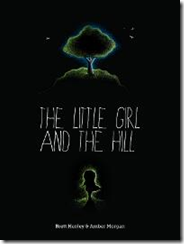
The Little Girl and the Hill by Brett Henley.  In January, Joel didn’t like the smallness of the text and I agree – you can’t read the author’s name, even with this fairly large thumbnail.  He said the art was lovely but that the cover overall is “a dark and easily skipped muddle.”  Still, something about this concept really appeals to me.  Like finding a good black t-shirt for a baby, it’s rare to see an all-black cover on a kids’ book.  (Caveat:  the interior looks similarly all-black, and I’m not 100% sure how good that would look on an ereader.)  I do wish they’d re-do the fonts, however.

#3

Tuesday, December 9, 2014

12 nights of Chanukah fun: a mega Jewish holiday picture book roundup

image

Before you read any further, you should know:  these aren’t exactly reviews.  They’re BETTER.

(That’s also why I want you to read this even if you don’t celebrate Chanukah.)

What could be better than reviews?

As writers, we’re at work even when we read for fun (even when we read to our kids), and that’s a serious job.  We have to examine each book not simply for whether or not we enjoyed it (like ordinary readers do), but analyzing it to figure out IF it works and HOW it works.

That’s the only way we can make our own writing better.

Working while we read (for pleasure)

When I took a children’s picture-book writing course earlier this year, I had to research “comps” – comparable books on a similar topic.  Since I was working on one of my Chanukah books, I decided to research what else was out there in the world of Chanukah books.  I chose these books almost at random, but I think it’s a good assortment of what’s out there.

Have fun reading through them, and hopefully discovering a few new favourites. 

  • How Do Dinosaurs Say Happy Chanukah? by Jane Yolen, illustrated by Mark Teague
  • Mrs. Greenberg's Messy Hanukkah, by Linda Glasser, illustrated by Nancy Cote
  • Esther’s Hanukkah Disaster, by Jane Sutton, illustrated by Andy Rowland
  • Chanukah Lights, by Michael J. Rosen, illustrated by Robert Sabuda
  • Latkes, Latkes, Good to Eat: A Chanukah Story, written and illustrated by Naomi Howland
  • The Story of Hanukkah, by David A. Adler, illustrated by Jill Weber
  • Sammy Spider's First Hanukkah, by Sylvia A. Rouss, illustrated by Katherine Janus Kahn
  • Biscuit's Hanukkah, by Alyssa Satin Capucilli, illustrated by Pat Schories
  • Elmo’s Little Dreidel, by Naomi Kleinberg, illustrated by Christopher Moroney
  • Light The Lights! A Story About Celebrating Hanukkah And Christmas, by Margaret Moorman
  • Engineer Ari and the Hanukkah Mishap, by Deborah Bodin Cohen, illustrated by Shahar Kober
  • Battle for Torah: The Message of Hanukkah, by Kay Kindall, illustrated by Neil Kindall

While you’re reading through these short blurbs, take a look at some of the different ways we – as writers –should be analyzing “comps.”

What to look for

Friday, October 31, 2014

Write better, sell more books. Under a buck.

image

Want to write better?  Want to sell more books?  All for under a buck?

Of course you do.

It doesn’t matter whether you’re writing children’s books, blogs, or full-length adult nonfiction (or anything else).  The basics of writing and publishing in a digital age are exactly the same.

Lots of self-proclaimed “experts” will tell you how you can cash in on some kind of digital gold rush, but they’re all lying to you.  Their tips are gimmicky and most won’t hold true for more than a few months at a time.

Just in time for NaNoWriMo, two bestselling writers and one exceptionally prolific writing team have put together the Indie Author Power Pack.  It’s coming out November 3rd, but if you buy it now, it’s 88 cents.  That’s 88 cents for three books. 

This is easily the best 88 cents you will EVER spend on your writing career.

I literally stumbled across this today on Amazon, so I have no clue how long the presale deal’s going to last.

My current favourite, Write, Publish, Repeat (which I bought in audiobook, but have never sat down and read), alone must be over 100,000; it’s a monster (check out my review of Write Publish Repeat, plus my interview with its author, writer dad Sean Platt).  And it costs $5 all by itself. 

Again, the bundle is 88 cents. 

Get the deal here.

NOTE:  US-based viewers may see a price of 99 cents.  I wrote and published this post before I thought to check how it showed up here.  Here’s a screenshot of how the site comes through at my end:

image

(Which is funny, because usually we pay MORE outside the U.S.)

Let’s take a look at the math.

Write. Publish. Repeat., by Sean Platt and Johnny B. Truant Let's Get Digital, by David Gaughran How to Market a Book, by Joanna Penn

That’s at least $15 worth of ebooks, and these aren’t some second-run thing put out by fly-by-nights who don’t know what they’re doing.  These are the superstars of self-publishing, who have been at it for years and want to share their ideas with you..

I just bought the bundle, and I can’t wait until it comes out.  You should, too, even if you already own one (or two) of the books.  Here’s your last chance for this post…

Get the deal here.

If you do get it, or if any of these books have helped YOU, let me know in the Comments.

Wednesday, June 25, 2014

Writing with Pride: creating LGBTQ kids' books that don't make it an "issue."


Are you proud of who you are?

I hope so.

But as much as I wish I could say that pride was enough to create a great kids' book... it's not.  The last few years have seen a flood of LGBTQ-oriented kids' books rushed into print... not all of which are fantastic.

I want to say this up-front:  I am not LGBTQ, and I write this as a white woman married to a white man.  So some would say that we're uniquely privileged... and that members of a minority should take any opportunity they can get to show families like theirs.

I don't want to argue with that.  I want to believe, instead, that there's a way to do that that doesn't undermine the cause.  And that way is to write a great story, with characters that happen to be... well, whatever type of characters you want to depict.

Why pride isn't enough

Too many of these books, particularly the classic ones, focus on the central "issue" - that there are two mommies, two daddies, that somebody is transgendered, whatever it is.  And those kinds of books are not only generally tedious to read, but also don't appeal to children.

      
I have a mom and a mom... or a dad and a dad!

The message of these stories is usually pretty simple-minded:  yes, we're different, but we're happy and our lives are full of love.  It's certainly not an offensive message....but neither is it very interesting, or engaging to a child.

I wear a dress, even though I'm a boy!

Children, by nature, take most situations at face value.  It's us grown-ups who have trouble processing things that are new or different.  If a kid has two mommies, she knows it and doesn't usually love it or hate it - it just IS.  If somebody at school has a problem with that (probably not another kid; probably one of us closed-minded grown-ups), there are ways of reassuring kids without making a big deal out of it.

Another thing about "issues" books?  They get dated REALLY fast.

Books centred around the theme of overcoming intolerance and educating the general public are going to seem very, very odd in a decade or two when it's just Not a Thing (as my 18-year-old daughter would say).

Want to know the worst offense when it comes to "issues" books?

Tuesday, May 13, 2014

Apples to apples: checking out the competition.

image

I wrote last week about the one thing you must do before hitting Publish – pick up a kids’ book and flip through it to make sure YOUR book looks and feels the way a children’s book should. The truth is, I was letting you off easy.

By the time you publish, whether on your own or through a traditional publisher, you should have held in your hands – oh, DOZENS of children’s books… and picked at least three to be your “comps” – your prime competition.  Here’s how I did this step recently with an upcoming book of my own.

What are your comps?

Probably the best place to start looking is Amazon.com. I’m finishing a story right now which centres around the Jewish festival of Shavuot. Because this important holiday doesn’t get as much coverage as some of the others, I want to position it as a “Shavuot book,” which I hope will get the attention of Jewish children’s-book publishers.

Amazon offers an Advanced Search feature – not easily visible on the home page, so

Tuesday, April 8, 2014

Three timeless lessons from “Tales of a Fourth Grade Nothing.”

image Some books never get tired.  I’m reading Tales of a Fourth Grade Nothing with my kids right now as one of our chapter books, and it’s incredible how modern it is, considering it was first published in 1972.  Imagine – a book for kids in which:

  • there are no internet, cellphones, or mobile devices of any kind
  • the dad in the book isn’t used to looking after children, and hands off the kids to his secretary
  • the main character has an elevator man
  • the shoe store carries two styles in its children’s section – loafers or saddle shoes

Yet my kids are fascinated, and ask eagerly for this book every single night.  They’ve also been “sneaking” reads on their own during the more suspenseful bits.  Wow.

Here are three lessons we could all learn from Judy Blume, one of the masters.

Saturday, March 22, 2014

Three tips to write kids’ rhymes that don’t suck.

I’ve talked about rhyme before… but today, I’m here to help you make your rhymes better.

Let’s imagine we’re writing a cute rhyming book about a little penguin named Bridget.  Here’s Bridget:

Let’s introduce her – along the with the central story problem – with a rhyming couplet:

Bridget’s a penguin who lives by the sea
But when it comes to fish, she’s rather picky.

We’re off to a great start, except…this rhyme sucks.

Here are three tips to tweak your own rhymes and help make Bridget’s story great along the way!