Showing posts with label chapters. Show all posts

Friday, February 9, 2018

What the Cat taught me: Lessons for authors from yesterday’s book covers

image

Do you have a favourite book from childhood?  You can probably visualize its cover, right? 
Just picture it in your mind's eye and maybe feel the nice, contented feeling that comes with curling up with a delicious book...

Well, this morning, I came across one of my preteen favorites sitting open on the floor where my daughter had left it when she went to school:  The Cat Ate My Gymsuit, by Paula Danziger:

image

This book meant a lot to me as a kid.  I think it was because of its open acknowledgment that life is sometimes lousy when you’re a teenager but also the gentle message that (thanks, Dan Savage!) it gets better.  That there is a light at the end of the tunnel.  And it does all that with the good-natured humour that the late Paula Danziger brought to all her books.image

I posted this picture on Facebook because it brought back so many memories.  But I also started thinking about both how dated the cover looks (it's from 1978) and also how I doubted publishers would put a picture like this, showing a slightly overweight, slightly depressed teen on the cover of a book today.

Searching Google to find a history of this book cover, and I discovered I was right.  The most current version of this book, on Amazon, just shows

Thursday, June 11, 2015

5 survival tips for the long, uphill journey to a finished book.

image

You’re standing at the foot of a mountain.  Don’t look up, or you’re done for – there’s just so far to climb when you’re just starting out.

I started a new nonfiction book this week.  I love writing them, gathering photos, putting the information together.  But it’s soooo much work.

Short picture books come easily, but longer stories, like chapter books, are an uphill slog.  Some chapters in a longer book are fun to write – others, not so much.  And when I’m right at the beginning… well, some days I feel like I don’t have the strength.

Does that happen to you, too?

Here are some ideas that get me up that mountain.  I’d love to hear yours, just leave them in the comments at the end of this post.

1.  Sit down and write

“Writing is a struggle against silence.”
― Carlos Fuentes

Writer Cory Doctorow says, “Write every day. Anything you do every day gets easier. If you’re insanely busy, make the amount that you write every day small (100 words? 250 words?) but do it every day.” (read more here)

Thursday, June 4, 2015

Write like a journalist: use the 5 W’s to write captivating children’s books.

image

How are you on the 5 W’s? 

You know:  “who, what, when, where, why”?  Those 5 W’s.  The ones your high school English teacher badgered you about. 

Maybe you’ve pushed them aside and not thought about them since high school.  But it’s time to dust them off and see how they can help you create a tighter, more fascinating story.

Every journalist knows that if they haven’t answered these 5 W questions in the very beginning.  So should every story writer. 

Open up any newspaper in the world and you’ll see how those 5 W’s have been worked into the first paragraph – known as the “lede.”  Here’s a short news item from Reuters today:

An explosion at a gas filling station in Ghana's capital killed at least 78 people, many of whom had sought shelter there due to torrential rain, a spokesman for the national fire brigade told JOYFM radio on Thursday.

Let’s take a look at those 5 W’s.

  • Who’s it about?  78 people who were killed, and one fire brigade spokesman.
  • What happened?  An explosion.
  • When?  Today, Thursday June 4 (or maybe it happened yesterday).
  • Where?  Accra, the capital of Ghana.
  • Why?  The people were in the gas station to seek shelter from the rain.  The article doesn't given a reason for the explosion itself, but the next paragraph says it may be connected to the rain as well.

Oh, and by the way, I know nothing about Ghana.  That’s another thing journalists realize:  if they’re doing their job right, they can make you feel entranced, utterly fascinated, by anything.  They can make you care.

Now let’s look at the beginning of a children’s book.

Thursday, February 26, 2015

Does your children’s book have series potential? Use this 3-step checklist to find out!

image

So your book is doing great.  You wrote it, released it, it looks terrific.  You’ve got a few reviews under your belt.  And now… it’s time for your next book.

Should you make it a brand-new story?  Or should you write a “sequel” – spin off a series that somehow picks up where your last book left off?

Series books are proven winners in lots of ways:  26 of Amazon’s 100 Children’s Books to Read in a Lifetime (that’s over 1/4 of the best kids’ books of all time) are series books.  Kids love them, teachers love them, librarians love them.  And writers love them, too.  Why?

Once kids are hooked on a series, they’ll read them one after the other, devouring them like Cheetos.  If my kids are typical, and I think they are, they’ll often go back to the beginning once they’ve read them all.  Series books also look great lined up side by side on a bookshelf (or in a bookstore!).

image

(Once you have a basic cover idea, it’s easy to think up clever variations!)

Will your book make it as a series?  Here’s a three-step checklist to help you identify the most crucial elements that you’ll need to help turn it into a franchise instead of just a single standalone book.

1. Distinctive Character

image Think about your favourite children’s-book series.  Now… who was the main character or characters?  Arthur?  Madeline?  Frances?  The Baudelaires?  Greg Heffley?  Franklin?  Olivia?

The books that stand out – and the series that succeed – are usually the ones with a very strong lead character.  Strong as in unforgettable.

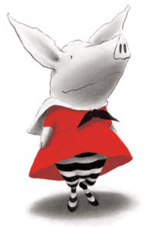
Olivia (fictional pig).pngThink about Olivia, from the books of the same name by Ian Falconer.  She’s a cute pig, but there are a million cute fictional pigs out there.  Actually, Olivia isn’t particularly cute, but the drawings are strong and distinctive, as is her personality.  I mean, she loves opera.  How cool is that?

Is your character unforgettable?  If so, read on…

2. Distinctive Setting

Your character’s world should be compelling enough to make you want to spin more than one story in it.

Monday, February 16, 2015

Why picking the right age category for your book is so important (and how not to mess it up). GUEST POST by Laurisa White Reyes

image

If you are as avid a reader as I am, you are probably familiar with the terms Middle Grade, Young Adult, and Adult fiction. Recently, a new category has popped up: New Adult.

laurisa2What exactly determines if a book fits into one category or another? This may not be important for people who just want to read good books, (Who cares if the protagonist is sixteen or thirty-six as long as it’s a great read!) but understanding the difference is vital when you are writing books and marketing them.

Middle Grade Books

Let’s start with Middle Grade. This category is for younger readers, generally between the ages of 8 to 12, or if the subject matter is a little more mature, ages 10 to 14.

The protagonist’s age should fall into one of these ranges, and the story should be told from a child’s point of view (1st or 3rd person doesn’t matter). Adults may be present in the story, but the kids are the stars of the show.

Some “no-no’s” for writing for this age group include books told from an adult perspective reminiscing about when they were young and stories told from a kid’s POV but where the subject matter could be considered mature.

Middle Grade = Young Adult?  (nope)

Friday, December 19, 2014

Best & worst of the Indie Children’s Covers 2014: 19 hits, 10 misses.

image

UPDATE:  Want to enter the 2015 contest?  Open NOW to any children’s books self-published between Dec 1, 2014 and Nov 30, 2015.

Covers are hard.  If you’re like most people, I hope you don’t even try to do them yourself.  But even if you hire a pro, it’s easy to wander off the path of good judgment into the jungle of horrific, embarrassing covers.

That’s why we need objective feedback. 

Which is where Joel Friedlander, the Book Designer, comes in.  Every month, he hosts a cover contest.  It’s free to enter, and if you have a cover you love, you really should.  It won’t boost book sales directly, but it’s worth it, I promise.

Remember:  every single buyer is judging your book by its cover.  You can’t escape from that simple fact.

Every month, Joel shows off every cover he gets.  Sometimes he adds praise – but sometimes, his comments can sting.  One author proudly submitted his cover with the words “Fully designed by the author himself.”  To which Joel replied, “That’s apparent.”  About another cover, he wrote, “Impossible to tell what was intended here, but clearly this is a disaster.”  (My personal favourite:  “Pretty much announces: “I’m self-published!” And not in a good way.”)

I have to laugh – even when his criticisms are aimed at me, which they have been a couple of times.  Don’t submit anything unless you’re prepared for him to tear it apart.

Most of the covers he gets are for adult books.  Why not more kidlit?  Maybe because most of us aren’t putting enough money/effort into our covers, and aren’t proud enough of the results. 

That’s REALLY got to change.  I hope this list inspires you to create excellent covers that will hog all the top spots for 2015.

Here (in no particular order) is my personal Top Nineteen of all the kids’ covers that he’s featured in 2014.  NOTE:  I haven’t read the books.  I’m literally just judging them by their covers.

Down below, you’ll find 10 “misses” and “near-misses” that failed on one count or another to make it to that empty #20 spot in my “top” list.  Plus two grownup books with really, REALLY bad covers that make me wonder why anyone would submit them to a contest.  And one I loved that inspired me to buy the book.

#1

image

The Boy Who Loved Fire by Julie Musil.  There were many great YA covers this year; I think authors in this category are a lot more serious about their covers than if they’re just writing “kiddie books.”  (Again, that’s really got to change.)  Joel didn’t say anything when it was listed in January, but in March when he listed it again, he said, “Although a bit overwrought, it is nicely creepy.”

#2
image

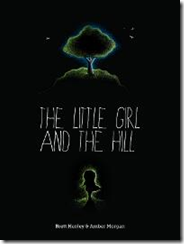
The Little Girl and the Hill by Brett Henley.  In January, Joel didn’t like the smallness of the text and I agree – you can’t read the author’s name, even with this fairly large thumbnail.  He said the art was lovely but that the cover overall is “a dark and easily skipped muddle.”  Still, something about this concept really appeals to me.  Like finding a good black t-shirt for a baby, it’s rare to see an all-black cover on a kids’ book.  (Caveat:  the interior looks similarly all-black, and I’m not 100% sure how good that would look on an ereader.)  I do wish they’d re-do the fonts, however.

#3

Monday, November 10, 2014

DIY chapter books in Microsoft Word – a five-step cheat sheet.

image

Written five books for kids with nothing to show for it but a page of Kindle ebooks? 

It’s time to break into print, if only to have something to show your mom, and your friends, and your kids, and their friends, and… well, print books are just awesome in every way.  If you haven’t released one  yet, you should.

Even if your ebooks are selling great, you may not feel like a “real” author if everything you’ve done is digital.  There are other great reasons to print your stuff as well, especially for kids, even if the profit margins may not be as high as for ebooks.  (They’re not; sorry.)

It may sound like an exercise in masochism, but with a little patience, you can format your own book for print using nothing more than Microsoft Word.

The most popular thing on my site are my free children’s picture book templates, and it’s true:  I could have just made another template to help you do chapter books.  But take my word for it:  you don’t need a template for this.  I want to help you make the book you dream of, quickly and easily, using tools you already have.

That’s what this post is all about.

I originally wrote my new chapter book, No Santa!, in Scrivener, but I knew all along that print was in its future.  Scrivener can output to Microsoft Word format (.doc or .docx), but only provides minimal formatting.  Your book is definitely not ready to print yet.

santa2r

But don’t panic.  It won’t take much to whip it into shape.  You will need a slightly more-than-basic familiarity with Word, but you don’t have to be a guru.  If you’re comfortable with stuff like Styles and Margins, plus Headers and Footers, you’ll be okay.

Here’s your five-step cheat sheet to take your naked manuscript, Times New Roman and all, and turn it into a professional-looking print-ready PDF:

1) Use global Styles rather than formatting

Don’t format your text!  What I mean by this is don’t just highlight individual sections of your text and set them up to look the way you want.  Instead, assign each section of your text to a particular Style – either one of the many built-in styles or styles you create yourself.  You can change the way that style looks once you’ve done that, and then every instance of that Style will be changed at the same time.  You will save yourself a TON of work in the long run.

image

I assigned all my chapter titles to the Heading 1 style.  Heading styles are important because they will show up in your Table of Contents later on, if you create one.  Of course, all of your text should be in the same Style.  I usually use the built in Normal style and then tweak the Style for the size and font I need.

2) Choose fonts carefully

Tuesday, April 8, 2014

Three timeless lessons from “Tales of a Fourth Grade Nothing.”

image Some books never get tired.  I’m reading Tales of a Fourth Grade Nothing with my kids right now as one of our chapter books, and it’s incredible how modern it is, considering it was first published in 1972.  Imagine – a book for kids in which:

  • there are no internet, cellphones, or mobile devices of any kind
  • the dad in the book isn’t used to looking after children, and hands off the kids to his secretary
  • the main character has an elevator man
  • the shoe store carries two styles in its children’s section – loafers or saddle shoes

Yet my kids are fascinated, and ask eagerly for this book every single night.  They’ve also been “sneaking” reads on their own during the more suspenseful bits.  Wow.

Here are three lessons we could all learn from Judy Blume, one of the masters.