Showing posts with label setting. Show all posts

Thursday, July 23, 2015

Beat the blahs with these zesty local story setting ideas

image

Think about a story you've written.  Where is it set?

Now think about where you live.  In the city, the countryside, a small town, a suburban hub?  A farm, a trailer, an apartment, a cottage, a motor home?  In North America, or Asia, or Chile?

Some of us naturally write stories set where we live.  In the vegetable patch in back of our farmhouse, or in the driveway of our one-storey suburban house, or the elevator to our twenty-fifth storey penthouse.

imageOther writers pick a location that's as exotic as possible.  If they live in Canada, they'll set their story in Thailand or Bengal or Nigeria.  (Or, if they're from Nigeria and live in Wales, like Atinuke, author of the lovely Anna Hibiscus series, they'll write a story set - in part - in Canada!)

While writing about a place you DO know well may sound dull, the truth is that some of the most-loved children's books take place in settings that are very similar to places the authors live or lived.  Places they know well, almost like the back of their own hand.

And the good news is that wherever you live, it's bound to be exotic to somebody. 

Right now, I'm visiting Toronto with my family, after nearly two years living in Israel.  This is my home town; I grew up here. 

Thursday, February 26, 2015

Does your children’s book have series potential? Use this 3-step checklist to find out!

image

So your book is doing great.  You wrote it, released it, it looks terrific.  You’ve got a few reviews under your belt.  And now… it’s time for your next book.

Should you make it a brand-new story?  Or should you write a “sequel” – spin off a series that somehow picks up where your last book left off?

Series books are proven winners in lots of ways:  26 of Amazon’s 100 Children’s Books to Read in a Lifetime (that’s over 1/4 of the best kids’ books of all time) are series books.  Kids love them, teachers love them, librarians love them.  And writers love them, too.  Why?

Once kids are hooked on a series, they’ll read them one after the other, devouring them like Cheetos.  If my kids are typical, and I think they are, they’ll often go back to the beginning once they’ve read them all.  Series books also look great lined up side by side on a bookshelf (or in a bookstore!).

image

(Once you have a basic cover idea, it’s easy to think up clever variations!)

Will your book make it as a series?  Here’s a three-step checklist to help you identify the most crucial elements that you’ll need to help turn it into a franchise instead of just a single standalone book.

1. Distinctive Character

image Think about your favourite children’s-book series.  Now… who was the main character or characters?  Arthur?  Madeline?  Frances?  The Baudelaires?  Greg Heffley?  Franklin?  Olivia?

The books that stand out – and the series that succeed – are usually the ones with a very strong lead character.  Strong as in unforgettable.
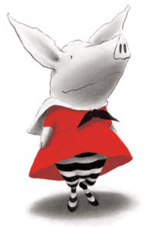
Olivia (fictional pig).pngThink about Olivia, from the books of the same name by Ian Falconer.  She’s a cute pig, but there are a million cute fictional pigs out there.  Actually, Olivia isn’t particularly cute, but the drawings are strong and distinctive, as is her personality.  I mean, she loves opera.  How cool is that?

Is your character unforgettable?  If so, read on…

2. Distinctive Setting

Your character’s world should be compelling enough to make you want to spin more than one story in it.

Sunday, May 18, 2014

New life for old stories: 3 that have been done to death – and why you should write them anyway.

image

Searching for new ideas?  Give it up.  There are no new stories… as it says in the book of Ecclesiastes, “What has been will be again, what has been done will be done again; there is nothing new under the sun.” 

But don’t let that worry you.  Here are three books that have been written over and over and over… but which will always be fresh and interesting, with just a little spin.

Thursday, May 1, 2014

Why “write what you know” produces terrible books: putting a spin on reality.

clouds wtihin cloudsSome of the lamest writing advice is “write what you know.”  It’s lame because it doesn’t go far enough.  It doesn’t show you how to take what you know and make it exotic, exciting, delicious and fun.

These advice-givers fear that, like Shakespeare, we will set our stories in some exotic locale like Denmark or Venice (where Shakespeare himself never actually visited). That used to be acceptable, back when travel was rare and you might never meet an English-speaking person who had visited “darkest Africa.”  These days, when you can hop on a plane and be anywhere, and back in a week to tell the tale, you can’t just make it up.

Fair enough. I think we all have this urge to make our writing exotic and interesting. Indeed, we may even confuse ourselves into believing they are one and the same.

Why?

Because most of us lead lives that FEEL as boring as paste.

We get up, go to work, take our children to soccer practice or dance class… and when we get home and sit down to write, we think, “why would anybody want to read about all of this?”

So we spice it up a bit, in an unnatural way: set our story in a more interesting city or make the characters wildly different from ourselves. Before we know it, we have written a terrible story about people we don’t know or understand.