Showing posts with label values. Show all posts

Tuesday, January 17, 2017

Want to teach values in a kids' book? Put them in the background!

image

Got a message you’re dying to share?

I’ve been there.

But those of us who do have a real problem.

I’m sure you’ve heard before – and I’ve certainly said it before – that kids’ books shouldn’t be used to preach at kids.  If you put that message first and fill your book chock-full with good healthy values, you’ll end up with a terrible book that kids simply won’t enjoy.

Think of zucchini.  Nobody in my family likes zucchini very much.  If you adore zucchini, think about another vegetable.  Eggplant, maybe.

Now, you know you should eat zucchini.  It’s super-good for you, right?

But if I were to cook up a big batch of zucchini for my family, they’d all sit and stare at it – myself included – and not know what to do with it.  That zucchini would sit uneaten on the plate.

Now here’s the cool part:  we actually eat a LOT of zucchini.  We eat it sliced into chicken soup every Friday night; we eat it grated into latkes and any number of savoury dishes; we eat it pureed into potato soup.  I’ve even baked zucchini bread, though yes, I understand, it’s not entirely super-good for you if it’s surrounded by flour and sugar!

The trick to zucchini, or whatever veg you don’t like very much, is to put it in the background, and the same is true for morals, values, or any other type of lesson you’d like to embed in your book.

In my new book, Yossi and the Monkeys (2017, Kar Ben Publishing), there are a ton of what the publisher probably calls Jewish values, but which I consider pretty universal.  Here’s the first page:

image

What values are here – in the background?  There are things Yossi really wants, but they are not selfish wishes; they are things he wants for his family. 

(So I don’t have to come out and say something annoying like, “Don’t be selfish!”  Kids know that already anyway, so they’ll just tune you out if you try.)

The holiday itself is another value right here on this front page:  I love writing stories with Jewish holidays in them but which aren’t about the holiday.  There are too many “what is Chanukah?” books out there for me to want to contribute to the genre, plus those kinds of books have always bored my children, who have known since infancy what all the holidays are about.

(Notice I haven’t said: “Shavuot is a wonderful festival in which Jews…”  This book isn’t about Jews in general, so forget about them.  This is Yossi’s story.  Just in case the reader isn’t familiar with the festival, the publisher has included a short paragraph about it on the copyright page.)

Here are two more pages from later in the story:

Thursday, February 12, 2015

What's your story REALLY about? (Hint: forget the forest, just show us a tree.)

image

I’ve figured out how to get rich.  What’s the secret, you’re wondering?

I’m going to make folks hand over a nickel every time they say:

  • “I’ve written (or I’m writing) a story about bullying.“
  • “It’s a kids’ story all about grief.”
  • “This is my book about divorce and/or remarriage and/or gay families.”
  • “It’s an illustrated picture book about eating right.”
  • “I’m writing a story about consideration / politeness / good manners.”

You get the idea.  These are all great concepts, each and every one.  But they are also all lousy kids’ stories.

The truth is, they’re not stories at all. 

Because a story is not about the great big FOREST that is your concept.  A story is about the tiny, individual trees that live in the forest.

Finding the trees in the forest

Have you made this mistake?  I know I have. 

Wednesday, June 25, 2014

Writing with Pride: creating LGBTQ kids' books that don't make it an "issue."


Are you proud of who you are?

I hope so.

But as much as I wish I could say that pride was enough to create a great kids' book... it's not.  The last few years have seen a flood of LGBTQ-oriented kids' books rushed into print... not all of which are fantastic.

I want to say this up-front:  I am not LGBTQ, and I write this as a white woman married to a white man.  So some would say that we're uniquely privileged... and that members of a minority should take any opportunity they can get to show families like theirs.

I don't want to argue with that.  I want to believe, instead, that there's a way to do that that doesn't undermine the cause.  And that way is to write a great story, with characters that happen to be... well, whatever type of characters you want to depict.

Why pride isn't enough

Too many of these books, particularly the classic ones, focus on the central "issue" - that there are two mommies, two daddies, that somebody is transgendered, whatever it is.  And those kinds of books are not only generally tedious to read, but also don't appeal to children.

      
I have a mom and a mom... or a dad and a dad!

The message of these stories is usually pretty simple-minded:  yes, we're different, but we're happy and our lives are full of love.  It's certainly not an offensive message....but neither is it very interesting, or engaging to a child.

I wear a dress, even though I'm a boy!

Children, by nature, take most situations at face value.  It's us grown-ups who have trouble processing things that are new or different.  If a kid has two mommies, she knows it and doesn't usually love it or hate it - it just IS.  If somebody at school has a problem with that (probably not another kid; probably one of us closed-minded grown-ups), there are ways of reassuring kids without making a big deal out of it.

Another thing about "issues" books?  They get dated REALLY fast.

Books centred around the theme of overcoming intolerance and educating the general public are going to seem very, very odd in a decade or two when it's just Not a Thing (as my 18-year-old daughter would say).

Want to know the worst offense when it comes to "issues" books?

Sunday, June 8, 2014

Twelve steps to writing an awful kids’ book.

image

Mea culpa.  I have been there and I have done that.  I have written awful children’s books; not just book but books, plural.  And no amount of “Hail Mary”s can fix the bad writing I’ve done (plus, I’m not Catholic).

Phew.  Feels good to get it off my chest.  These days, I sometimes turn up an old file on my hard drive and open it up, only to discover an ugly early attempt at a kids’ story.  I’m nowhere near perfect yet, but it has become easier, at least, to spot where all those early attempts went wrong.

If I ever wanted to write an awful kids’ book again, let’s just say I now know all the steps to get me there.  And having been there and done that, I’m happy to share this twelve-step plan to help you, too, create a children’s book that truly stinks. 

What?  You want to write a great kids’ book?

Don’t worry… for each of these twelve steps, I’ve offered a few tips (many from painful personal experience) on how to do it right.  You know… just in case you want to write this book:

image

Instead of this one:

image

You decide which you want to write… and then follow these twelve simple tips.

Tuesday, April 22, 2014

‘Tis the season – write holiday books that don’t spell HUMBUG (Part 2 of 2)

happy holidays!What the heck is a holiday-books post doing here in April? And not just any post – this is Part 2 of a 2-part series! (Click here to read Part 1 first.)

Well, for one thing, not all of us celebrate our main holiday in December. Plus, if you’re thinking of writing or wrapping a book aimed at the December holiday season, April is actually a great time to be planning it.

In Part 1, we looked at four big Do’s and Don’ts to help get you on the right track.  Now, we’re going to look at one final question you need to ask yourself before you sit down to write – who are you writing for???

buy Rashad's Ramadan and Eid al-Fitr, by Lisa Bullard

Finding your audience

Is your book aimed at kids and families who celebrate the holiday, or those who don’t?

As a religious Jew, I can’t tell you how many Chanukah books I decided were ultimately inappropriate for my family because they explain too much.

Saturday, April 12, 2014

‘Tis the season – write holiday books that don’t spell HUMBUG (Part 1 of 2)

happy holidays! What the heck is a holiday-books post doing here in April? And not just any post – this is Part 1 of a 2-part series. (Click here to read Part 2.)

Well, for one thing, not all of us celebrate our main holiday in December. Plus, if you’re thinking of writing or wrapping up a book aimed at the December holiday season, April is actually a great time to be planning it.

Certainly, when you’re in the thick of holiday excitement is NOT the time to think you can take time out to write your best work.

Since I myself have a major holiday coming up in 2 days, I have been procrastinating – big time. And you, my friends, are the big, big winners.

Here, in Part 1 of this 2-part series on “Writing Kids’ Holiday Books,” are some quick Do’s and Don’ts to help you get those holiday kids’-book juices flowing.

buy Sammy Spider's First Passover

DO get fired up with holiday excitement

Figure out what you love the most about the holiday you’re writing about… and then capture that excitement on paper. (Well, monitor – but you know what I mean.)

Frankly, I’ve seen a lot of bad kids’ holiday books out there, many of them self-published (hint:

Monday, January 6, 2014

Early children’s books.

Raise your hand prissily if you don’t get a tremendous tee hee reading through this with all the F’s that aren’t really F’s.  “To fee if the corn is almoft ripe.”  Tee hee.

(I come by it honestly:  my mother’s name is Susan, but my father, tickled by old-fashoned handwriting, used to call her, affectionately, “Foovan”, because of the S’s.)

Since early children’s book writers clearly hadn’t heard of Mistake #1:  Tossing in Values, those first books had purely moral intentions – sometimes pretty scary ones involving hellfire (heckfire, if the former offends you). 

image Later, it was discovered that they were also a great way to teach children to read.  But ideally, as with the American McGuffey Readers in the 1800s (a series I adore, by the way, and still use with my own kids), books would do double-duty, sharing a moral lesson AND teaching children to read!

When books were rare and precious.

image This was before the days of Print On Demand:  books were rare and precious, and most families – heck heck, most schools – only had a few. 

So you crammed as much as possible onto each page.  They had math texts back then that could fit into your hand and cover the entire mathematics curriculum from Grades 1 to 12.  Maybe not in as much detail as a slow math student like me would prefer, but there it was.
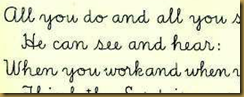
imageThese were all-purpose texts, too.  Even the McGuffey readers included “Slate Work” in the form of script-handwriting lessons interspersed with the with the stories and poems.  Of course, these, too, were designed for double duty, dishing out moral lessons about faith and hard work right along with the handwriting practice.

Kids today are daunted by script – I read somewhere about a girl who had to learn script so she could send letters back and forth with her grandmother.

What else is different today?

Forget about fonts.

imageToday’s kids’ books make liberal use of fonts – well, except for good old script handwriting, which seems to have been completely eliminated from our kids’ repertoire.

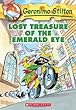
Indeed, books like the popular (accidentally typed “poopular,” maybe it means something?) Geronimo Stilton series (this page is from Lost Treasure of the Emerald Eye, one my kids adore), at times seem to rely more on font and novelty than on actual plot – let alone moral virtue.

(Not a fan of this series, but not for any reason I can put my finger on, and I’d never forbid the kids from reading them based on my own intuitions.)

0307010856Anyway, who can blame them when there is such marvellous precedent from the previous generation of kids’ books, the books of the 1970s and 1980s that were the first to break with morality, convention, with everything?

imageInstead of these tried-and-true formulas, this generation created fun, eclectic Free-to-be-type books that (sometimes literally, like in Grover’s 1971 classic, The Monster at the End of This Book, smashed all precedent to create the totally new artform in which Geronimo Stilton is free to play today to his heart’s content.

image 

(Okay, it’s late, I’m tired.  Hands up; bonus hug for anyone who followed that last sentence!!!)

Forget about trees.

Today, you get taken to task if you don’t make careful use of whitespace – or, what those early children’s book pioneers would call “intentionally waste space in your book.”
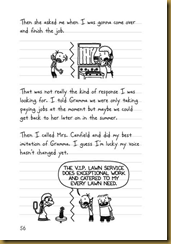
image 0810983915And rather than one picture per story (regardless of how many pages each story ran), you'd darn well better include a picture on each page if you expect hold kids’ attention.

Better yet, make like successful Diary of a Wimpy Kid author Jeff Kenney and many of today’s graphic novelists and forgo the words part altogether.  (Okay, comics and Diary of a Wimpy Kid HAVE words… but they are generally incorporated among other graphic elements, rather than carrying the story alone.)

Forget about stopping progress.

Not that I want to!  I love today’s kids’ books.  I’m not panicking about their future, by any means, and I’m always excited to see what the future will bring.

But sometimes, when I see the woeful choices my children make and chuckle over (this is code for the entire body of literature that relies primarily on fart jokes for its readers’ edification), I yearn for a simpler time.  Don’t we all?

0694003611I yearn for Goodnight Moon. (An Israeli woman once told me she found this canonical book creepy!  Really, it’s creepy to have an old lady in your room watching you fall asleep?  I always thought this was kind of sweet, but maybe she has a point.)

image

B00ES279V4I yearn for The Velveteen Rabbit.  (Does anyone still read this?  I thought about it once but realized it was too long to hold my attention span, let alone my kids’.  There – painful true confession.  Maybe I should try again now that they’re older.)

B000FCK65WI yearn for A Tree Grows in Brooklyn – a wonderfully shocking YA book easily as scandalous as anything today’s teens encounter.

Or is it perhaps not a simpler time I yearn for but a “fimpler” one, a world full of fimple ftories that won’t confound or confufe uf.  “Come, it is Auguft.  Buy a fharp fickle; you muft cut down the corn and eat fome.”

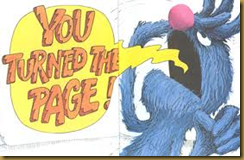
Ah, but you can’t stop progress.  Or, as Grover might put it,
image

What modern changes do you love in the world of kids’ books?  What can’t you stand?  If you could go back to visit any period of children’s literature, when would you pick?

Monday, December 30, 2013

Avoiding the #1 mistake: tossing in values.

A lot of people decide to write kids books because they think kids today are “lacking in values” (not sure what this means) or need good, wholesome stories that “reinforce values.”

I love values!!!

(just not in most kids’ books)

Look, I like values as much as the next person, and as a parent, I do my best to share mine with my kids, all day, every day.  But not in kids’ books.

Basic Principle #2:  Almost without exception, your book should be about STORY, not values.

Trying to force values into a story where they don’t belong is the #1 mistake of beginning (and some not-so-beginning) children’s authors.

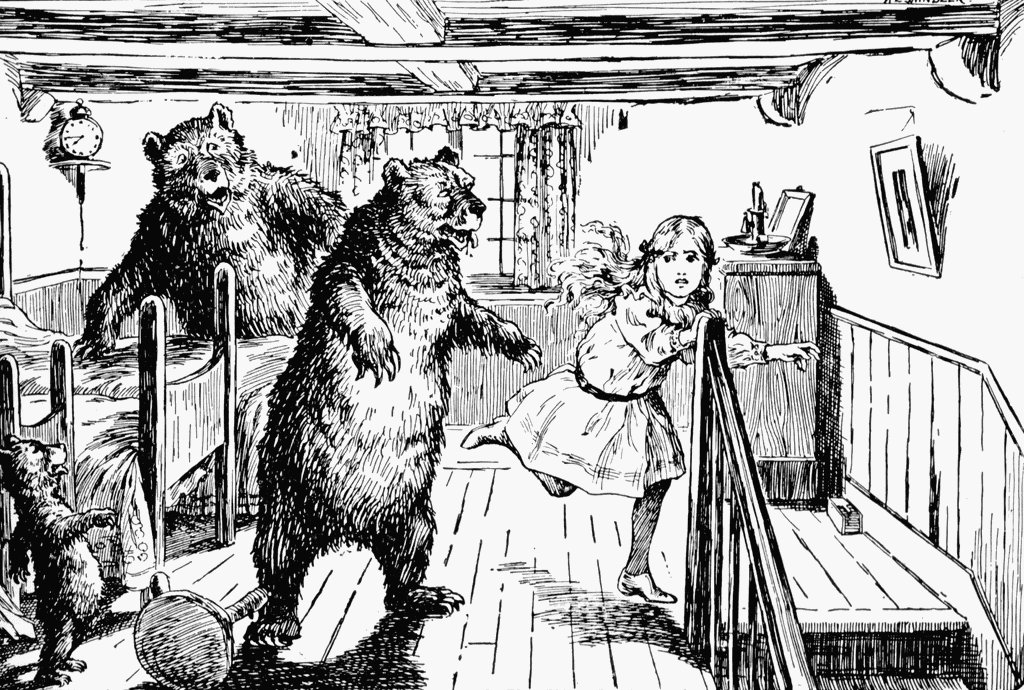
If you believe that the “moral” of the story of Goldilocks and the Three Bears is “never intrude on strangers’ homes,” that’s lovely.  But you still have to tell the story, in a compelling way.  You must create the characters and weave the plot from beginning to middle to end.  And you cannot throw in a clunky ending where Goldilocks is somehow punished for her curious nature unless it flows naturally from the story.

Believe it or not, I have read a couple of bad versions of the Goldilocks story lately which forgot this rule.  Yes, this even happens (more rarely, thank goodness) in professionally-written and -published books.

So what were the values or moral lessons in these two versions?

Goldilocks:  Moral #1

In one version, Goldilocks learns the lesson to never, ever go into people’s houses without permission.  Blah.  What kid doesn’t know that?  It was actually a good book, too, right up until the point where the (professional, published) author decided to inject the moral.  No idea how that got past the editors.

Goldilocks:  Moral #2

In the other, the bears learn the lesson that they must forgive Goldilocks and welcome her into their home.  They shake paws, invite her to stay and everybody winds up being good, good friends.

In neither case does the “moral” outcome flow from the story.  In both of these books, the ending felt tacked-on and perfunctory.  This happens a lot with modern fairytale adaptations, because writers feel they can’t just publish a straight story without offering some kind of clever twist (they’re probably right).

Just for fun, can you think of other morals / values we’d like to impart through or force onto this familiar tale?

Of course you can… that’s why so many of these books are flooding the market.  But it’s also why so many of them are simply awful reads.  Here are just a few off the top of my clever little head:

  • Goldilocks comes to understand the importance of taking care of others’ property (no more oopsies with the chair).
  • Goldilocks learns that sharing isn’t just one-sided and goes down to the kitchen to whip up a fresh batch of porridge.
  • Goldilocks realizes how privileged / spoiled she has been, with her curly golden locks, and spends an hour styling Mama Bear’s hair into a slightly-coarser, browner version of her own fabled ringlets.
  • The bears, having discovered how much they actually love company and hate long walks through the dreary woods, relocate to the nearest Big City.

Well, you see where I’m going with this.  All of these “endings” are artificial – they feel forced.  And so do most values when you stick them where they don’t belong.

Of course, there are exceptions to every rule, and some truly lovely kids’ books that do happen to impart values.  I’d love to hear about great ones you’ve found. 

Or, just for fun, use the Comments section to post any great “alternative endings” you can think up to that Goldilocks story!