Sunday, May 18, 2014

New life for old stories: 3 that have been done to death – and why you should write them anyway.

image

Searching for new ideas?  Give it up.  There are no new stories… as it says in the book of Ecclesiastes, “What has been will be again, what has been done will be done again; there is nothing new under the sun.” 

But don’t let that worry you.  Here are three books that have been written over and over and over… but which will always be fresh and interesting, with just a little spin.

Thursday, May 15, 2014

Having trouble choosing a children’s-book writing course? I don’t blame you!

image

When I decided to take an online children’s picture book writing course, I had no idea where to start (I’ll tell you where I ended up later on, and offer a few more good suggestions as well.).

Googling “children’s picture-book writing course” turns up a dizzying range of courses, from universities (expensive!) to individual authors’ homemade courses (sketchy?).  Some claim to have been around for 30-some-odd years, while many others have popped up overnight.

All these courses claim to be the BEST.  How can you tell them apart? 

The good news is that you can find decent courses at a few different price levels.  As for which ones will actually help you get ahead… I’m convinced that has more to do with your attitude than with the teacher (as long as he/she is reasonably competent).

I’ve taken a bunch of creative writing classes, both online and in person.  Some were good, a couple were great… one (in-person at a major university) was pretty bad:  we spent much of the time looking at the professor’s own (mediocre) writing.

Here are three questions to help you narrow down what you’re looking for:

1.  What is my goal for the course?

Do you want to get your story down on paper?  Are you struggling with stilted language?  Or are you at the stage of figuring out how to get it in front of as many publishers as possible? 

Tuesday, May 13, 2014

Apples to apples: checking out the competition.

image

I wrote last week about the one thing you must do before hitting Publish – pick up a kids’ book and flip through it to make sure YOUR book looks and feels the way a children’s book should. The truth is, I was letting you off easy.

By the time you publish, whether on your own or through a traditional publisher, you should have held in your hands – oh, DOZENS of children’s books… and picked at least three to be your “comps” – your prime competition.  Here’s how I did this step recently with an upcoming book of my own.

What are your comps?

Probably the best place to start looking is Amazon.com. I’m finishing a story right now which centres around the Jewish festival of Shavuot. Because this important holiday doesn’t get as much coverage as some of the others, I want to position it as a “Shavuot book,” which I hope will get the attention of Jewish children’s-book publishers.

Amazon offers an Advanced Search feature – not easily visible on the home page, so

Saturday, May 10, 2014

Who do we write for? Ezra’s Aliyah feedback.

Ezras_Aliyah

Sometimes, we write to touch many lives, and sometimes, it’s enough just to connect with a few.  When we were going through the process of moving to  Israel, I couldn’t find any books out there to help my kids with the process.  So I wrote Ezra’s Aliyah, about a boy whose family is going through the process that we ourselves were going through at the time.

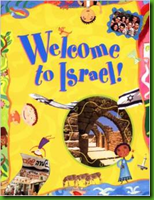
imageimageSure, we found books about kids going to Israel, like the board book, Ella’s Trip to Israel, and, for older kids, the somewhat chaotic Welcome to Israel!, but nothing that says, “You’re going to live here now” and describes the process a little bit, in a non-threatening way.

So that’s what I set out to do, and I think I did an okay job… maybe more than okay (I secretly hope so!).  I wrote most of it before we left Toronto, but waited until we were here to actually publish it.  I’m glad we did; I changed a few things, though the core of the story stayed the same.

I have to tell you, I don’t cry easily, but if I did, I would when I hear from people who are now going through the journey, who tell me how the book has helped them and their kids. 

Here’s a random message that popped up on facebook the other day.  I’ll leave out personal details, and just share the main part of the message:

I saw a blog post from someone about your book, Ezra's Aliyah, and I knew I had to buy it. …my older daughter hasn't really been happy about the prospect of moving.

I read her your book last night for the first time and she really connected with it. We paused a lot so she could relate her own experiences to Ezra, and when we were done she was really excited to move.

I think she still needs to wrap her head around some things but Ezra is really helping her out and she's excited to meet him when we get over there. (I hope I can find someone named Ezra who's her age).

Sometimes, we write our books hoping to reach lots and lots of kids… but sometimes, just one feels like enough.

Of course, it’s NOT enough, and that’s where marketing comes in, on related message boards, facebook groups, and anywhere else I can think of. 

Every summer, hundreds of people move from North America to Israel (summer is the “aliyah season,” for some reason, perhaps because it’s a natural break in the calendar), and I really hope the book can help lots more families before that happens.

Ezra’s Aliyah is available now with another of my books, Zoom!  A Trip to the Moon for a special price of $9 plus shipping.  Click here for details.  It’s also available as a Kindle e-book.

Thursday, May 8, 2014

Best of the writing blogs this week: May 8

image In which I read the blogs so you don’t have to.  But seriously, you SHOULD.  There is a ton of wisdom out there, floating around for free. 

Yes, you should still buy and read books on writing – there’s something to be said for information presented systematically in a consistent voice – but the right blog “nudge” at the right time can give you a push, an inspiration, and get you headed in the right direction.

Here are four nuggets I discovered this week that I think can help us all become better writers (and, in one case, self-publishers).

On paring down your writing to its essence:

Wednesday, May 7, 2014

Are your characters going nowhere?

road-166543_1920

It’s a pitfall even in adult books, but in kids’ books, where action is everything, going nowhere can be deadly.

But I don’t just mean walking around for no reason!  Your main character needs motivation; a great reason to get up out of his armchair (or bed, or couch, or floor), and leave the safety of “home “ (wherever that may be) for distant, more exotic, more challenging surroundings.

I’m sure you already know that the main character must solve his own problem.  But it’s not usually enough to have him “think” of a solution… far better if he can arrive there, on his own two feet (or wheelchair, or tank, or tenspeed).  A character who moves is more likely to be a character whose journey moves us (your readers). 

Here are 3 ways to make sure your characters really MOVE. 

Sunday, May 4, 2014

Free Microsoft Word children’s book templates - now in TWO popular sizes, 8.5"x8.5" and 6"x9"!

image  

UPDATE:
You now have a choice of two sizes for your free template.  Download one or both - enjoy!  Find all the juicy details on the 6" x 9" size (and why I'm now offering both) over here.

Special gift for mailing list subscribers!
Like a good blueprint, a standard template can get you started on the road to creating a self-published book that doesn’t look and “feel” self-published.
This template produces a standard 8.5” x 8.5” book, including as many pages of text as you like, as well as front and back matter, the stuff that goes before and after your story. The page size is actually a little bigger, by 0.13” all around. This is the “bleed” recommended by CreateSpace and other on-demand publishers.
This template contains full instructions…
image
Page numbers and many helpful built-in styles are already set up for you…
image
There’s even an “About the Author” page at the end for you to fill in your personal details.
image
This template will make formatting your children’s book for print-on-demand super-easy… all in a beguiling purple colour (don’t worry, you can change it).
To instantly receive this 8.5” x 8.5” FREE children’s book template, sign up for the mailing list in the box at the top-right corner of this page!


Saturday, May 3, 2014

The one thing you MUST do before hitting Publish.

reading Have you looked at a kids’ book lately?  Before you hit Publish, take a minute to haul a few kids’ books off the shelves.  If you don’t have any, go to the library and bring some home.  Let’s look at them together. 

What are we looking for?  Bear with me, because we, my friend, are looking for secrets that will rescue your book from the morass of terrible self-published children’s literature out there.  Okay, I call it literature here to be nice.  It isn’t always; sometimes, frankly, it’s just books.

There are 5 main things you’ll want to look in that stack of REAL, professionally published children’s books that will save you a ton of heartbreak if you’re self-publishing and getting your own book ready to print. 

This will take a little time up front, but you’ll thank me, really you will, when your book comes out looking nice and professional in the end.

So just grab one of the books off that pile, open it up, and take a look…

Thursday, May 1, 2014

Why “write what you know” produces terrible books: putting a spin on reality.

clouds wtihin cloudsSome of the lamest writing advice is “write what you know.”  It’s lame because it doesn’t go far enough.  It doesn’t show you how to take what you know and make it exotic, exciting, delicious and fun.

These advice-givers fear that, like Shakespeare, we will set our stories in some exotic locale like Denmark or Venice (where Shakespeare himself never actually visited). That used to be acceptable, back when travel was rare and you might never meet an English-speaking person who had visited “darkest Africa.”  These days, when you can hop on a plane and be anywhere, and back in a week to tell the tale, you can’t just make it up.

Fair enough. I think we all have this urge to make our writing exotic and interesting. Indeed, we may even confuse ourselves into believing they are one and the same.

Why?

Because most of us lead lives that FEEL as boring as paste.

We get up, go to work, take our children to soccer practice or dance class… and when we get home and sit down to write, we think, “why would anybody want to read about all of this?”

So we spice it up a bit, in an unnatural way: set our story in a more interesting city or make the characters wildly different from ourselves. Before we know it, we have written a terrible story about people we don’t know or understand.

Wednesday, April 30, 2014

Four signs you’re not cut out for self-publishing… and one reason you might be after all.

success-259710_1920 Self-publishing used to be for losers.  It wasn’t even called self-publishing – it was called “vanity publishing.”  Even the name meant you were a loser:  “You’re so vain… you prob’ly think this book is about you!” 

In between staring at the mirror and primping your nails, you wrote a book; how cute!

Who’s a loser now?

That “loser” reputation was well-earned in some cases.  Companies out to “help” writers publish their books would sell exorbitantly-priced packages of legitimate-sounding “services,” from editing and illustration to layout and promotion.  But mainly what they’d “serve” you with, often for thousands of dollars, was a useless box of poor-quality books that would sit in your living room for years, doing nothing to sell themselves.

(A few of these companies have “successfully” transitioned to the Internet.  Visit the Writer Beware blog for a guide to some of the more heinous among them.)

That is NOT today’s self-publishing environment.  Today, self-published books are of great quality.  They look and feel super-professional, and they’re cheaper than ever.  For under $10, including delivery, you could be holding your finished children’s book in your hands next week.

Why self-publishing may not work for you

So there’s no shame in self-publishing anymore.  But that still doesn’t mean it’s for everybody.  Here are four signs that self-publishing, even in today’s easy-entry market, might not work out for you.

Sunday, April 27, 2014

Photo picture books: good, bad, UGLY.

sharkiesmallI’ve taken some heat over the last couple days for this post, which suggests that writers can choose free photos from Wikimedia and other websites and use them in their books as an alternative to hiring an illustrator. 

(Photo credit:  Albert Kok, Wikimedia)

Yet photo-based picture books are a long tradition, going almost back to the beginning of both.  And we cannot all dive to the bottom of the seas to take our own pictures of sharks… nor is there any need to, with good-quality stock photos and (high-quality!  read my post!) internet photos.

So I decided to search through Amazon to find out exactly what’s out there these days:  the good, bad, and ugly in kids’ picture books that are based around photos.  But not in that order!

Books illustrated with photos tend to come from the non-fiction end of the spectrum… but not entirely, as we’ll see in a couple of the examples below.  They can be found both in slick professionally-published versions and some good, bad and loathsome self-pubbed editions.

Friday, April 25, 2014

Three pitfalls of using online photos in your self-published kids’ book.

image You may have noticed that there are lots and lots and LOTS of photos out there on the Internet… lots of which are free for the taking.  One source for beautiful free photos is Wikimedia Commons, so let’s start there, looking at how to find pictures and legally reuse them in your own project.

(top photo credit:  Nicolás García, Wikimedia)

Whatever you’re looking for, you can find it on Wikimedia.  Here’s a sample search I did, looking for pictures of fruit that I could use for this post (click to see all the great results!):

https://www.google.com/search?q=site:wikimedia.org+fruit&source=lnms&tbm=isch

Click to take a look and see the vast wealth that’s out there – all of it totally, absolutely free.  (And click here for Part 2, in which I round up the Good, the Bad and the UGLY of the types of kids’ books you can create using photos…)

But there’s a catch!  Well, 3, at least. 

You might see the wealth of free photos out there and start thinking, “hey, online photos are a promising way to avoid paying an illustrator.”  But “free” often has a price, so hold your horses for a minute. 

Let’s look at 3 of the most common pitfalls of using Wikimedia art… and then I’ll show you how you can avoid them, to take your book to the next level!